Germany: Nathaniel Breault (Sustainability in Hamburg)
Program: Hamburg University of Applied Sciences GE3, Year
Moin moin!
I am a little over a month into my program in Hamburg, and I really love this city! As the second-largest port city in Europe, Hamburg has a LOT of people to manage. But Germans approach the complicated logistics of this in a way that sharply contrasts with America in its efficiency and sustainability.
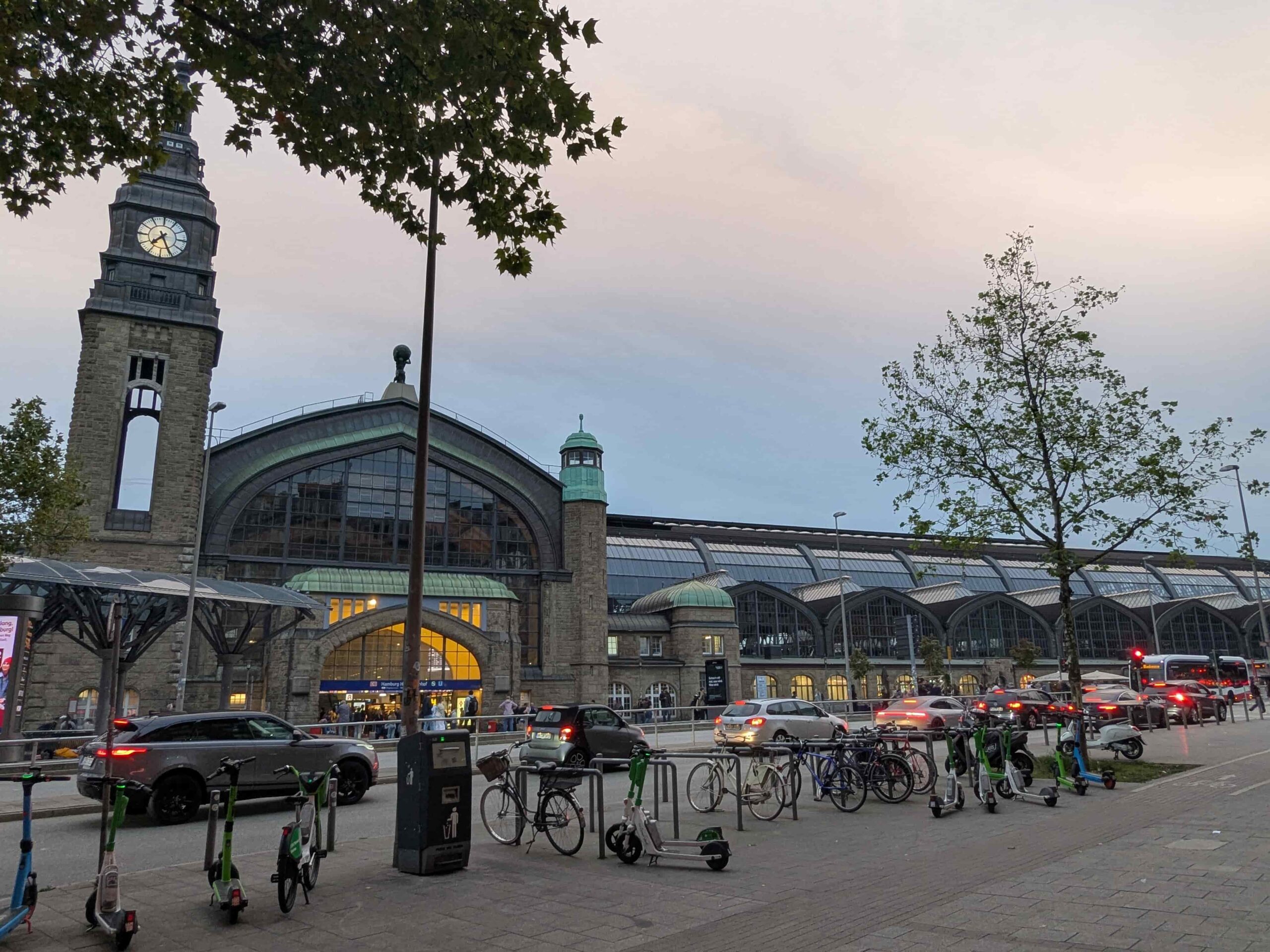
For one thing, there is the public transportation. For €63 a month (although for me, it’s included with my tuition cost), Germans can get a Deutschland ticket, or D-ticket. This covers the cost of all public transport throughout Germany, and I do mean all: buses, trains, bikes, and even ferries can be ridden as much as you want in a month for that single charge. Most wonderful of these is the U-Bahn, though, which runs every 5 minutes during the day and can take you to most places in the city. Or, much faster trains can take a person to any city in Germany in under 6 hours. This initiative makes it so much more practical for most people here to use public transport, which is so much more sustainable than the United States’ reliance on cars.
Waste disposal here is significantly more complicated than in the United States, but this is only to make it more sustainable as well. There are four different colored bins for waste: green for compost, blue for paper recycling, yellow for plastic and metal recycling, and black for everything else. Or, almost everything, rather. One can also find bins in the street specifically for old clothes, not to mention swap boxes, which are sort of like the little libraries in Madison, but for used clothes.
Oh, and then there’s the really strange one: glass bottles. Food and drinks come much more often in glass containers here. This is because there’s an established system to recycle glass and get money back for it. At any grocery store, there’s a machine that you can feed empty glass bottles into and receive a 25-cent coupon for each. When a store isn’t convenient, it’s common to leave empty glass bottles by trash cans so people in financial hardship can collect them and take some of the cost off of their grocery bills. Incentivising city cleanup like this not only makes the city itself more sustainable, it helps increase the quality of life for everyone.
Viele grüße,
Nathaniel Breault

Nathaniel Breault
Program Name: Hamburg University of Applied Sciences GE3
Major: Mechanical Engineering
Hometown: Peotone, IL
Receiving the Global Gateway Fellowship has made my lifelong dream of living abroad a possibility. As someone trying to pay my own way through college, I was not sure that any study abroad program would be a viable option for me, so I am immeasurably grateful to Global Gateway for opening that door.
Through the Hamburg Exchange program, I hope to develop a more complex understanding of German culture. More specifically, I would like to understand the techniques and thought processes that make German engineering so globally renowned.
I am looking forward to exploring Hamburg’s canals, parks, and nature reserves. Madison’s abundance of green spaces is one of my favorite parts about this city, and they also comprise some of my favorite places to study. Hamburg is known for being one of the greenest cities in Europe, so I imagine its green spaces will help me to fall in love with the city just as I have with Madison.