Ecuador: Ashton Diermeier (Food in Ecuador)
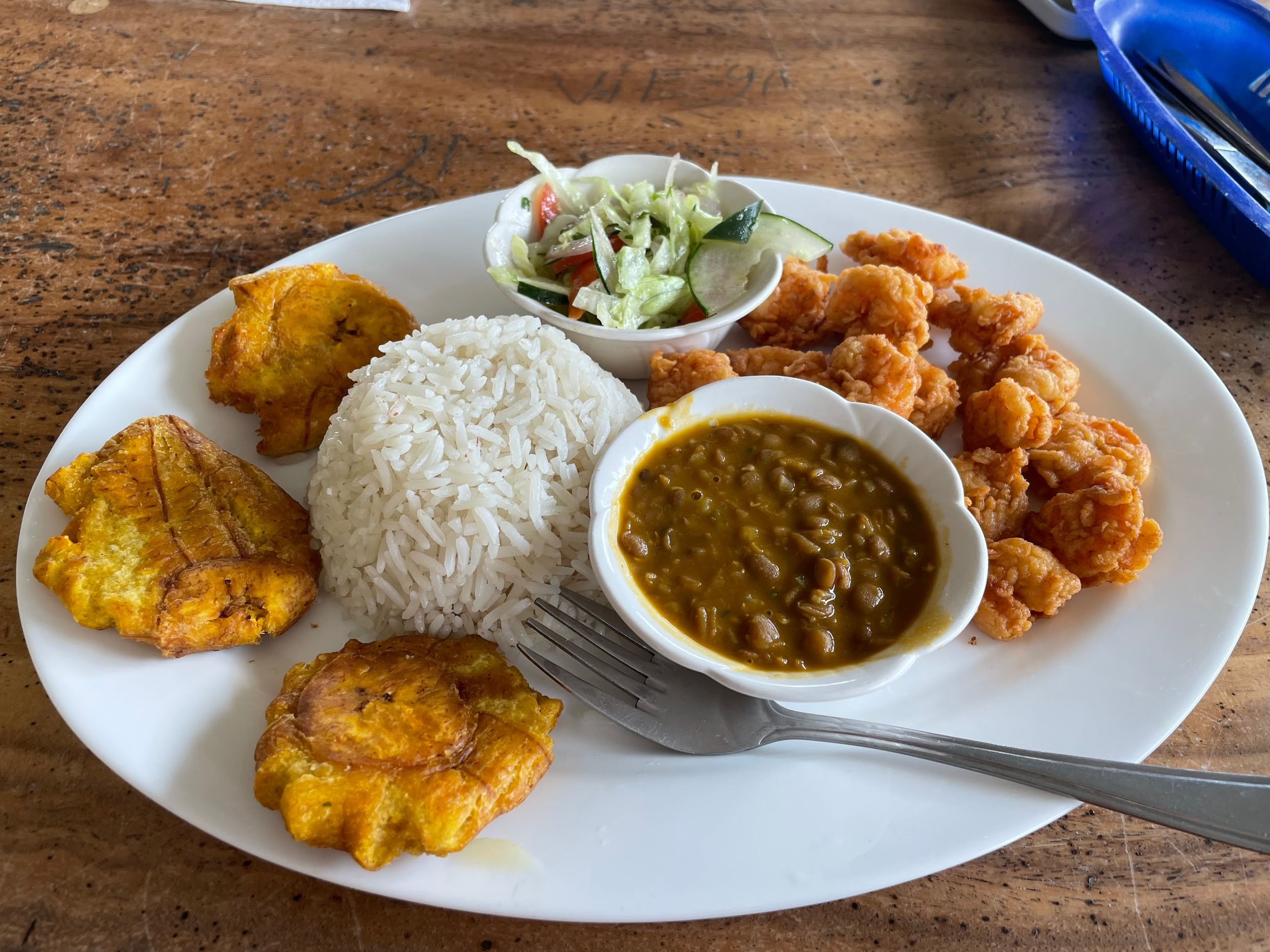
While it would be inaccurate to say that the food of Ecuador is homogeneous throughout the country, I did notice some interesting similarities and differences between the food we ate in the city, highlands, and the coast of Ecuador during the Ceiba Water for Life program. After receiving our first group of meals in the highlands of Ecuador, it immediately became apparent to me that a very popular meal combo in the region was rice, a tuber (usually potatoes or yuca), some sort of vegetable medley, and a meat item. This meal assortment didn’t change that much upon arriving in the coastal province of Manabí aside from the fact that the tubers were very often replaced with some sort of side dish made from plantains.
Obviously, this is likely due to the difference in availability of the respective starch sources in the distinct regions. Additionally, the vegetables in the coastal meals were almost always pickled, although this may have been in order to kill any microbes that may give a foreigner food poisoning. Something else I noticed that interested me was the fact that the drinks we were served changed considerably upon arriving to the coast. In the highlands, the drinks mostly consisted of colorful, herbal teas. However, in the coast, we were primarily served various fruit juices, again, likely due to the large amount of fruit grown in the region.

Ashton Diermeier
Hometown: Eden Prairie, Minnesota
Major: Environmental Engineering
Program: Ceiba Water for Life: Sustainability and Community Health in Ecuador
I chose this program for multiple reasons. My primary reason for participating in the experience is because I wanted to study abroad in a region with a primary language that I have some comprehension of. Additionally, I have never been to Ecuador, and I believe it will be fascinating to learn about various ecosystems of the region first-hand. Finally, I am genuinely interested in the topic of the aspects of safe water access and quantification, so this opportunity seems perfect for me.