Nepal: Maria Freese (Daily Life in Kathmandu)
“Chori! Breakfast!” is shouted down the tight staircase into my bedroom, where I sit in front of a fan on high speed desperately trying to remember how to say, “Did you sleep well?” in Nepali. I yell back, “Hajur! Ek chin!” (okay, one moment), in the best accent I can muster, slip on my chappal (sandals) and head up to the kitchen.
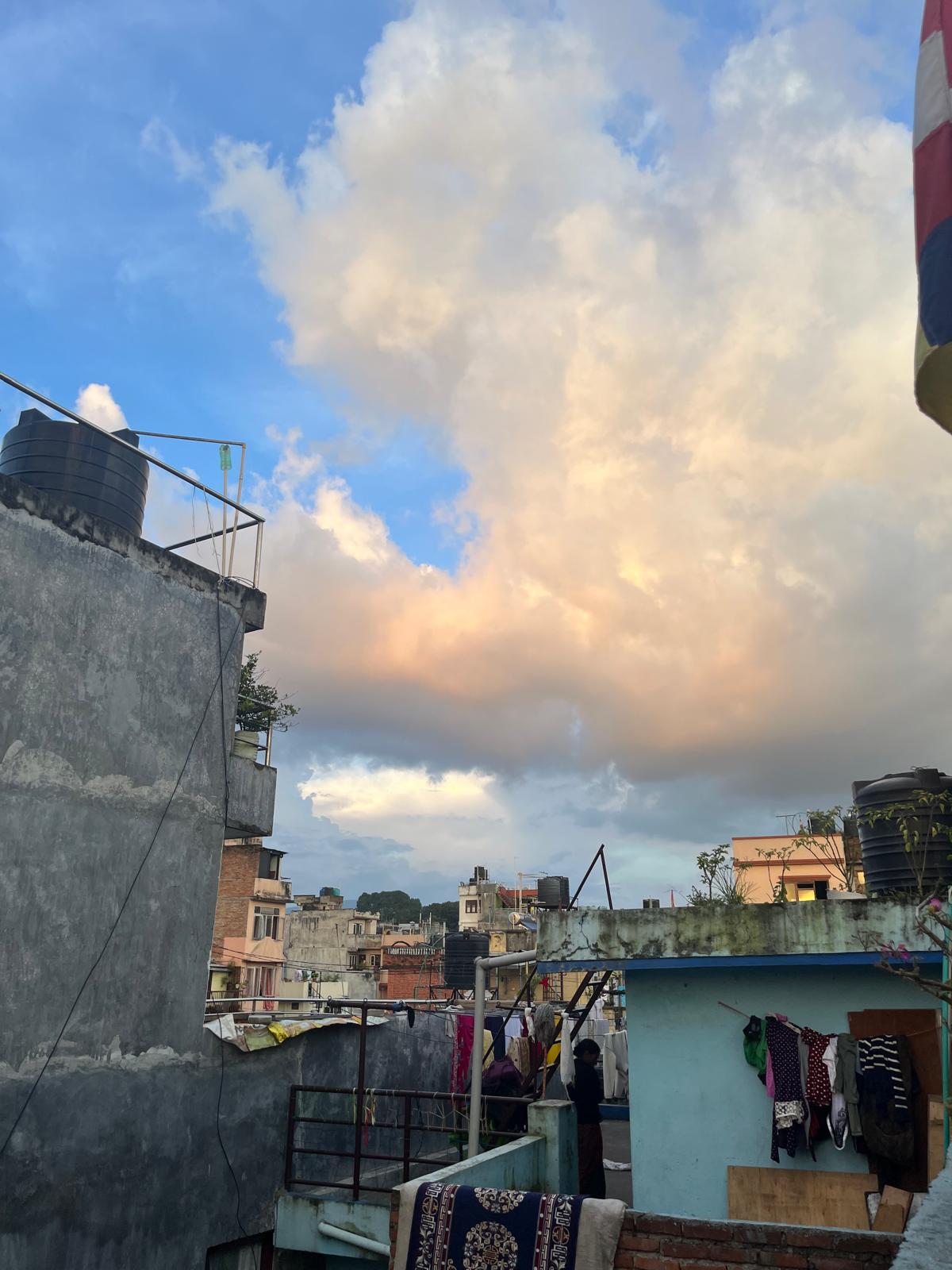
Every morning, there is something new waiting for breakfast on my homestay family’s table. Sometimes a Newari (Nepali ethnic group) adjacent donut hole called “gwaramari” or masala potatoes, and always, without fail, a hot cup of dudh chiya (milk tea). My Nepali bahini (younger sister) sometimes joins for breakfast and a quick chat, but usually, she is still asleep by the time I exit the small blue house onto the skinny streets of Kathmandu.
I live just down the road from Maitidevi Temple, so on my morning walk to the program center I always pass the musical, colorful chaos of Hindu puja (worship). Young girls in school uniforms receive tika (blessings) from the priest on their way to the bus stop and grandmothers sit, silver platters adorned with fruit, money, and spices, in their laps. The walk to my 8:30am Nepali class is a late start to the morning for the people of Kathmandu, many of whom have been up since 4:00, like my homestay aamaa (mother)—making dalbhaat, washing clothes, and reciting prayer. I make sure to greet them all with a friendly “namaste, subha bihani” (hello, good morning) and watch their faces light up at my basic Nepali.
At the program center, Dorjadai makes me a latte and we gaphsaph (gossip) in the most broken Nepali-English language exchange, knowing the sillier we sound today, the more we’ll know bholi (tomorrow).

Maria Freese
Hometown: Duluth, Minnesota
Major: English
Program: SIT Development, Gender, and Social Change in the Himalaya
I am most excited to learn about smaller more rural villages we will visit in Nepal and what life is like there. How are the social and caste systems functioning there and how is it different than urban areas?
I like that the structure of this program is not on a US type university campus. It is much more immersive in the culture and language, with a small cohort.