Sri Lanka: Galina Vartanova
Program: UW Global Health Community Health & Asset-Based Community Development in Sri Lanka, Winter Intersession
Galina’s Majors: Biology, Global Health
What is your most memorable experience from your program?
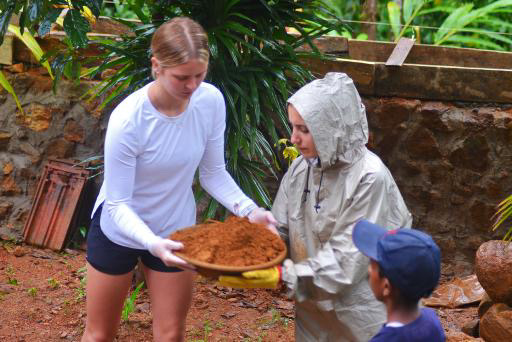
My favorite part of this study-abroad experience was the village stay because of the permanent relationships I was able to make with the community. While we were there for the Sarvodaya Shramadana (field experience), this village visit was more than just helping rebuild the preschool or painting a schoolhouse; it was most impactful by showing us the culture in the village. One part of the village culture that resonated with me the most was the celebratory ceremony at the end of our stay where I was able to see a new style of dance and enjoy the music that accompanied the motions of the dances. The Sarvodaya philosophy describes four treatments for group awakening and one of them included equality (samanathmathawa). I felt intense samanathmathawa during my village stay where I would engage in tea time, shared dinners, ceremonies, shramadana, and share the beautiful environment that the villagers lived in.
During my study abroad experience, I visited an Ayurvedic hospital. This visit was a pivotal moment in my study-abroad experience. I thought it was very intriguing how natural remedies and preventative care with a patient-centered approach were used in this traditional healing medicine.
Describe your internship, research, or fieldwork and how the experience helped advance your career or studies.
Experiencing village life in Sri Lanka has been an eye-opening experience for me. During my time in the Nuwaraeliya village, I was able to gain a deeper understanding of the operation of the village and the meaning of health and wellness there. One aspect of village life that stood out to me was the extreme sense of community there and the straightforward acceptance of everyone including us students during our stay. Instantaneously we were welcomed by a beautiful cultural ceremony and greeted with handmade gifts from the villagers. The cultural ceremony upon our arrival immersed me into the culture of the village with the unique dancing, singing, playing of instruments, and cultural attire that I got to see. Additionally, while there was a significant language barrier between me, and my host parents, we were able to share some laughs during some of the noticeable miscommunication and this allowed me to build a relationship very quickly with them. There was also a power outage on the first night of our stay and navigating through the dark and eating the delicious meal that was prepared for us made the experience more memorable while it was unexpected. I felt like my host mother was like my second mother during this trip. She had a warm, and comforting presence making me feel like I was accepted as her own. Initially, the thought of staying at anyone’s home made me a little bit uncomfortable, but this feeling vanished with the hospitality that I mentioned in my host family’s home. This made some of the personal difficulties that I was facing on this trip feel less consuming. Meeting such kind people in the village, made me think that everyday living in Sri Lanka especially in smaller communities like villages is full of people who are there for each other and support each other unconditionally. This was seen during the Shramadana as well where members of the village gathered together to contribute a helping hand to some of the improvements that were being made to the village. What resonated with me was hearing of the members who showed up from other villages to help. This especially reinforced the idea that everyday life in Sri Lanka means that people show up for each other while not expecting something in return. I’m not assuming that that is always the case, but my own experience and observations of the collaboration that was made in the village and outside the village show me that oftentimes the people were more kind and proactive to tackle some of the problems that they were facing. On top of all this, I paid a visit to a village where villagers were significantly affected by CKDu (Chronic Kidney Disease of Uncertain cause). During this visit, the villagers affected mentioned in touching interviews that we had with them, some of their most vulnerable experiences with the difficult disease. While mentioning the obstacles that CKDu has placed in their daily life, they mentioned that they receive much of their community’s support for their condition. All of the knowledge that we gained on daily life in Sri Lanka through meeting members of the Nuwaraeliya village and the CKDu-affected village shows the importance of social determinants of health on the well-being of individuals. The concept of the social support theory suggests that people surrounded by strong family and community support tend to be healthier. While certain conditions like CKDu are irreversible, it is clear that social support reduces the burden of this disease on those affected. I suspect that many individuals in the village where we stayed and the village affected by CKDu continue to stay healthy and proactive in their community because they have the social support that could pick them up when they face some hardships. Overall, this time has been a wonderful opportunity for me to witness firsthand the intertwined nature of health, resilience, and community in Sri Lanka, leaving me with a profound appreciation for the strength of the people that we had the pleasure of meeting on this study-abroad experience. I will take this knowledge with me to my future career in healthcare to be able to give the most tailored treatment to unique groups and individuals from differing backgrounds.
How will your experience benefit you in the future? How might it affect your future career or studies?
During my study abroad experience, I visited an Ayurvedic hospital. This visit was a pivotal moment in my study-abroad experience. I thought it was very intriguing how natural remedies and preventative care with a patient-centered approach were used in this traditional healing medicine. This gave me insight into a more holistic approach to medicine. Therefore, the information that I gained from this experience broadened my sense of cultural humility and emphasized the importance of patient-centered care. As my goal is to be a future physician, I aim to bring much cultural awareness and compassion that I encountered in Sri Lanka to work with me.