Ecuador: Klara Stelzer (Sustainability in La Esperia)
Sustainability in La Esperia
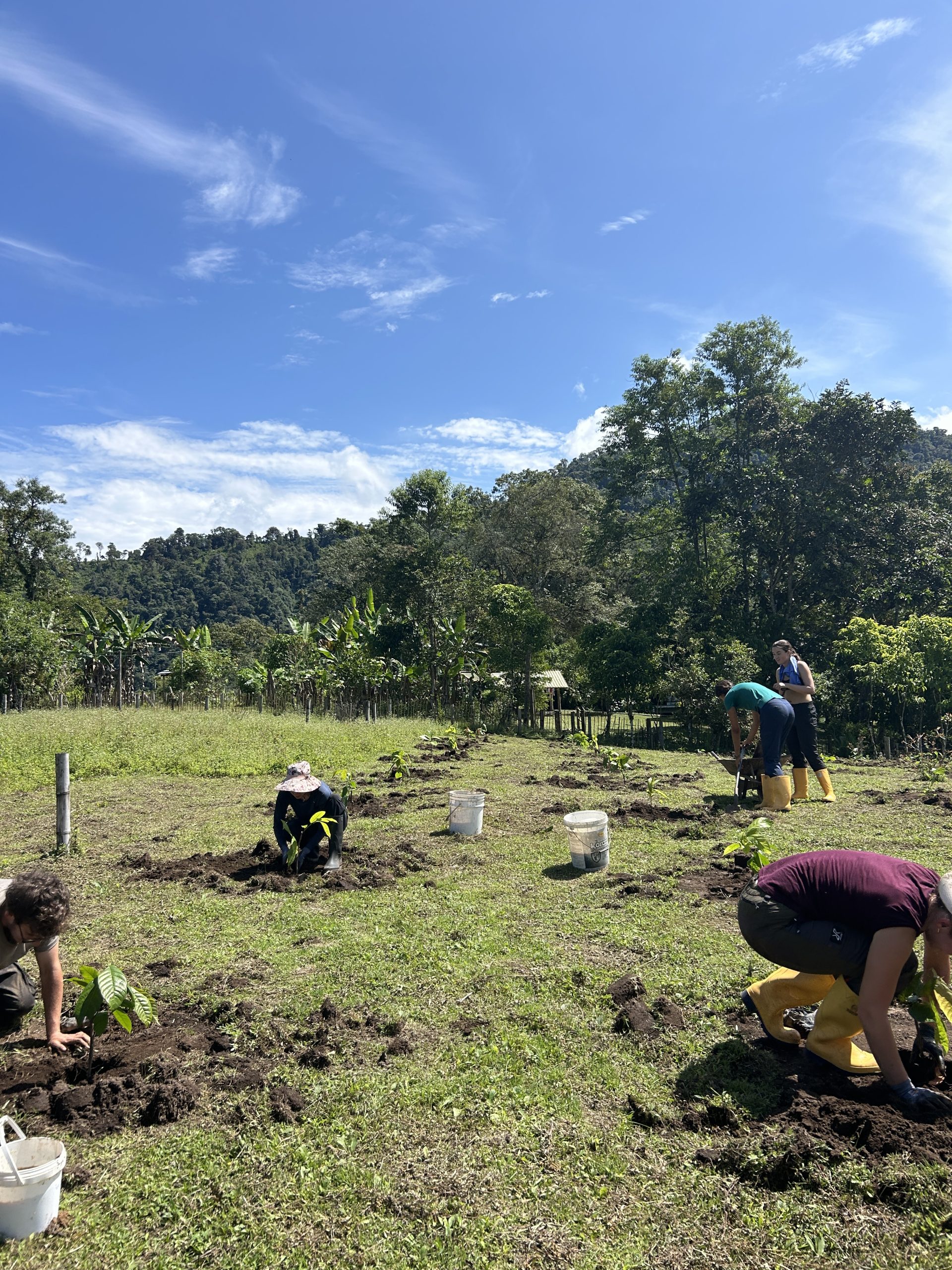
During my internship at La Hesperia, a reserve with 800 hectares of land in the Eastern Andes, I observed, learned, and engaged with many sustainability-related practices. The goal of the reserve is to conserve the existing forest and educate communities on their sustainable practices. In the few days I have been here, I have seen many organic farming practices in this self-sufficient reserve. Avoiding monocultures, they plant a wide range of fruits and vegetables as well as many medicinal plants. Additionally, their farm houses cows, sheep, goats, and one (large) pig. The first day I arrived, I helped plant cocoa and coffee. We used sheep manure as fertilizer while another group built a fence around the plot with bamboo grown on the farm. The farm avoids using any herbicides or pesticides and works to find natural remedies such as adding calcium to the holes that we dug to put the cocoa and coffee into.
I have observed little waste at the La Hesperia reserve and energy is conserved in every way possible. An example of this that I have never seen or heard of before is a solar-heated shower. There is a long pipe where the water is heated by the sun during the day instead of using a hot water tank. Also, any leftover food from meals is fed to the pig to avoid food waste.
Seeing firsthand the simplicity of using less waste has inspired me to incorporate aspects of what I have learned on this farm/reserve into my personal life once I finish this internship. Composting, eliminating unnecessary single-use plastic items, and being mindful of resources I use (energy, water, etc.) are all easy actions that myself and others can take to switch to a more sustainable lifestyle.

Klara Stelzer
Major: Genetics and Genomics, Botany
Hometown: Oshkosh, Wisconsin
Program: Ceiba Tropical Conservation Semester: Galapagos, Andes and Amazon