Ghana: Global Gateway Summer 2025 (A Day in the Life 1)
Faith E: Places: Favorite
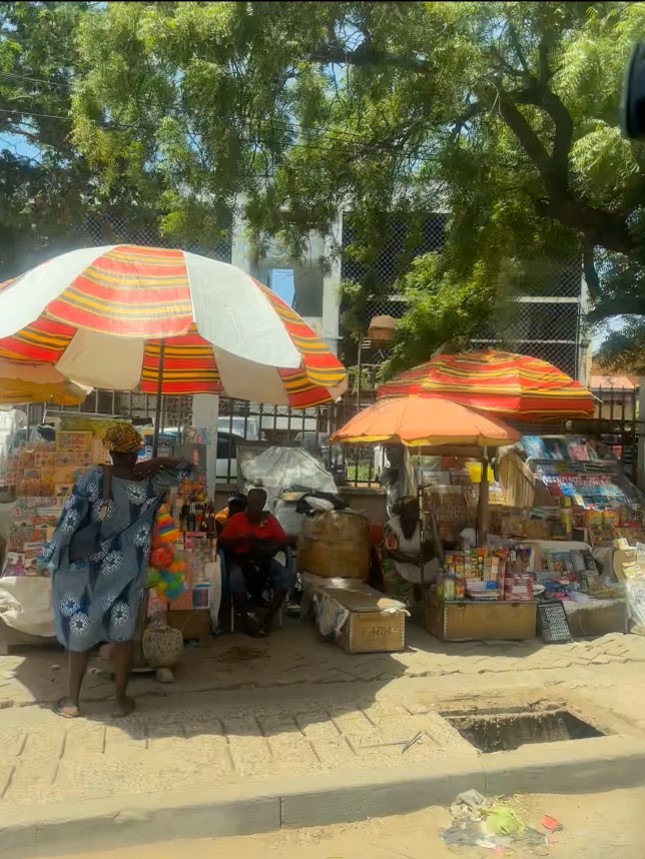
Since arriving in Ghana, my favorite place has been the Kantamanto Market in Accra. This location is known as the world’s largest secondhand clothing market and is more than just a place to shop. The authenticity of this experience was one that had to be felt in real time as no article, video, or lecture could fully encapsulate it.
When we arrived, we were immediately submerged in the market’s energy. Women, many with children strapped to their backs, moved gracefully through traffic with large baskets balanced on their heads, filled with everything from food to water to everyday goods. Under the blazing sun, they weaved between cars and tro tros (shared vans), selling their items to passersby. The red traffic light signaled an opportunity—not a pause, but a moment to push forward. When the light turned green, it was time to step aside as vehicles surged ahead.
Stepping off the bus felt like walking into a beehive: constant motion, noise, and people coming at you from all directions. Shops lined the roads, each specializing in something different—dress shirts, leather shoes, sunglasses, and many more.
Some stalls didn’t sell products at all but offered services like tailoring and ironing. What truly amazed me was how resourceful and hardworking the vendors were. Despite limited access to modern equipment, they made do with what they had—using natural sunlight and energy-efficient methods like traditional charcoal irons.
As we walked through the market, we drew attention. Many locals stared in surprise and shouted, “Oborɔnyi!” or ,“Americans!” Their reactions were full of curiosity and excitement. What stood out most was the attitude of the people. Even in challenging conditions, many remained joyful and hopeful. Their determination, pride, and warmth made the experience unforgettable.
Ola H: Places: Routine
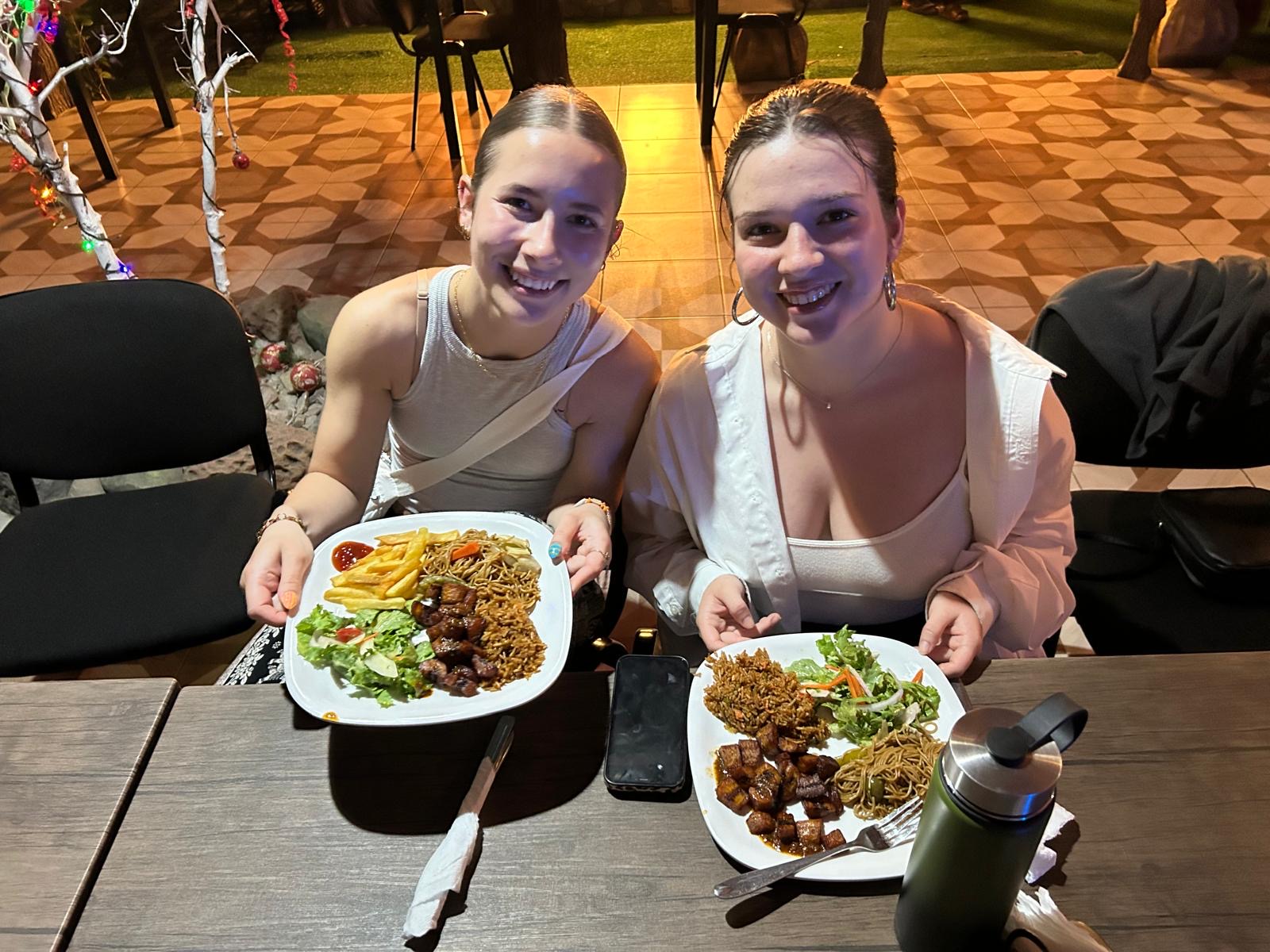
Traveling throughout Ghana has allowed us to experience the bustling markets of Accra, the humbling history of the slave trade in Cape Coast, and the university life in Kumasi. However, these experiences require many long bus rides and hotel moves, making establishing a set routine every day difficult. Despite our constantly changing classrooms, one place that is part of my daily routine is the lunch table with my cohort.
No matter where we have lunch, we always sit at a large table together, where we can try local Ghanaian foods, ask questions, and talk amongst ourselves. Usually, no one sits next to the same person, which allows us to get to know everyone in our cohort better. Our conversation topics range from discussing our activities from the day and asking questions about Ghanaian culture, to our lives in Madison and plans for the future. Everyone from our cohort is studying something different, which brings a variety of knowledge and perspectives to our conversations.
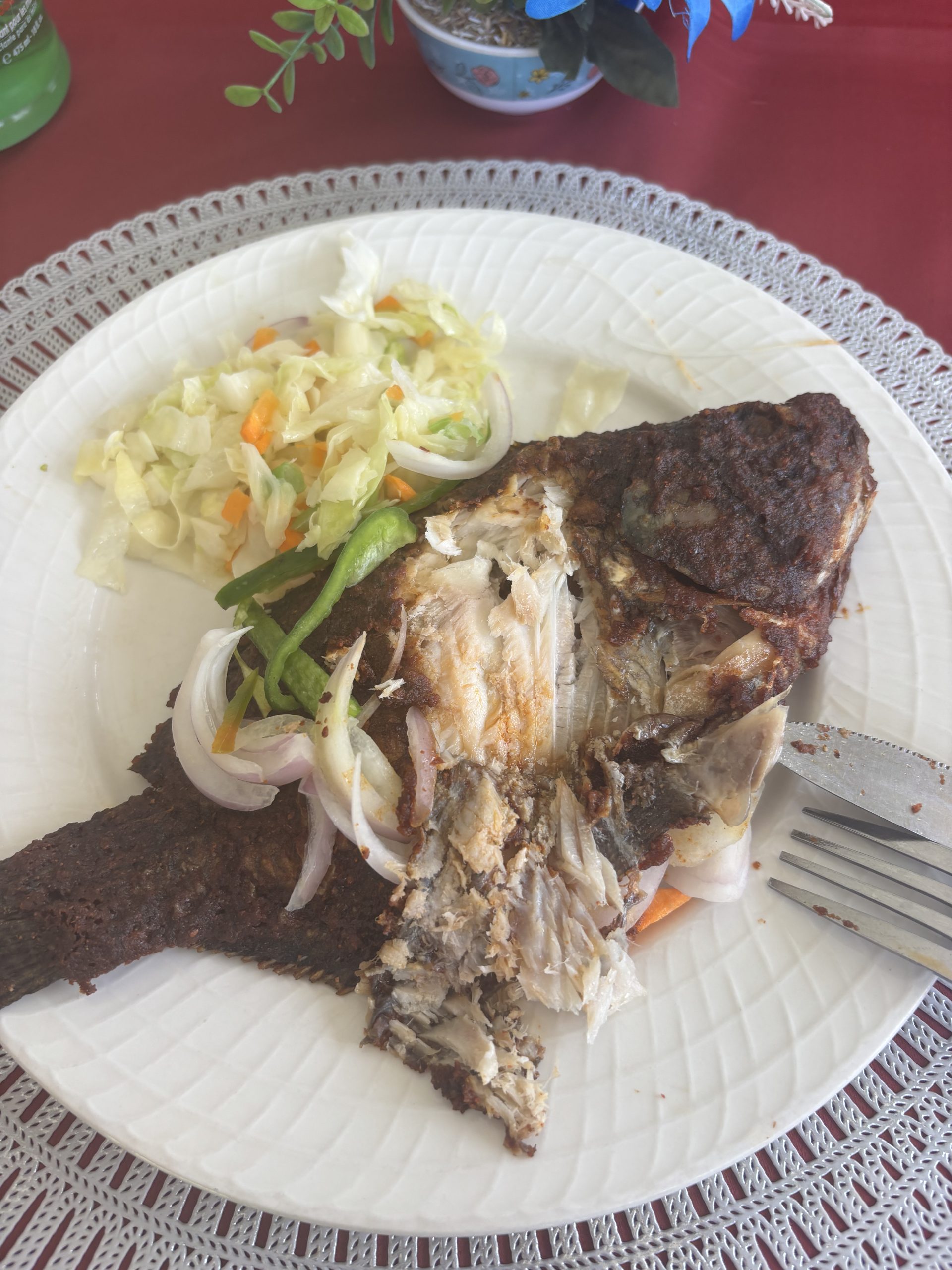
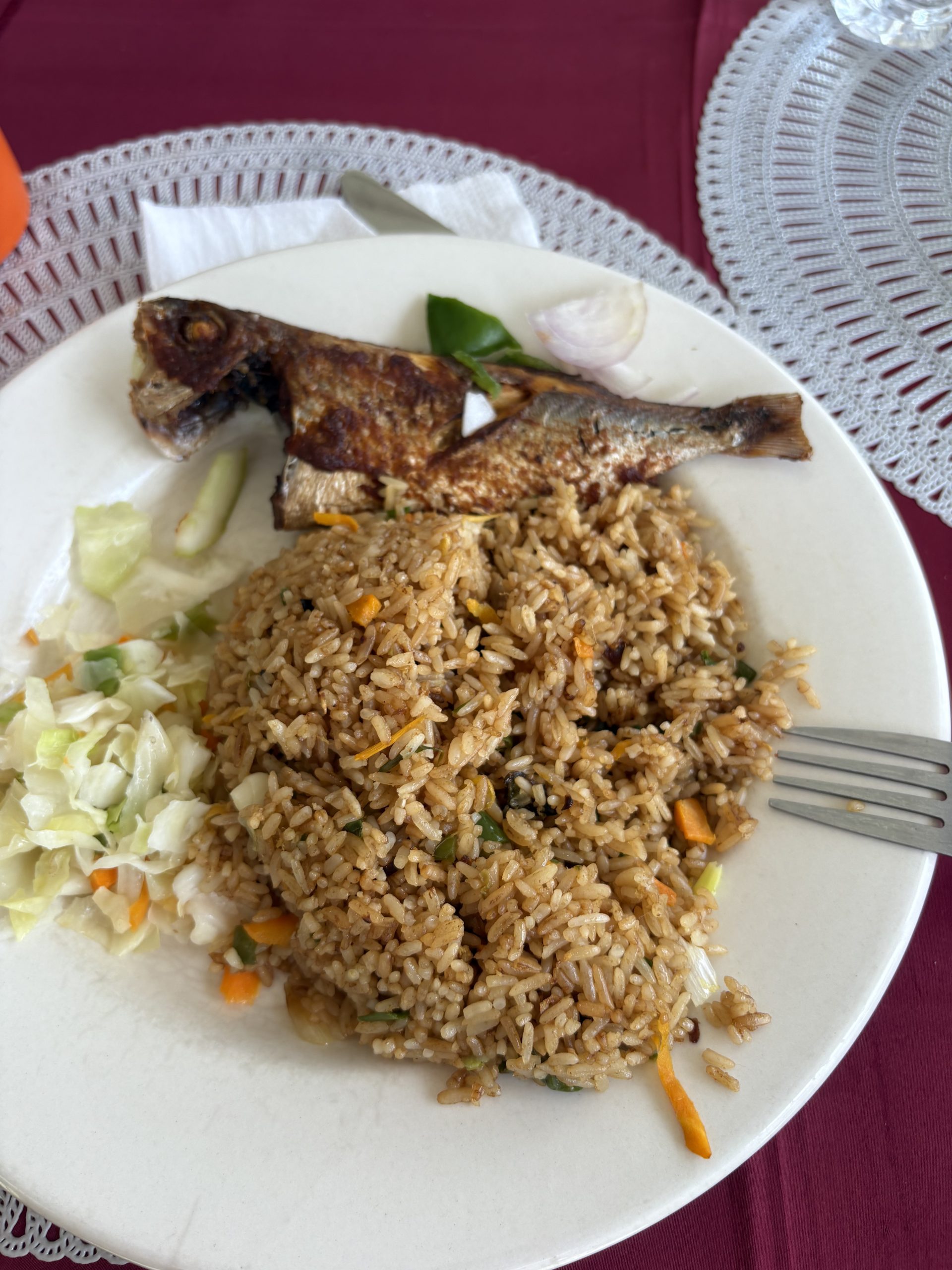
One of my favorite lunch table moments was when we visited Kwame Nkrumah University of Science and Technology because I had the opportunity to sit near Professor Dorothy Amenuke, a representative of blaxtTARLINES, and my professor, Dr. Mary Hark. They taught me how to eat a grilled tilapia, and I was able to ask questions about other Ghanaian foods I had encountered, such as Fufu and Banku, and learn about their artwork and projects.
Elise K: Daily Life in Legon
Most of our days are set up similarly during our time here in Ghana. Each morning, I attend breakfast, which includes a range of choices between toast, omelets, fresh fruit, and more. Following breakfast, we depart for our first site visits of the day, listening to Afro Beats chosen by our driver, Eric. I connect most with the Ghanaian culture while in the bus as I sit next to the window, watching people interact, noticing cultural patterns and symbols, appreciating the kayayei, and observing the plethora of street vendors.
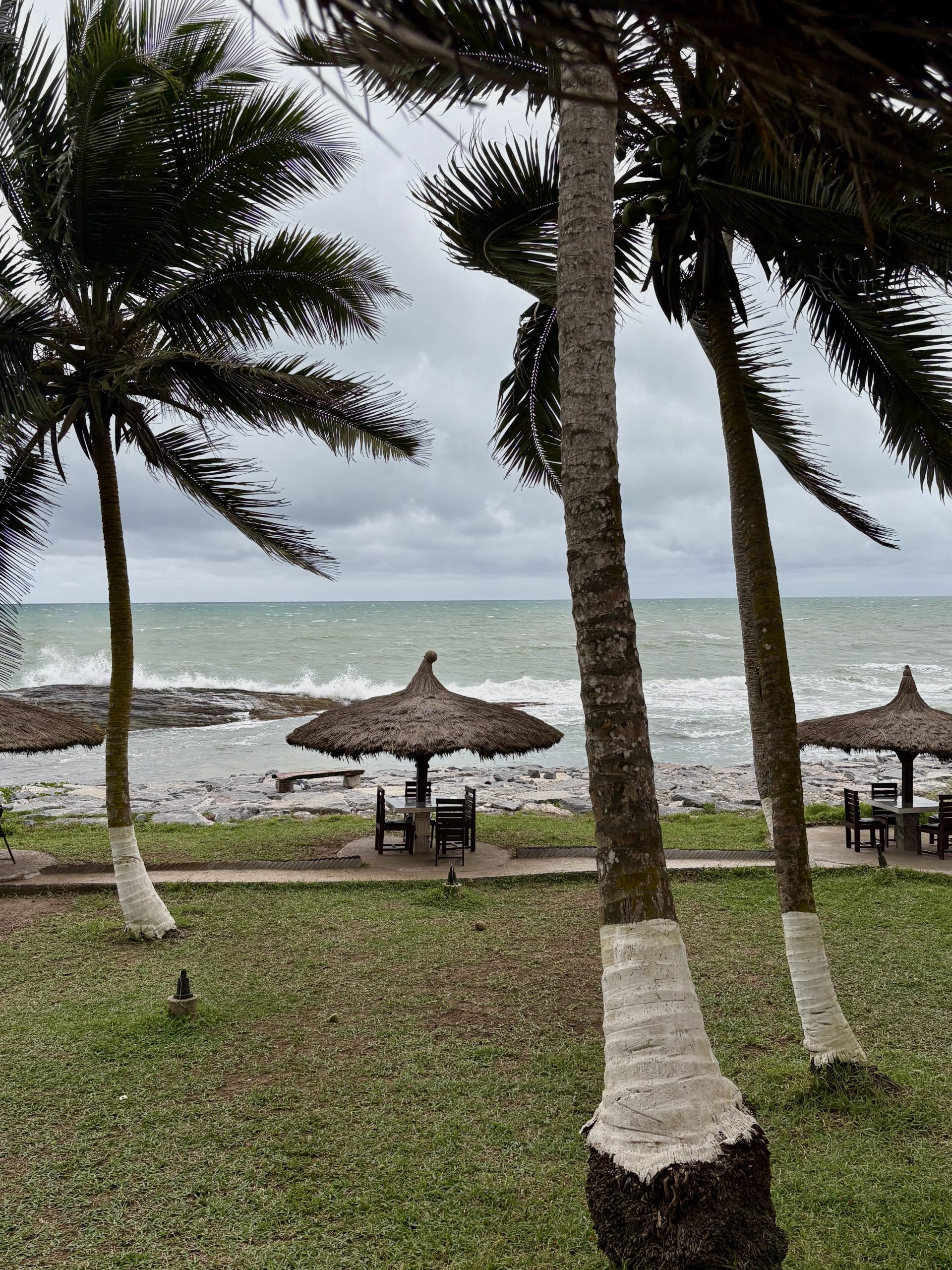
After our excursion, we eat lunch, which ranges from tourist spots to a beautiful open-air restaurant on the coast. Sometimes, we are lucky to be accompanied by mentors from our morning activity. Our schedule after lunch depends on the morning; If we have a slower morning, then we will have a second activity in the afternoon but if not, we will head back to our hotel or have a class meeting. During our class meetings, we ask questions about what we observed throughout the day, have meaningful conversations about our experiences, and dive a bit deeper into how it impacted us.
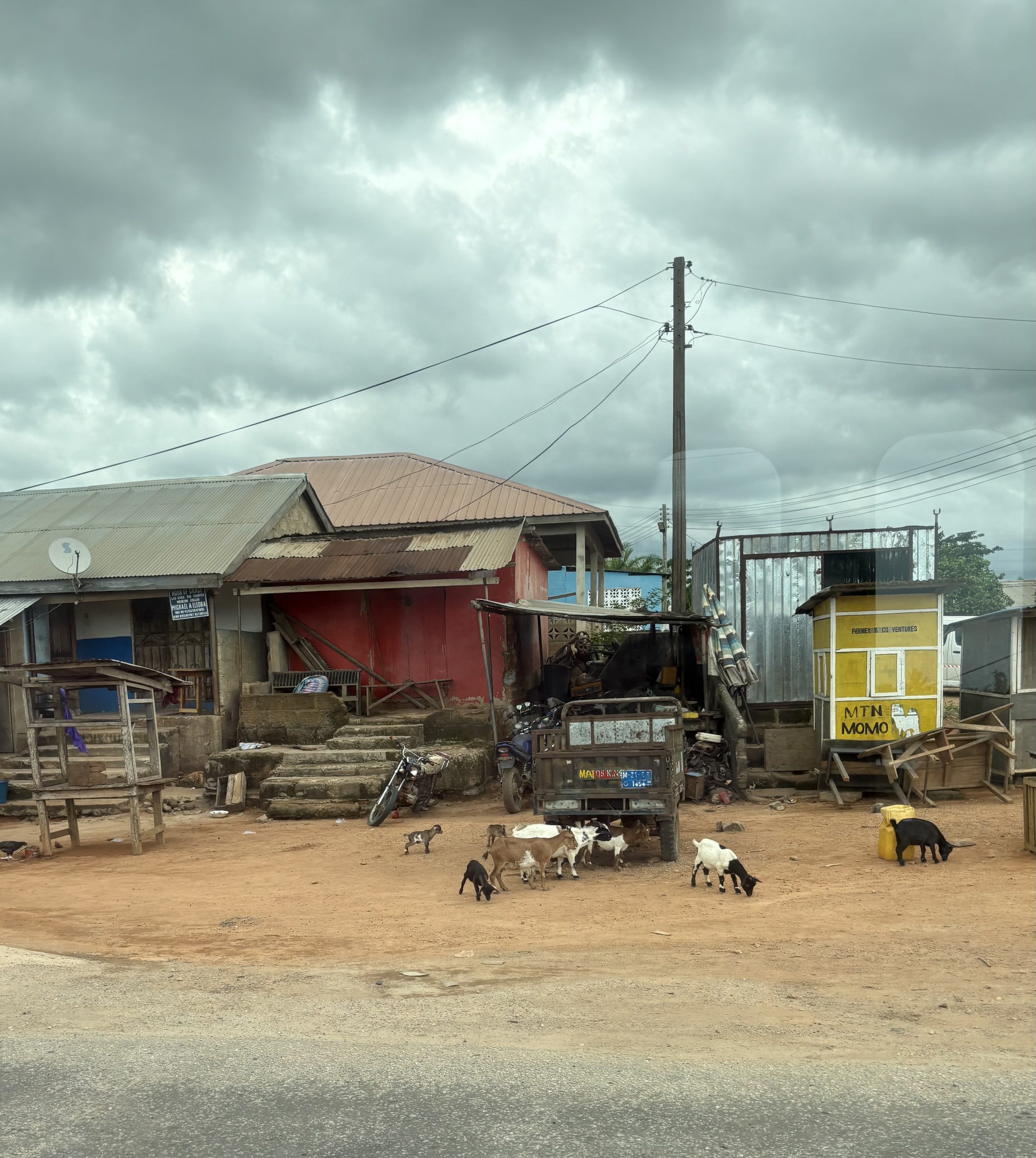
Dinner is typically a time for us to make decisions for ourselves as many are not pre-planned. Personally, I purchased peanut butter and jelly, with an authentic local bread, to make sandwiches. This helps me to lower the cost of being here and gives me the opportunity to enjoy time by the pool or explore other areas outside of the food industry.
Other than looking out the window, I connect with the culture through human interactions. I have picked up a few words of Twi, the native language, like Me ho y3 and Medaase, which mean I am well and Thank you. Specifically, more connections were formed in Kumasi, where we met students from the university. We received lectures from their faculty, received art department tours, learned to traditionally tie and dye, and soon, we will teach them how to book bind, with the help of Dr. Mary Hark, our professor from UW–Madison. I look forward to the next three weeks to continue absorbing the culture, learning more words, and making the most of the amazing opportunity to spend time in Ghana.
Adaobi N: Food in Legon – Nigerian Girl vs. Ghanaian Food: A Love Story (With a Side of Jollof Wars)
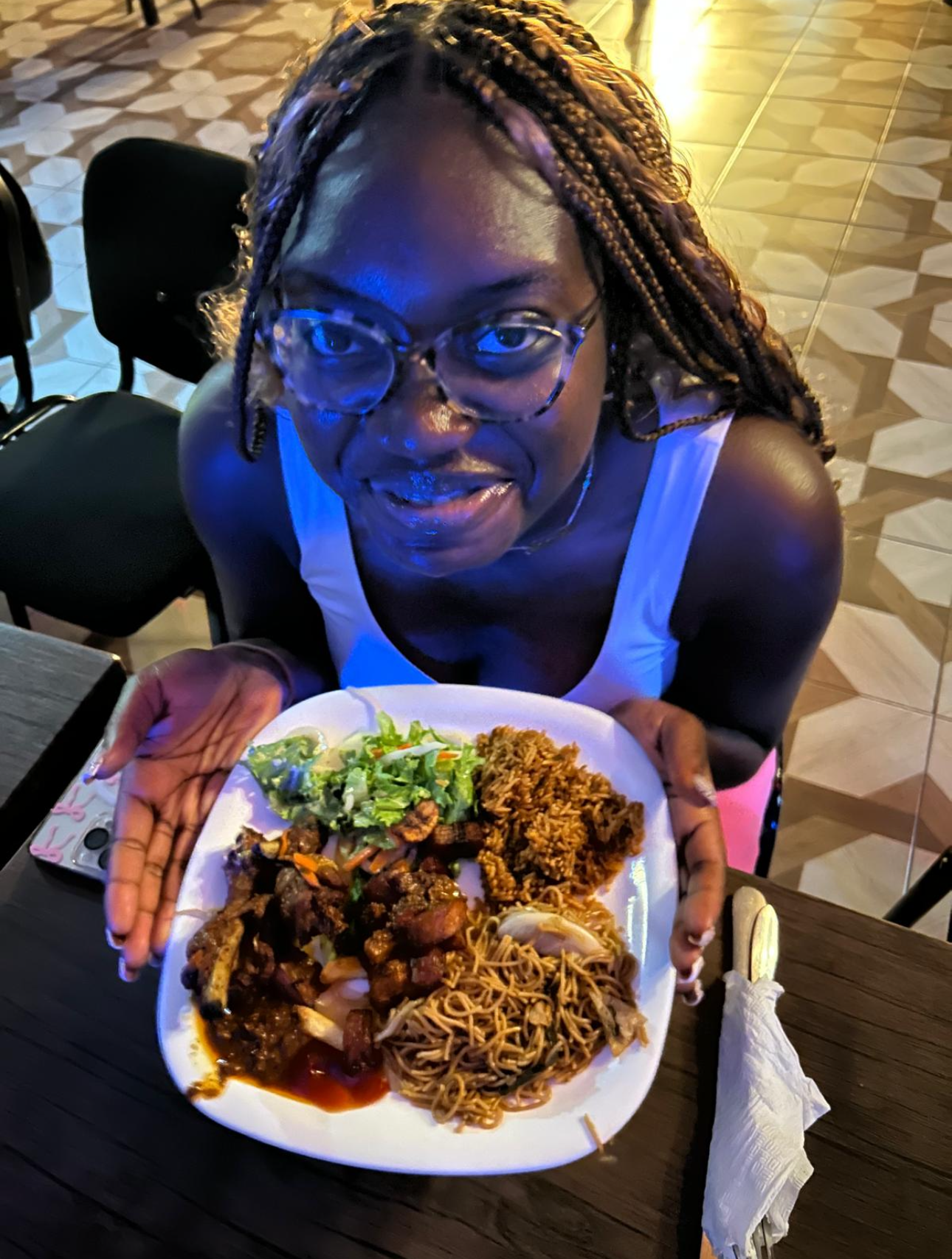
As a proud Nigerian, I came to Accra ready. Ready to learn, ready to explore, and most importantly, ready to eat. Ghana did not disappoint.
Let’s start with the groundnut soup with fufu. I’ve had versions back home, but this one hit differently. Thick, rich, and perfectly spiced, the soup hugged every bite of the soft, stretchy fufu like it was meant to be.
Then came banku with grilled tilapia. Banku was definitely new to me. It’s got that fermented, kind of stretchy like amala but more solid, and when dipped into the pepper sauce and paired with the smoky tilapia? Chef’s kiss. I had to pause mid-meal just to process.
And of course, I couldn’t leave out the Ghanaian jollof. It was good… really good. But let me be clear, Nigerian jollof still holds the crown. I said what I said.
What stood out most wasn’t just the food itself, but the way food brings people together here. Every meal feels like a celebration, of culture, of community, of slowing down and enjoying the moment. Even as I represent Nigeria through and through, Ghana has earned my respect (and my stomach’s loyalty).
I came here for a global learning opportunity and I’m leaving with a full belly, a new renowned love for tilapia, and a few Ghanaian snacks tucked in my suitcase!