Iceland: Evan Burmeister (Learning on Excursions)
This past Tuesday my Icelandic Nature and Cultural Heritage class took a field trip to the Grotta Lighthouse on the westernmost of Reykjavik’s peninsulas. It’s a small lighthouse situated a quarter of a mile from the mainland across a thin tongue of beach that floods with the tide, thus positing an educationally valuable resource in an otherwise densely urbanized area just a short bus ride from the university.
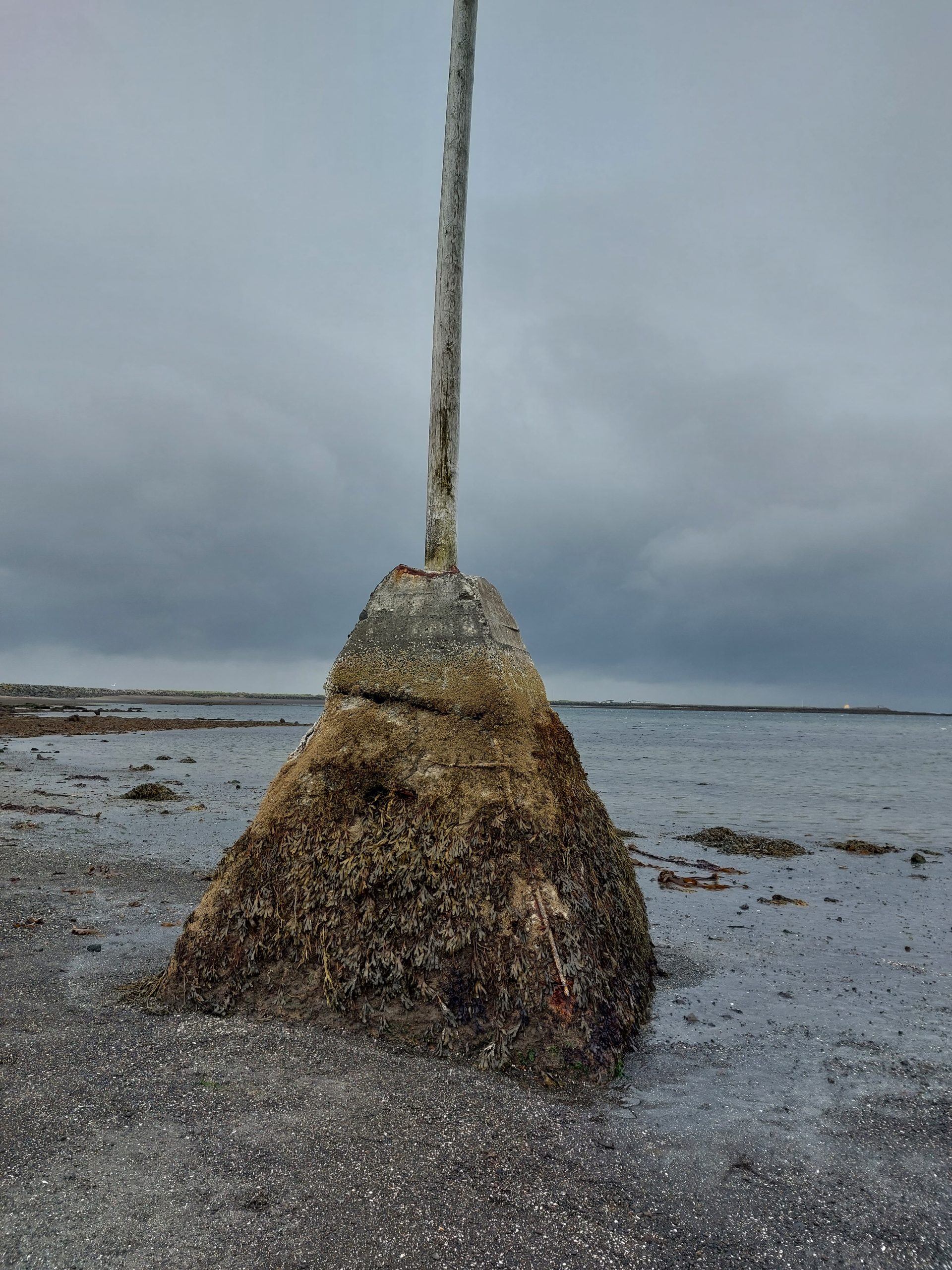
We were tasked with cataloguing the biology of the shore and tidepools, so as to conjecture on how the ecosystem and its constituents were influenced by its semi-aquatic character. The nature of this work was predictably slimy and wet; one of my fellow exchange students from California went completely barefoot across the rotting red and brown kelp heaps aquagraphed over the beach, rather braver than me (in the end I was the one with wet socks). The biological detritus of the North Sea we inspected that afternoon was mostly dead; dead crabs and dead jellyfish and dead sea gulls, dried up and salt scourged in the grim repose of Neptune’s own Icari, flown too far from home and smashed to pieces on the rocks for their troubles.
Of less mortified nature, we found sponges nearly everywhere. Pointedly yellow, their size and shape resembled that of loaves of bread, and their scattering across the beds and pools evoked visions of a successful bakery on the sea floor, selling prodigiously to their maritime clientele. We found sponges inhabiting seemingly every possible niche of the tidepools and in every possible manner. They were growing on sticks and under stones, the larger sponges were the dwellings of smaller tidal creatures like mussels and oysters and snails. I came away from the experience greatly impressed by the humble animal. As I navigate the challenges and experiences of the rest of my semester abroad I will remember and emulate the sponge.
Evan Burmeister
Hometown: Oregon, Wisconsin
Major: Agricultural Economics; Environmental Studies
Program: University of Iceland Exchange
I want to further my education as it specifically relates to green energy and applicable economic utilization. In my studies at UW Madison, I have learned a lot about sustainable practices both here and abroad. This has included how Iceland manages to power itself almost wholly off green energy, along with it’s sustainable harvesting practices concerning fishing. I am interested to learn more about the integration of agricultural policy and practice with environmental renewal and restoration.