Spain: Ashlie Hewett
Program: English Social Club (ESC) English Language Teaching Internship, Summer
Major: Psychology
Describe your internship, research, or fieldwork and how the experience helped advance your career or studies.
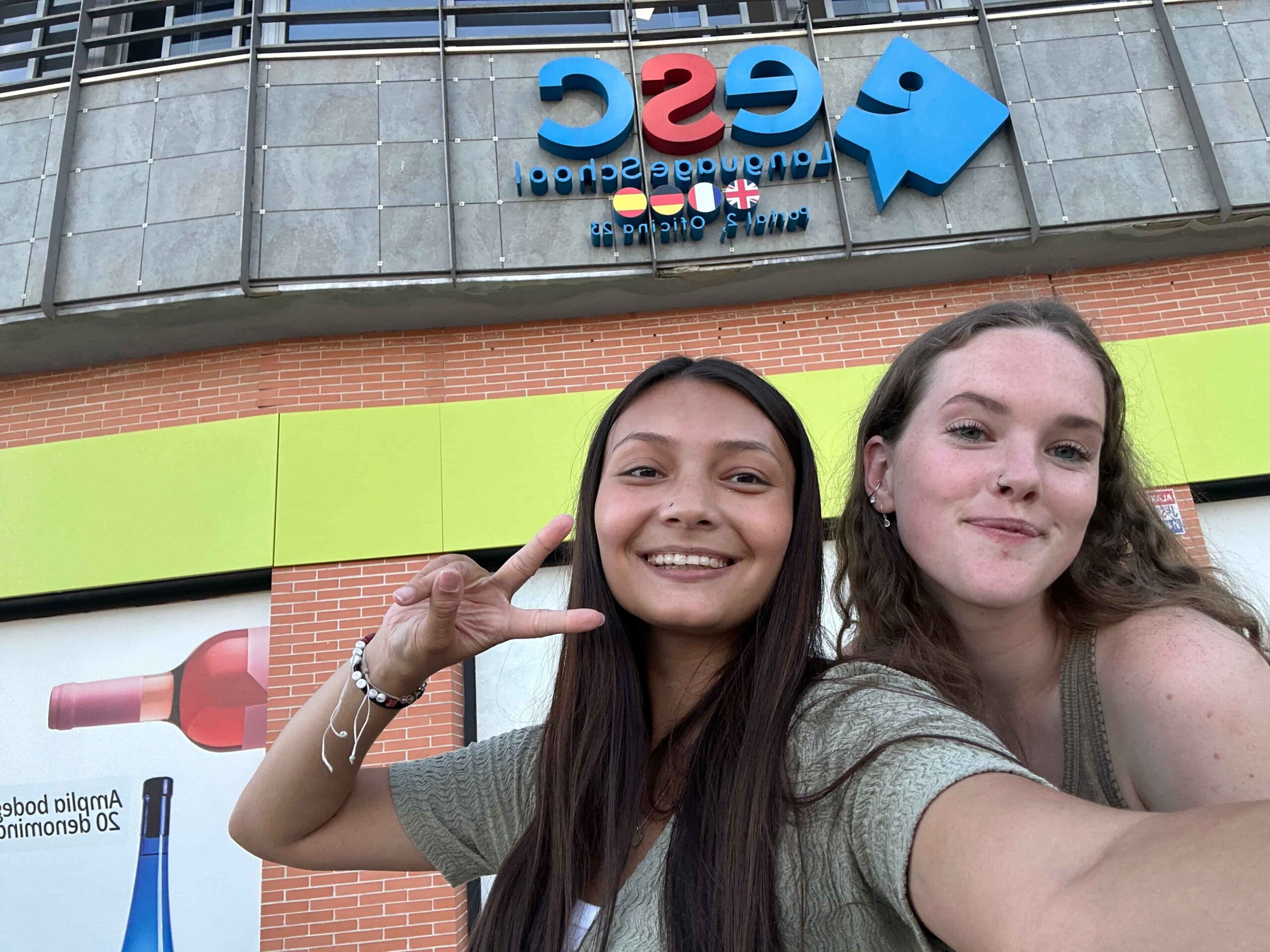
At ESC, I was tasked with running classrooms full of English learners, ages ranging from 5 years old to 40 years old all at different levels of proficiency. Having arrived during peak proficiency exam season, I had to cater to the needs of the students who were preparing for their exams. Every Sunday, I found myself planning lessons for the upcoming week, referring to textbooks I had never seen before but that my students were familiar with. Developing this sense of adaptability is key for any future career because you never know what you will encounter in the future, and I am grateful for this internship, which indirectly taught me this skill.
More so, I learned a lot about myself and my teaching style. I found that I truly value teamwork and utilizing games as a way to further one’s learning — my students loved it too, especially the games. There was a class where I made an entire plan from scratch and I focused it around the game Mafia. My students had to figure out who the Mafia was but they could only use English. Overall, this internship helped me create a bond with my students and strengthened my value for teaching. I am eternally grateful for how supportive the fellow full-time teachers and my supervisor were, and I still remember our conversations to this day.
What did you learn about yourself or the world because of your experience?
This was my first time out of the country, and I was the first person in my family to ever travel to Spain, let alone Europe. I had some background in the Spanish language — I had been studying it since 8th grade and I had grown up around people who spoke Spanish. I was semi-confident that I could get around by looking up directions or writing things out, but I struggled with my speaking skills. When I first arrived at my dormitory, it was a weekend, so the main office was closed. It was a hot summer’s day in Sevilla and I had a suitcase that was the size of my entire torso. The front doors to the dormitory were locked and no one was around to help me get in. I came to the daunting realization that I had to call the 24-hour staff member to let me in… in Spanish. In broken Spanish, the staff member somehow understood my request and they let me into the dormitory. With the limited resources I had, I managed to move into my dormitory — even if it wasn’t as smooth a process as I had hoped. This created a newfound confidence in myself and my ability to adapt and problem-solve, even in spaces I am unfamiliar with; I had to use these skills quite often while in Spain.
Overall, this internship helped me create a bond with my students, and strengthened my value for teaching. I am eternally grateful for how supportive the fellow full-time teachers and my supervisor were, and I still remember our conversations to this day.
What challenges or barriers did you face as you prepared to go abroad and/or during your time abroad? How did you work through them?
During my time in Spain, I experienced extreme homesickness and, on top of that, was sick the entire time I was there, causing me to become bedridden most days. My roommate, another UW–Madison student, would invite me to go out with her into the central part of Sevilla, but I would miss home so deeply that I could not find the energy to put on a facade and venture out of our room. I found myself staying inside most weekends, watching Bridgerton and ordering food in while Facetiming friends and family. However, the food in Sevilla wasn’t my favorite and I ordered McDonald’s quite often. I remember distinctly being on a check-in call with the advisors for the program and tearing up because I wasn’t sure if I wanted to continue on with the internship, and was debating on purchasing a flight back home before it ended.
However, I thought about how much work I put into being where I was — the interview, the application, and the fundraiser I held to raise funds for my internship. I didn’t want all of that hard work to go to waste. So, I used the travel insurance UW–Madison gave us, went to a nearby clinic and got checked out. They gave me medication to help with my symptoms, which helped enough to at least give me enough energy to start saying ‘yes’ to all the activities my roommate would invite me to. Then, I started trying to look at things from a different perspective in order to combat my homesickness. I tried to change my thinking patterns from simply “I’m so far away from my family” to “I am only going to be gone for about a month. I will be home sooner than I think.” And, of course, my family would reiterate this to me whenever I would speak to them. I believe having a support system back at home and while abroad is vital. My roommate, although we had only met once, would offer a listening ear whenever I felt homesick, and my family and friends weren’t out of touch when I needed them.
Additionally, I think it takes a lot of mental power to override your thinking. Having to go from dwelling on the fact that I am not in the environment I am used to and no longer have my usual safe spaces to trying to find the positives in being in that situation is very difficult, but it’s possible. Before going abroad, I had heard about homesickness and culture shock, the whole nine yards, but I wasn’t prepared for it. If this is your first time going abroad, I would say be prepared. Expect that you will feel all of those emotions relating to homesickness and culture shock, and navigate how you will overcome them. Expecting the unexpected is better than not. You are more powerful than your emotions; you can decide how they dictate your experience.

How did your identities impact your experience? What advice would you give to students with similar identities who are considering a similar experience?
My national identity as an American had some significant impacts on my experience abroad. Specifically in Spain, it felt like it was very easy for locals to spot that I was American. Ignorantly, I wasn’t sure what about me screamed “American.” Perhaps it was my accent when I spoke Spanish, or perhaps the way I maneuvered throughout the city… I couldn’t quite put my finger on it. When I would dine at restaurants or go to the local grocery store, I would be eager to practice my Spanish. However, I was mostly greeted with English, and I think part of that was because they assumed I was American.