Chile: Global Gateway Summer 2026 (A Day in the Life 1)
Program: UW Global Gateway in Chile, Summer
Kaylee F: Places: Routine & Favorite
We began traveling for our Global Gateway experience on Tuesday, May 26th, arriving in Santiago, Chile, the next day. Now, almost a week later, I have finally begun to settle in this brand-new environment. I could write a book about all of the similarities and differences between Santiago and Madison, and how I have navigated those; however, I want to first focus on a major component of my routine that is different from my habits in the United States.
Something I do almost every morning in Chile is eat breakfast, which for many is no different than back home. However, I would say I only eat breakfast around ten percent of the time in the States. On the first day, after eating breakfast all together in the hotel, I realized the experience is much different here. We were served fruit juice, coffee, and a main entree, all of which were extremely fresh. In addition, the food didn’t contain added preservatives, sugar, or chemicals, which I learned is a common trend in Chile. This was all a major shock to me because it is a relatively rare concept in the United States. For the first time in my life, I have truly enjoyed breakfast to the point that it is my favorite meal of the day.


My favorite place in Santiago so far has been Parque Quebrada de Macul, which is a free nature area for hiking that we went to as a cohort. We took a winding trail up a small mountain in the Andes that showcased a beautiful view from above the city of Santiago. We got free time to sit down by the river and observe the flora and fauna, which was the part I enjoyed the most because everything was so different, yet bore resemblance to what I have seen in the United States. I learned from our tour guide on our journey back down that if we hike further, we will reach a waterfall, so my friends and I decided we will return during one of our free afternoons. I look forward to this and continuing to eat the delicious breakfast at our hotel. I’m excited to see what the rest of the program has in store for me to learn and experience.
William K: Food in Santiago
From Completos to Japche Dopbab, the cuisine experience in Santiago, and the surrounding area, is immense. The city positions itself as a diasporic magnet of food influences, with some of the more influential being French and Asian cuisine. Almost every block features a bakery with cakes, croissants, and other French-inspired pastries. In our own hotel, we are presented with a range of savory choices for breakfast from American omelets to, again, ham and cheese croissants. In the same tone, there is a vast amount of Asian fusion restaurants dotting the landscape of Santiago, all with their own unique twist on the cuisine. I even tried chicken (cooked, not raw) sushi at a local spot, not even two blocks away from our hotel.
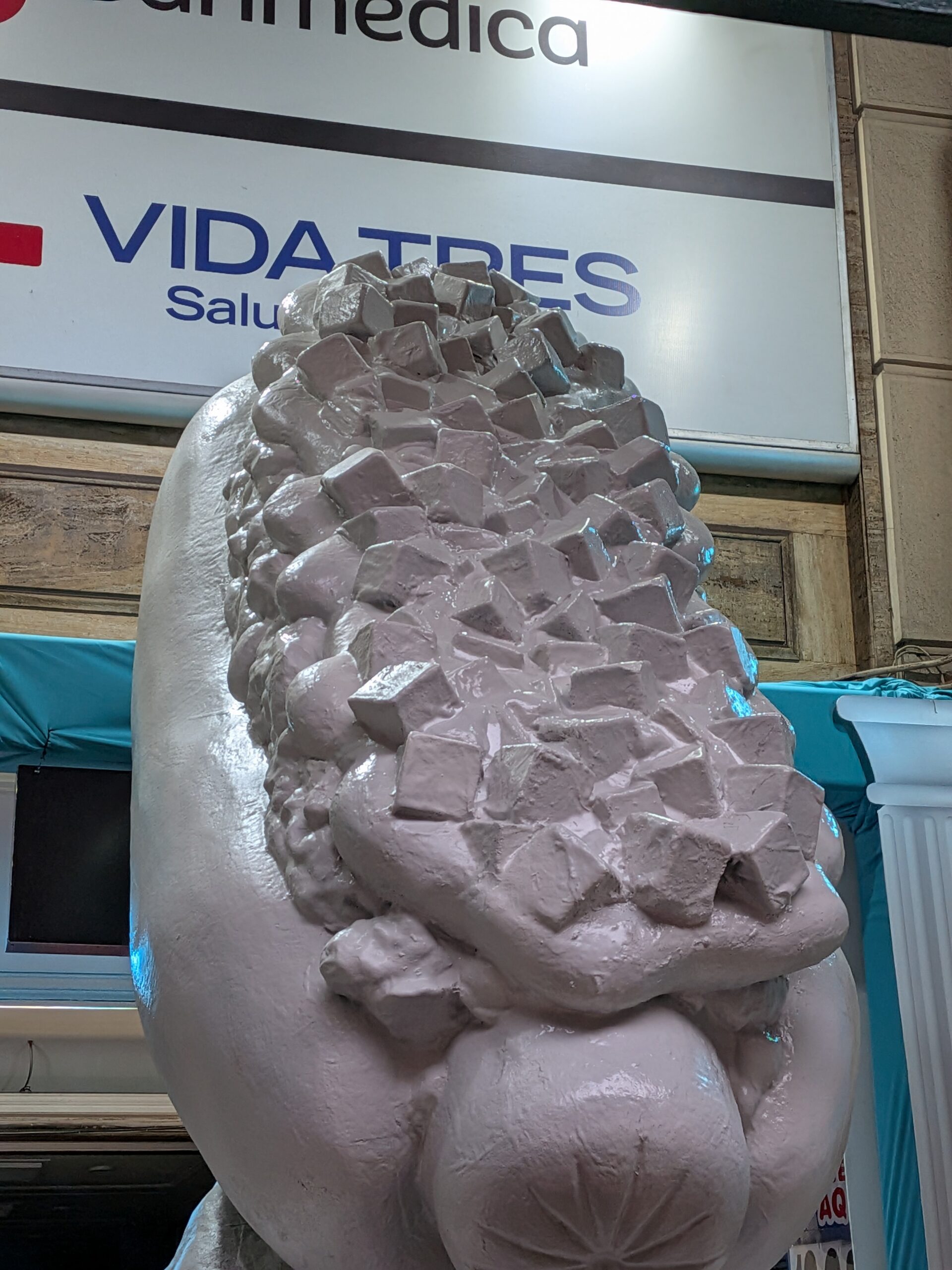
In a way, Santiago is like any major American city in its food culture. It has range and stretch—you can get almost any type of food, within quick reach, and late into the night. However, much like American cities, Santiago, and broader Chile, features its own variety of local cuisines. I tried Completo Italiano, a hot dog dressed in avocado, mayo, and tomatoes—its colors reminiscent of the Italian flag. In a rural village nestled in the Andes Mountains, I tried quite possibly my favorite food so far on this trip: Cazuela de Pollo. It’s a soup/stew made with a wide arrangement of vegetables like corn and squash. This was surprising to me since I normally despise soup. However, I think this experience has inspired me to give it a second try.

Although there are many local restaurants and chains, there are some reminders of home, chiefly McDonald’s, Burger King, and Subway. However, a lot of the menus have changed to reflect local tastes. McDonald’s even has empanadas and some items with avocado on them. Although when I went, I did not get one of those. Instead, I opted for the comedically named “McUSA” burger. The burger was at most okay, to say the best.
I think my favorite dessert I have tried on this trip has to be hazelnut ice cream. I think it has de-ranked anything I’ve had in the US. It’s a must-try. Honestly, everything here is a must-try, and I am excited and grateful for the opportunity to taste more.
Nina K: Daily Life in Santiago
After waking up and getting ready, I head downstairs to MAGDA Bistro, a cafe attached to the hotel where my cohort is staying. Breakfast includes a choice of eggs and toast, a yogurt parfait, or my favorite, a warm ham and cheese croissant. Each meal comes with a cappuccino and fresh fruit juice. Wherever you go in Santiago, you can always find two things: good coffee and the freshest fruit and juices.
After breakfast, it is time for our 15 minute walk to class. The walk is a great way to start the day as I can see the sunrise, locals walking their very cute dogs, and the busy city streets all before 9 a.m. Along the way, small cafes and ice cream shops line the streets of Providencia, the neighborhood where we all stay.


Our course, taught by Professor Sara, focuses on climate justice in Chile. In class, we discuss sustainability efforts and climate policies. Chile is a geographically diverse country with mountains, deserts, coastlines, and glaciers, which each have both incredible biodiversity but also unique environmental challenges different from one another. Time in class is spent discussing our readings, researching issues that Chile currently faces, and participating in meaningful conversations with one another. As part of class, we were given a journal where we respond to certain thought provoking prompts and reflect on our own environmental impacts and also “junk journal” and collect seemingly unimportant things and gluing them in a page and writing about it. I’ve collected wrappers from paper straws at restaurants or pieces of a paper place mat with the cafe’s name on it.

In the afternoon, we can connect classroom learning to real life experiences. Through site visits, such as Ecotix, a reusable clothing store, we can see sustainability efforts in action. On excursions, we explore Chilean history and the environment, like our visit to Cajon del Maipo. On free afternoons, my classmates and I often explore the city, visiting places like Gran Torre Santiago (the largest building in South America with a mall in it) or downtown Santiago, known for its beautiful architecture and rich history. Most Chileans walk or use public transportation like the metro or buses. Fun fact: Chile has one of the largest electric bus fleets outside of China and is just one example of the country’s commitment to sustainability.
After the day’s activities, conversations that include my awful Spanish, and some time journaling, it is time for bed to rest for the next day’s adventure!
Azalea S: Public Transportation in Santiago
Motorbikes weave between lines of cars; we wait in the traffic out of the airport as the sun rises above the Andes. In Santiago, Chile there are so many options to choose from to get from point A to point B. Home to the second largest fleet of electric buses, a subway like that of Chicago or New York, cars, bikes and people walking. From the second we arrived in Chile I was in awe of the different ways that people navigate this city of 7 million people.


Each day I wake up at eight to get to class at nine, a short 15-minute walk from the hotel we are staying at. Trees line the tiled sidewalk with fall leaves changing orange with the season, as Chile heads into their winter. Even though Chile is nearing their winter the weather is nowhere near the freezing cold Wisconsin winter and fall. Most days are in the late fifties. All the leaves changing color on the trees surprised me. I never expected Chile to have a true fall with deciduous trees and falling leaves. Each day on the walk to class we meet friendly faces and exchange greetings as we pass: “buenas”, “hola”. People care for the sidewalks outside, keeping public spaces clean and cared for, sweeping up leaves and cleaning the tiled walk.

Beep, the subway system card is named Bip! for the noise it makes when you scan into the station. Each stop in the metro station has different murals lining the walls. Stepping off at each different station is like stepping into a new world. At the Santa Lucia stop, blue tiles line the walls, creating different shapes and images all around the station. Stepping off the train at the next station down in Los Dominico’s modern renaissance figures loom over the station lining the walls. The art at each different stop is beautiful and a testament to the respect that Chileans give to their communal spaces
I’ve learned a lot about how Chileans navigate Santiago in just five days. Impressive fleets of bright orange electric buses, beautiful metro stations, and regulations that reduce air pollution from cars. All these things make up the public transportation in Santiago with infrastructure that is sustainable and beautiful.