South Korea: Global Gateway Summer 2026 (A Day in the Life 2)
Program: UW Global Gateway in South Korea, Summer
Ophelia L: Our Global Classroom
As I study abroad in Seoul, South Korea, with the UW–Madison Global Gateway and CIEE team, the entire city, and country has transformed into my university campus. While our traditional course structure includes morning lectures at the CIEE building, led by Professor David Fields, to study US-Korean relations since 1882, the real magic happens the moment you step outside the airport gates.

My absolute favorite aspect of this program is that our learning never stops when the lecture ends. Instead of just reading about history in a textbook, our class transitions directly into our many immersive afternoon excursions, whether done as a group or on our own time. Immersing yourself entirely in the local culture accelerates how quickly you absorb everything around you. One day, you are discussing political history, and the next, you are walking to the very sites where Syngman Rhee navigated the complex landscape of early modern Korean politics and drafted crucial manifestos. Our outside-the-walls classroom means tracing the ancient ridge lines of the Seoul City Wall, finding breathtaking views of the sprawling modern metropolis below. We also explore Deoksugung Palace, standing in the exact courtyards where the last king of the Joseon Dynasty ruled during a time of massive global transition.


Beyond the grand historical landmarks, this experience forces you to grow dynamically every day. Navigating the intricate subway system, ordering food, and communicating in another language teaches us resilience and cultural nuance far quicker than a traditional desk setting ever could. Navigating this rigorous curriculum in such a high-pressure environment does easily feel overwhelming, but it becomes an incredible catalyst for bonding. As a group, we take ownership of our learning by turning weekend scouting into our own collaborative research projects. We huddle over maps and history syllabi, hunting down hidden historical gems, mapping out transit routes, and tracking down local culinary spots that most tourists completely miss. Forging such deep friendships while tackling a demanding academic workload abroad teaches you resilience, but more importantly, it proves that the most profound discoveries happen when you are surrounded by a community that pushes you to explore further.
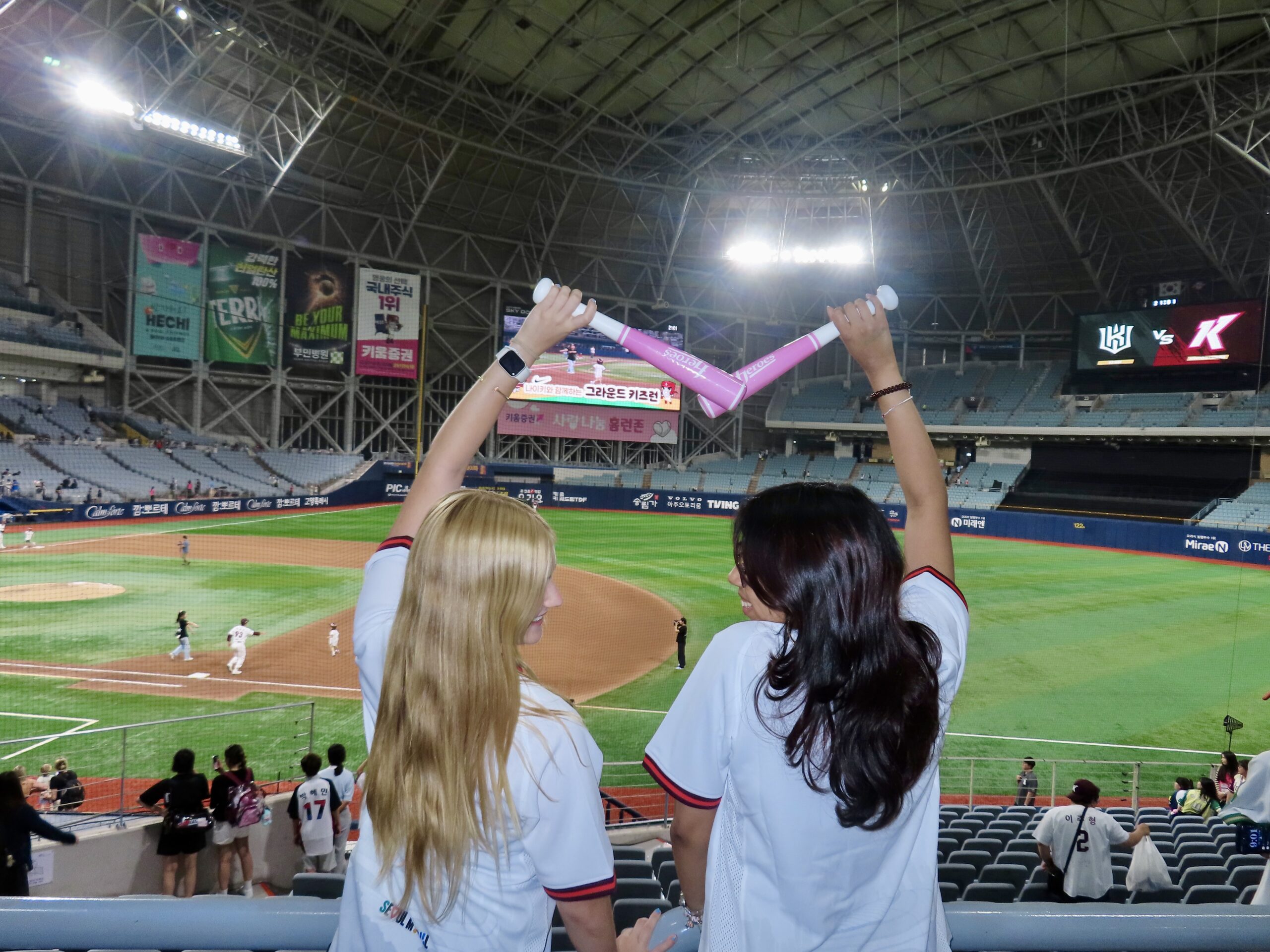
By bridging academic lectures with real-world touchstones, the city teaches us live history. This program is turning every street corner of Seoul into an opportunity to learn.
Yazmin L: Learning on Excursions
Throughout this program, we have had the amazing opportunity to experience many excursions that relate directly to the material we are learning in class. Not only does this improve our retention of the material by allowing us to see it first hand, but we are able to really immerse ourselves into the environment, allowing us to create our own connections to the material.
For example, we recently visited war battlefield sites with a retired U.S colonel, Mr. Tharp. We were able to walk were the battle of Chipyong-ni was. This battle was one of the ones we discussed in class where we learned that the French and U.S were fighting the Chinese and were victorious which was very important for the Korean War. It was very interesting to see the area in real life, especially because the moment in which this battle was fought, there were no trees anywhere and it was wintertime so everything was covered in snow but now there was an immense amount of greenery everywhere and even a couple of homes. We learned that the lack of trees was due to the high demand for the wood as resources was at the time, however, the government implemented a policy for reforestation that has been extremely successful and even recognized globally as such.
I was able to connect this reforestation process with another excursion we did at the GKEDC exhibition where we were learning about the development of Korea, and the reforestation process was talked about as well. During the visit to the battlefield, we were also allowed to see the twin underpass railroad that is no longer in service. This underpass was important to acknowledge because, as we learned in class, this was where the No Gun Ri massacre occurred in which many South Koreans were killed by U.S troops and now serves as a memorial and acknowledgement to the citizens who were harmed.

Jocelyn S T: Recycling in Seoul
One of the first things I noticed at the beginning of my study abroad program in Seoul was how clean the city is. Before coming abroad, I knew that it was part of Korean culture to be neat and proper, but it still caught me by surprise how clean it is everywhere. It was especially surprising because there is a lack of public trash cans on the streets, but you wouldn’t be able to tell.
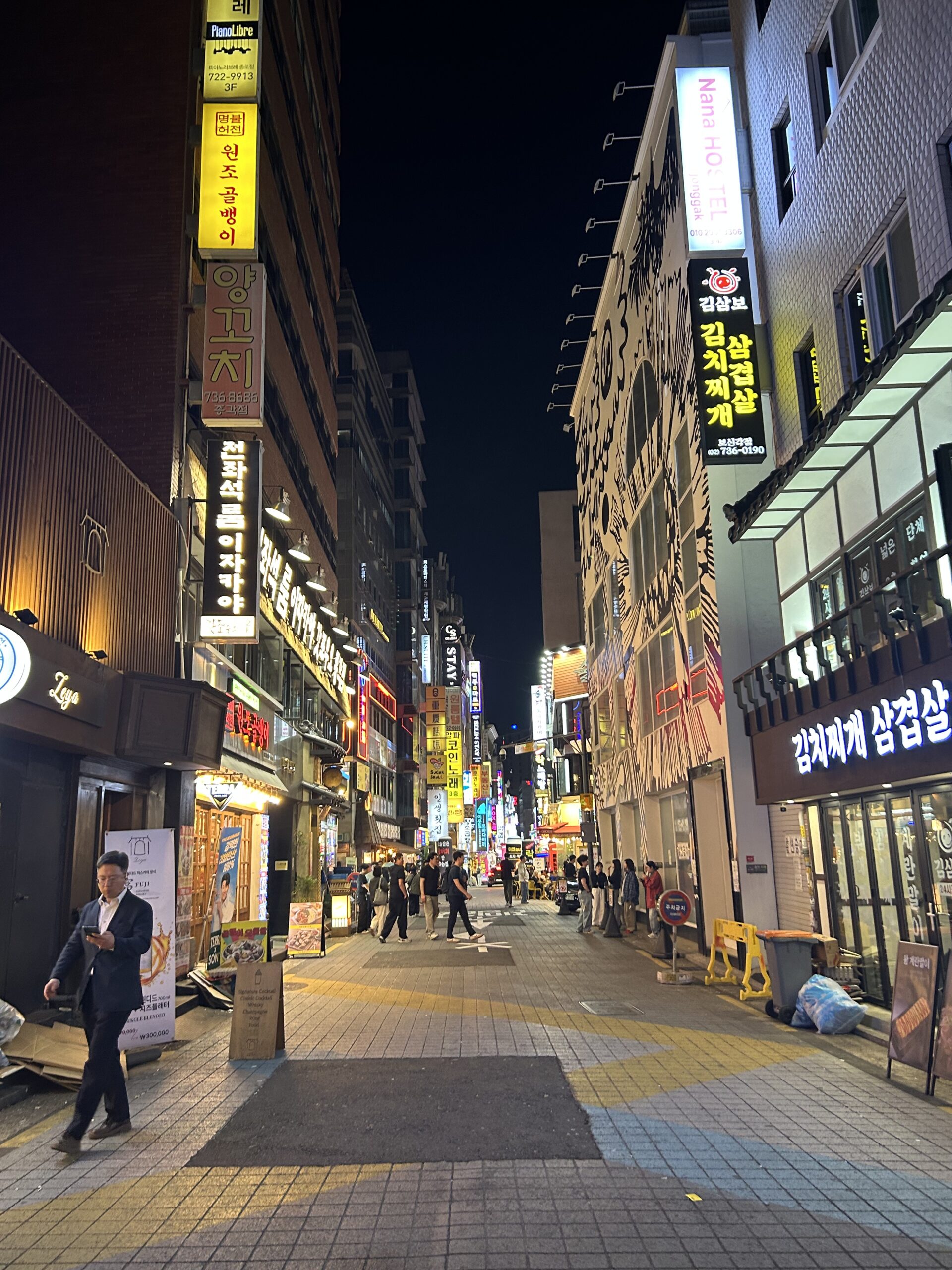
When I brought this up to my program leader and professor, Dr. David Fields, he explained to me that Seoul has a very strict Jongnyangje (volume-based) garbage system. Under Jongnyangje, businesses and residents have to separate their trash by: landfill waste, organic waste, large landfill waste, and recycling; the waste also has to be in the appropriate volume-based trash bags. Then when people go to discard their trash, they pay a volume-based fee, which is according to their amount of trash. There are two exceptions to this fee, first being large landfill waste; this refers to large waste like refrigerators, tables, televisions, etc., that wouldn’t fit in the appropriate volume-based trash bags. The other exception is recycling.
The fee on trash is meant to be an incentive for people to be more conscious of their trash and produce less waste country-wide; and there being no fee on recycling pushes people to recycle as much as possible to make their overall waste fee lower. Recycling is divided into the following categories: plastic, glass, paper, cans, styrofoam, and vinyl. But before the recycling is discarded, it has to be rinsed and unblemished. This is why in the subway, there are little liquid fountains next to the recycling bin, so people can dispose of drinks in plastic cups.
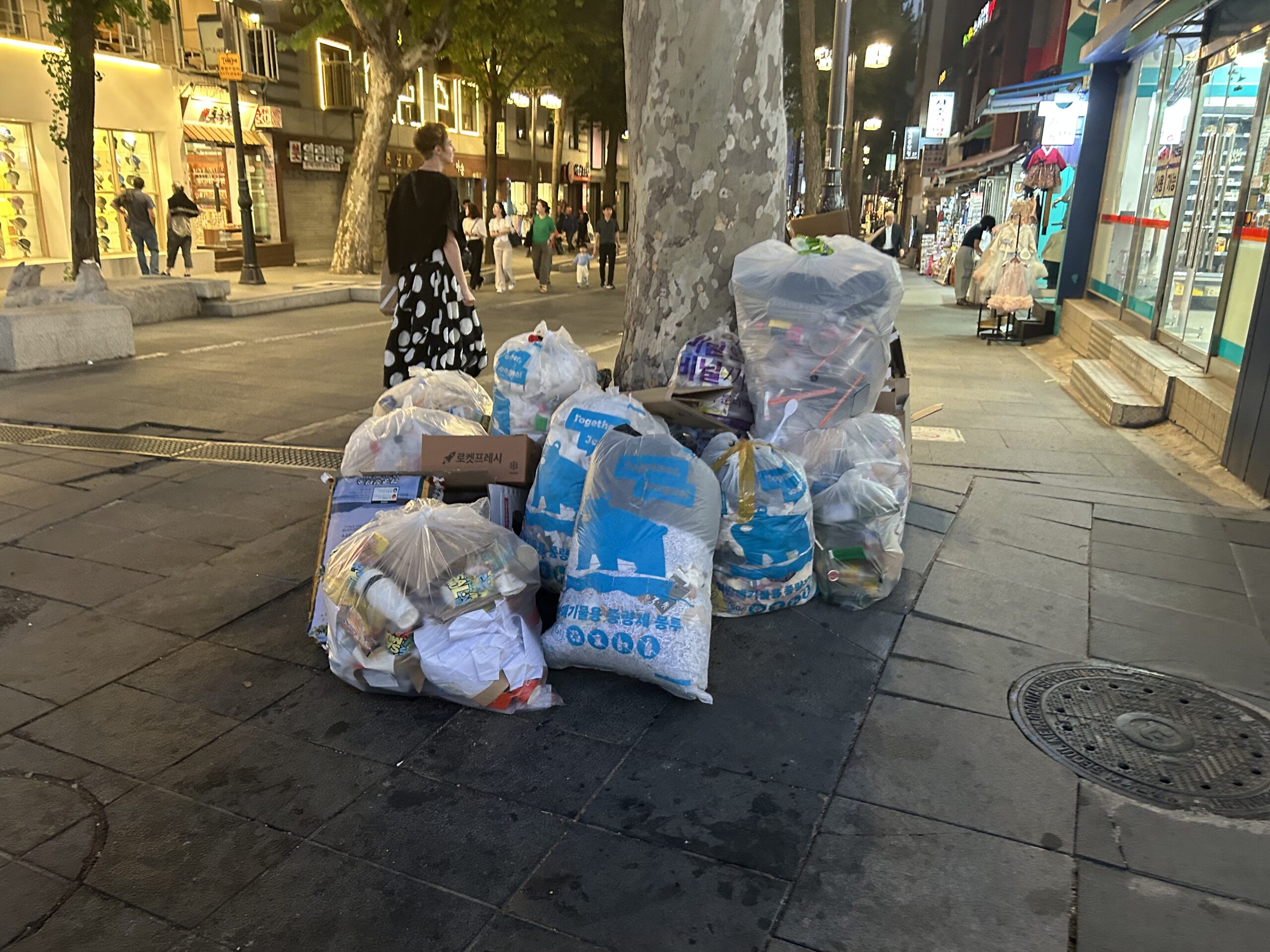
In Madison, recycling is talked about and promoted to be aware of, but I think in South Korea, it is a set standard to recycle properly, hence the Jongnyangje Garbage System. From my experience, it’s easier to recycle and be conscious of your waste in South Korea because of the set social standard, rather than back in the U.S., when the recycling bin and posters are just kind of there. I think South Korea’s recycling standard is something we can definitely learn from!