Estonia: Global Gateway Summer 2026 (A Day in the Life 1)
Program: UW Global Gateway in Estonia, Summer
Will D: Daily Life in Tallinn
I connect with the culture in Estonia mainly by going to Estonian restaurants. By going to restaurants in Estonia, I am able to immerse myself in their culture not only by eating their food, but also by being around Estonians and seeing what their daily life is like.
The first thing that I do in a day is go to class, where I learn about Estonia’s culture and history. Then, I go to eat somewhere, where I learn more about the daily life of Estonia. After that, I go on an afternoon excursion, which is something like a lecture or activity. These excursions allow me to learn about Estonia to an even further extent.

Recently, I have tried to live like a local even more by going to grocery stores here. I think that there is no better way to experience what day-to-day life is somewhere than going to their grocery stores. Here, you get to see everyday goods that people use and consume first-hand. Another way I connect with Estonia’s culture is just by walking around. Observation is a very powerful tool, and I have seen how the city moves and works on a first hand account just by wandering around the city.
Ryan K: Food in Tallinn
Going to Estonia, I’ve seen a variety of different types of foods, from the traditional rye bread, a dense, dark sourdough with a rich, earthy flavor profile, to unique dishes, such as sorrel soup, a vibrant, lemony green soup.
On the first day we arrived to Estonia, we went to Peppersack, where we had sorrel soup and salmon, which was an interesting use of both taste and texture. The sorrel soup contained small bits of carrots and other vegetables, with a slight tangy taste that made the upcoming dishes taste bright and flavorful. The salmon was more neutral, with the lemon bringing out the acidity of the fish as well as small accents of creaminess with the sauce, paired with the salmon.
The food influences I’ve noticed in Estonia were mostly Nordic, German and Russian traditions, as their food was mostly hearty, yet light. What I enjoyed seeing was how these types of foods relied on like rye bread, pork, potatoes, and seasonal produce like wild berries and mushrooms, while preserving them via smoking or pickling. The country also leans towards natural ingredients and unique Nordic flavor combinations rather than relying on formulas or chemicals often found in the U.S. making the food taste even more rich and flavorful.


The desserts were also similar, as the chocolates and bread seemed to be airy and light while having a deep, robust flavor with complexity of both sweetness and airiness. In Estonia, something I tried that I’ve never tried before was cinnamon buns. Unlike the classic cinnamon buns in America, the cinnamon buns lack cream cheese frosting and complex tastes of cinnamon and sugar. The cinnamon buns in Estonia carry more of a light, fluffy texture intertwined with small layers of cinnamon and small balls of sugar on top.
Estonia’s signature chocolate, Kalev, was also one of my favorite things to try there. The chocolate itself was snappy, crisp, and slightly sweet, with a small hint of bitterness, evening out the cacao and the sugar.
Overall, my culinary journey through Estonia was a delightful exploration of flavors and traditions that reflect the country’s rich cultural heritage. Each dish told a story, from the hearty rye bread that has been a staple for generations to the innovative uses of seasonal ingredients that highlight the connection between land and table. The emphasis on natural, unprocessed foods not only made each meal more enjoyable but also left a lasting impression on my palate. As I left Estonia, I carried with me not just memories of the vibrant dishes I savored but also a deeper appreciation for the artistry and care that goes into Estonian cuisine. I look forward to sharing these experiences and perhaps even recreating some of these unique flavors back home.
Mira N: Places: Routine & Favorite
From the moment we landed in Tallinn, the Old Town has become the place I return to every single day. It has already started to feel like a second home. Just one hour after checking into our hotel, we headed there for dinner at Peppersack. I will never forget the look on everyone’s faces as we rounded the corner into the entrance of the town. It was pure adoration. The narrow cobblestone streets and the pastel buildings rising above us felt like something out of a story I used to read as a kid. It was the first moment in my life where I thought to myself, this is what a real fairytale feels like!
What makes the Old Town so magical is not only how it looks, but how it makes you feel. The air seems quieter the moment you step inside the walls. The world slows down. The colors feel warmer. Even the sound of footsteps on the stones seems softer, almost like the town is welcoming you in. There is a sense of calm that settles over you, the kind of calm that makes you want to wander without a plan and let the streets guide you. Every corner feels like it might reveal a hidden courtyard or a tiny shop filled with treasures. It is impossible not to feel enchanted.


This feeling becomes even stronger when you compare it to the rest of Tallinn. Estonia is one of the most digitally advanced countries in the world, and you can see that immediately when you ride into the city. Sleek skyscrapers, modern malls, and fast-moving public transportation made me think we had somehow ended up back in the United States. I knew Estonia had modern cities, but I did not expect that futuristic energy to sit right beside the medieval charm I had seen online.
That contrast is what makes the Old Town feel even more magical. One moment, glass buildings and busy streets surround you, and the next moment, you take a single turn, and everything transforms. The noise fades. The pace slows. The fairytale appears. Tallinn truly lives with two identities. One is a high-tech and fast-moving business center. The other is a historically protected medieval town that feels peaceful, warm, and almost dreamlike. There is no construction, no rush, and no sense of urgency. It feels like stepping into another time.
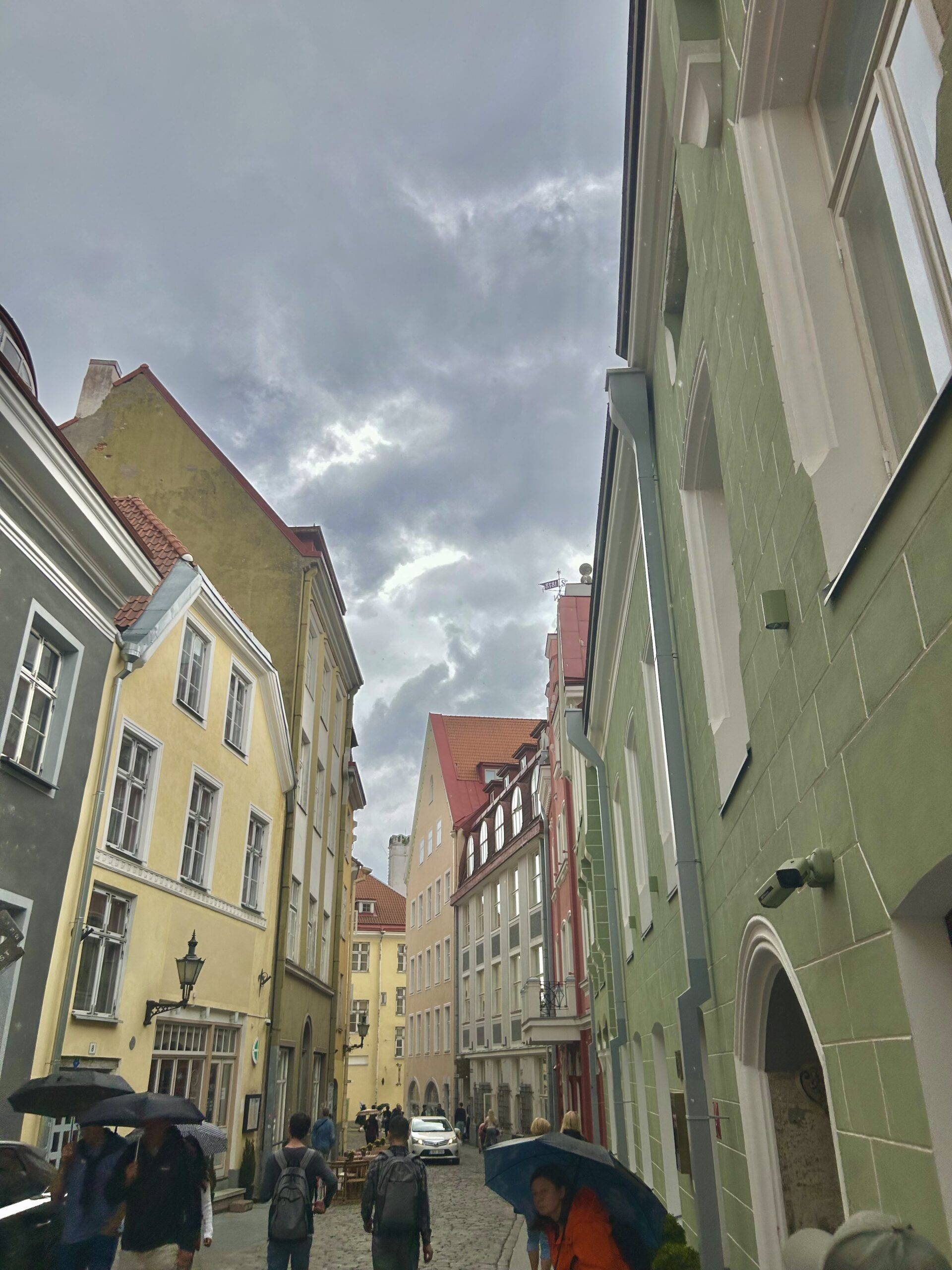
Even though we have only been here for a week, the Old Town has already become the place where we spend most of our free time. Since the sun does not set until around eleven at night, we have long evenings to explore after class and excursions. The long daylight makes everything feel even more magical, almost like the town refuses to let the night interrupt its beauty. We have wandered through tiny shops filled with handmade goods, browsed vintage clothing and record stores, visited museums, stumbled upon cultural festivals, watched street performers, and, of course, tried as many restaurants and dessert spots as possible. Every day brings something new to discover, even when we walk the same streets. It feels like the town reveals itself slowly, one little moment at a time.
There is something incredibly comforting about returning to a place that feels both familiar and full of surprises. I think almost everyone in our cohort would agree that the Old Town is the best place to be in Tallinn! It has everything you could want, whether you are looking for a good meal, a quiet moment, or a beautiful view. It is the kind of place that makes you feel lucky to be exactly where you are. If anyone ever has the chance to visit Tallinn, I recommend starting in the Old Town and letting yourself feel the magic! It is truly unforgettable!
Ella S: Public Transportation in Tallinn
While I have only been in Tallinn for about a week, the public transportation of the city is something that has really stood out to me. In Tallinn, both buses and trams are used to transport people around the city, and each of these methods have been wonderful so far on my program.
Our cohort has visited several locations while in Estonia that are not viable to walk to, so our lovely program coordinators provided us with a Tallinn Transportation card that allows us access to all bus and tram lines in the city. This has proven helpful, especially as our cohort explores the city around us.
To begin, the buses are similar to those that run in Madison. These buses are extremely punctual, and usually quite crowded. During one of our program days, our group had to take the bus about 30 minutes outside of the city, and it was packed! A lot of us joked that it reminded us of the 80 bus back on campus. On this same bus tide, I saw was this older man who made a group of younger kids laugh. While I do not know what he said, it brightened my day to see this exchange of laughter between generations while on public transport.


My absolute favorite way of public transport in Estonia has been the trams. While we unfortunately do not have these in Madison anymore, trams have proven to be quite enjoyable forms of public transport. The inside is spacious and comfortable, and people are generally quite quiet. There are many stops throughout Tallinn, which provides easy and effective means of transportation.
Tallinn is an extremely walkable city, and it is quite easy to navigate without the use of the public transportation provided to us. However, the availability of public transportation enhances the charm of the city as it decreases the number of cars driving around and eases the mind after a long day of walking
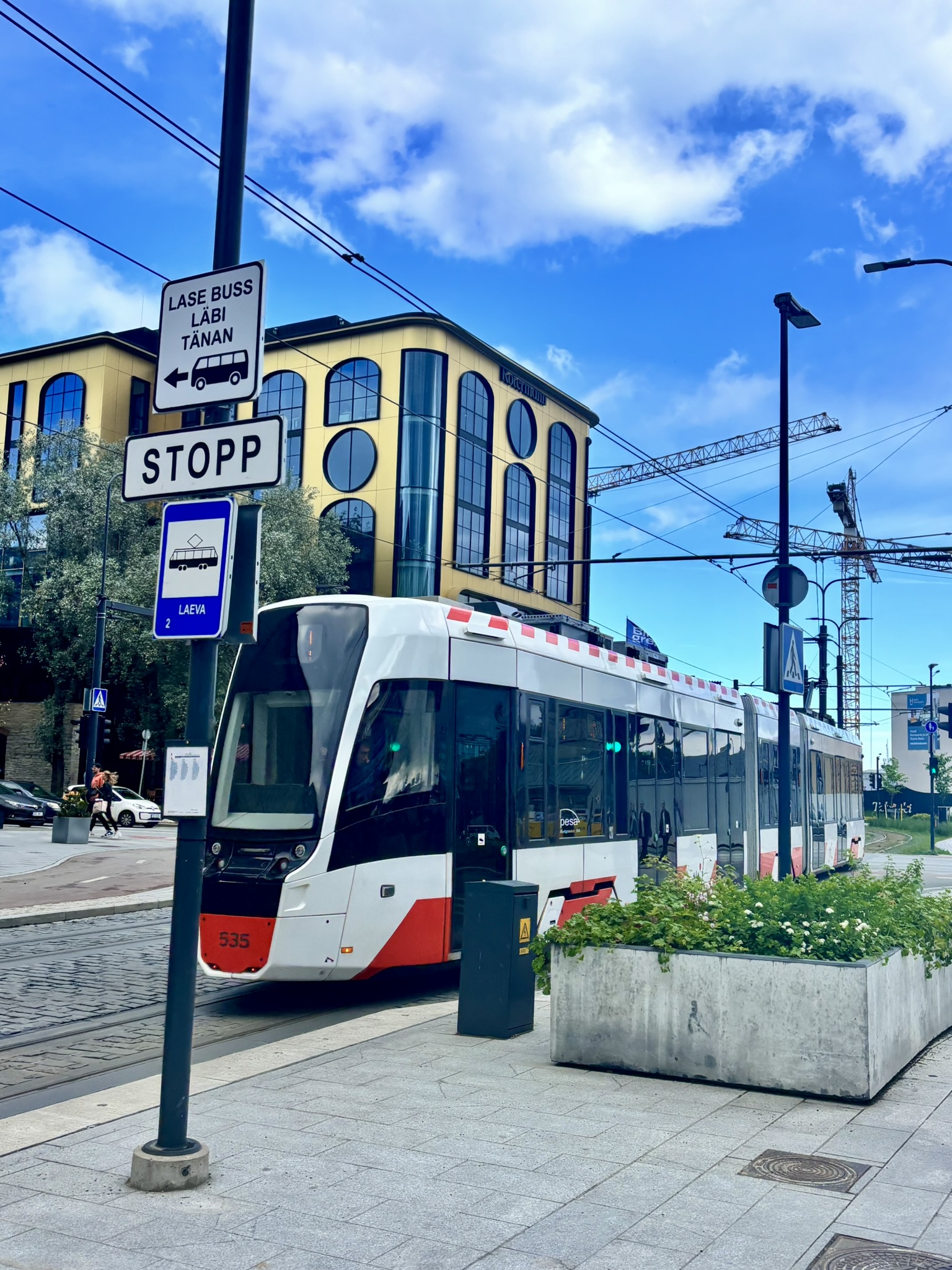
One last thing that I really appreciated learning about while on this program occurred not in Tallinn, but in Helsinki on our overnight voyage. Helsinki has an intricate subway system that is accessible and helped me travel throughout the city. Helsinki is a larger city than Tallinn, and hence the use of public transportation here (including buses and trams) has been a lovely experience.
Overall, my appreciation and knowledge of public transportation have grown while on the program. It has made this huge and daunting experience seem more manageable and has allowed me to experience this opportunity to the max.