South Africa: Noah Vetter
Program: CFHI Global Health Internships in South Africa, Summer
Major: Neurobiology
How were your program academics similar or different from taking classes at UW–Madison?
The academics were drastically different. From my three years here at UW–Madison, I’ve found that the vast majority of classes are centered around lectures and discussions–as most institutions are. However, learning from my own position, as well as the junior and resident (registrar) doctors that I was around was much more centered around experience. There were very few lectures or textbooks in the hospital, rather, doctors (along with myself and my fellow students) learned from hands on experience with patients, which was a nice breath of fresh air.

What is your most memorable experience from your program?
The most memorable experience of my program was seeing an open-heart surgery for the first time. This patient was a nine month old baby girl with an Atrioventricular Septal Defect (AVSD) and was undergoing surgery to repair her congenital condition. The surgery itself was incredibly fascinating to watch, but seeing an open, beating heart with my own eyes was an experience that impacted me more so than words can describe. Seeing the seemingly small, inconspicuous muscle that solely sustained the life of this child, and the massive cohort of machines and doctors that took over its job during the surgery gave me a much deeper appreciation for the marvels of modern medicine, as well as the beauty of life itself.
Being a visitor also made me more conscious of the importance of listening to local healthcare professionals and recognizing that effective care is deeply influenced by contexts outside of medicine alone.
Describe your internship, research, or fieldwork and how the experience helped advance your career or studies.
This experience challenged my understanding of medicine and how it can be practiced. I was originally under the belief that, in medicine, there was almost always one standardized answer or solution to any given problem–however, I quickly learned that is not the case. Especially in areas that lack the same resources that we take for granted in the US, providers are forced to use only what they have, causing deviations from practices often seen elsewhere.
For example, while most of the healthcare world in the US is pretty much entirely digitized, hospitals in South Africa still use pen-and-paper charting for all of their patients and procedures, demonstrating how there are multiple ways to provide quality healthcare depending on the resources available.

How did your identities impact your experience? What advice would you give to students with similar identities who are considering a similar experience?
As an American pre-med student completing a global health internship in Cape Town, my academic background and clinical interests shaped how I approached each experience, encouraging me to ask questions while remaining aware of the limits of my own perspective. Being a visitor also made me more conscious of the importance of listening to local healthcare professionals and recognizing that effective care is deeply influenced by contexts outside of medicine alone. For students with similar identities, I would encourage approaching the experience with humility, curiosity, and a willingness to learn rather than expecting healthcare systems to mirror those in the United States. The more open you are to different perspectives and ways of practicing medicine, the more meaningful and impactful your study abroad experience will be.
What is the moment you are most proud of?
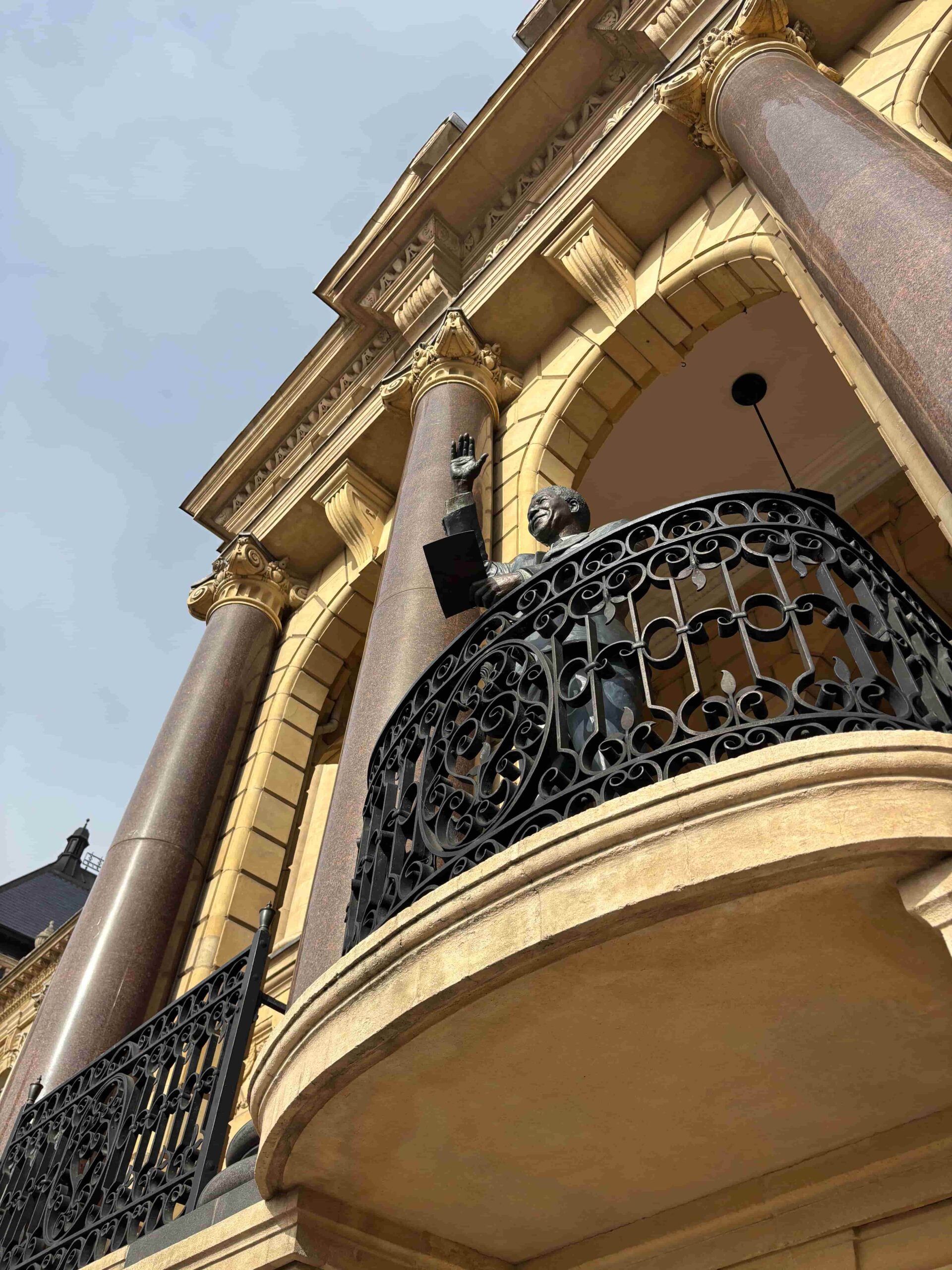
I’m most proud of the amount that I was able to see and understand in Cape Town. Usually when people travel to cities that have large tourism industries they are drawn to specific sites with little appreciation for what they’re seeing, and while I admit I fell in the same boat at times, I tried to approach my experience in the city with more nuance. I have been learning about the history of South Africa and its struggle with Apartheid since middle school, and with such an ingrained understanding of the country and its past, I feel as though I was able to approach my experiences with humility. I was able to see how the devastating effects of Apartheid are still very prevalent in the country even to this day, and while I was able to enjoy the tourist-based sites, I did so with the consideration of those who suffered in this city only a couple decades ago.
How will your experience benefit you in the future? How might it affect your future career or studies?
My study abroad experience in Cape Town strengthened my understanding of global health and the role that culture, history, and resources play in patient care. Seeing healthcare in a resource-limited setting gave me a broader perspective on health disparities and how providers adapt to meet patients’ needs. As I continue my studies and pursue a future career in medicine, this experience will help me communicate with patients from diverse backgrounds and provide more thoughtful, patient-centered care.
What is your advice for someone considering your program?
Take everything in. There are times that the program may feel long, and the days at the hospital may feel repetitive, but I guarantee that this will be an experience that you will cherish for your entire life. Be present, be proactive, take the initiative–this program is only what you make of it, you can’t sit idly by and expect things to just happen for you. These few weeks will go by much quicker than you realize, so take advantage while you can!