Denmark: Ramon Guarnero (Public Transportation in Copenhagen)
Program: Copenhagen Business School, Fall
The way I use transportation in my daily life has changed significantly since arriving in Copenhagen. Back in Madison, I usually walk to my classes because I live close to campus. If I do not feel like walking or need to travel somewhere farther, I will take the bus. Here, public transportation has become part of my daily routine and is one of the main ways I get around the city.
The Metro is by far the transportation I use the most. I live near the M3 line, which has been especially convenient because the route forms a circle around the city. This means that as long as I get on an M3 train, I can travel in either direction and eventually reach my stop. The line stops at many important places, such as Nørrebro, Frederiksberg near the Copenhagen Business School campus, and at the city center. This makes getting to many of Copenhagen’s best spots relatively easy.
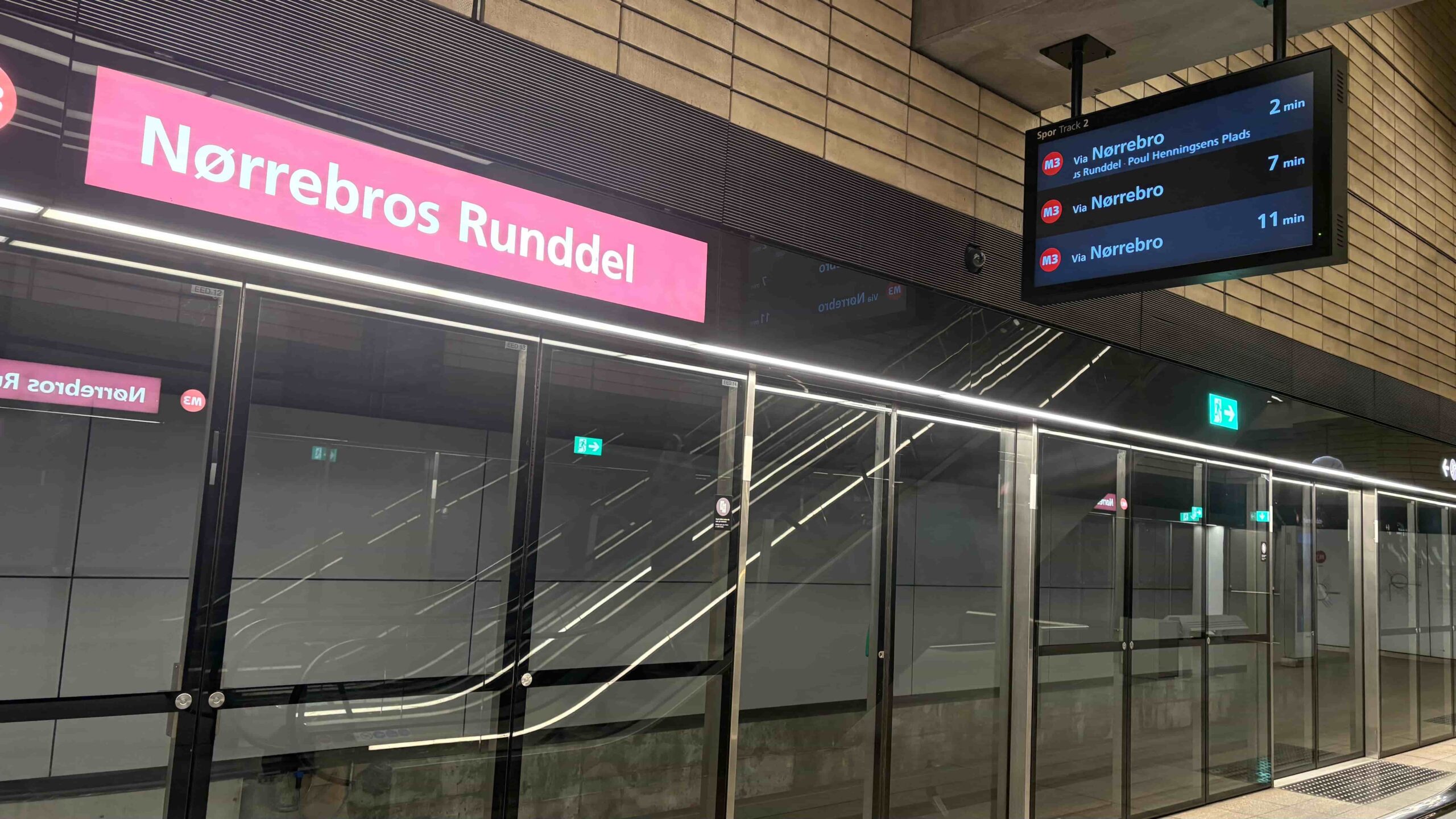
One interesting thing about the Metro is that it is completely automated and does not have conductors driving it. Because of this, the Metro can run frequently and consistently throughout the day. I never have to plan my day around a specific Metro departure because another will typically arrive within just a few minutes. The Metro also operates 24 hours a day, which has made it especially convenient when I am out later at night.
Although the Metro is my main form of transportation, Copenhagen also has an extensive network of buses and trains. I use the buses when the Metro does not take me close enough to my destination, and the trains are useful for traveling farther outside the areas I normally visit. Trains are especially useful when going out of the city. Having all three options makes it possible to get around Copenhagen and the surrounding areas.

While you do not need a ticket to board any of these public transport options, there are metro employees who will occasionally board and check tickets. Fees for not paying the fare can cost well over the equivalent of 100 USD, so it is better to pay for your trips. A standard trip can cost the equivalent of around $3 or 4 USD depending on the journey. For someone using public transportation consistently, a monthly commuter card can be useful. A two-zone commuter card costs about $90 USD for a month and allows unlimited travel within those zones.
Using public transportation has been very helpful in getting me around Copenhagen and in getting adjusted to the city. I have become much more comfortable navigating Metro lines, buses, and trains, and I have learned how easy it can be to rely on public transportation when a city has a system that runs frequently and efficiently.

Ramon Guarnero
Program Name: Copenhagen Business School
Major: Information Systems and Operations and Technology Management
Hometown: Milwaukee, WI