Malawi: Maya Kamin (An Impactful Moment and Food in Kasungu)
An Impactful Moment

The most challenging aspect of the program was seeing the lack of resources in the medical settings. The district hospitals, which are funded through the government, tend to have more resources compared to the rural clinics. When working in the district hospitals there is access to a larger variety of oral medication, intravenous medication, and more workers present allowing the hospital to care for more people. With more units available it also allows them to care for a larger range of sick people. The rural clinics have few laboratory tests available that can be ordered which limits the ability for the care team to diagnose and treat a patient. The most common laboratory tests ordered are malaria, COVID, and HIV antigen. When a patient comes in sick and yet all their lab results come back negative, they are often prescribed a general antibiotic because there is no access to other follow-up tests such as influenza, RSV, and streptococcus. I overcame this challenge by working closely with the chaperones who used their expertise in the field to guide me through the care process. With their guidance and through the collaboration with the local nurses to see their thought process, I was able to understand how to properly care for the patients despite the lack of resources.
Food in Kasungu
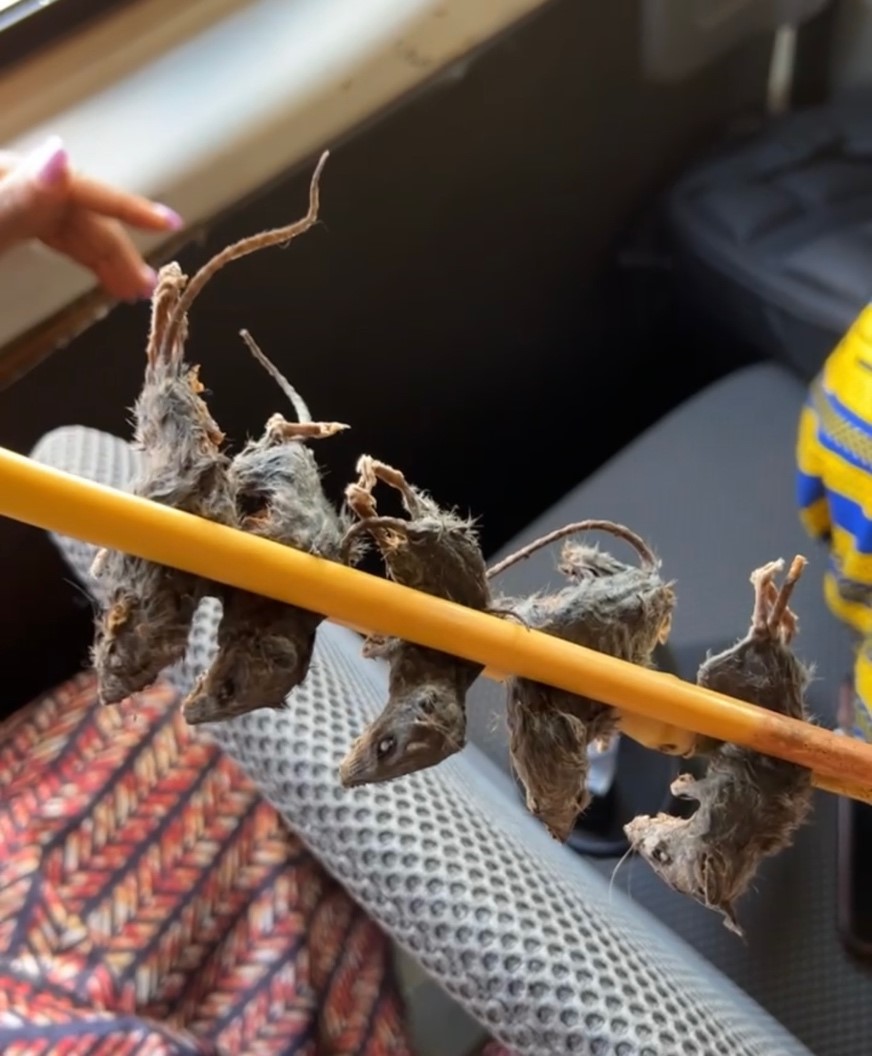
My favorite part about international travel was learning about traditional dishes eaten in the country. In Malawi many meals have the same components which include a vegetable, a carbohydrate, and a protein. We mainly ate peas or green beans for our vegetables, potatoes and rice were the main source of carbohydrates, and chicken or beef was the common source of protein with an occasional fish. My favorite thing about the meals was how fresh the food was. Many fruits, such as bananas, and vegetables, such as cabbage, were fresh from the market near our inn. Something new I tasted, and happens to be a local favorite in Malawi, was Thobwa which translates to “sweet beer”. Sweet beer is a non-alcoholic beverage made from white maize that results in a milky appearance with a cereal taste. If the drink is left to ferment for 5 days, the substance will become Mowa, meaning beer. A dish unique to Malawi is “mice on a stick.” Although this dish is mostly eaten within the lower class, it is still a meal enjoyed by most Malawians. The mice are caught, cooked, and then sold on a stick for all to enjoy. The cost of one stick with five mice costs only one US dollar. Although I was not brave enough to try a piece, one of my peers did and felt that it tasted like sweet teriyaki chicken.

Maya Kamin
Hometown: Chicago, Illinois
Major: Nursing
Program: UW Nursing Malawi
My academic goal is to enrich my critical thinking skills which will be accomplished by learning how to care for people in a unique setting that I would not normally be exposed to in America. My personal goal is to learn about a new country; I am always open to discovering more about different cultures around the world.
I have always been fascinated by charities such as Doctors Without Borders where healthcare providers are able to provide services to communities across the world. When I heard about the Malawi program, I realized that this would be a perfect chance to be able to have that experience despite still being a college student. This is a once in a lifetime opportunity that will allow me to integrate what I learn in the classroom with real world experiences.