Italy: Ella Buddenhagen
Program: Santa Reparata International School of Art (SRISA), Spring
Ella’s Major: Biology
What is your most memorable experience from your program?
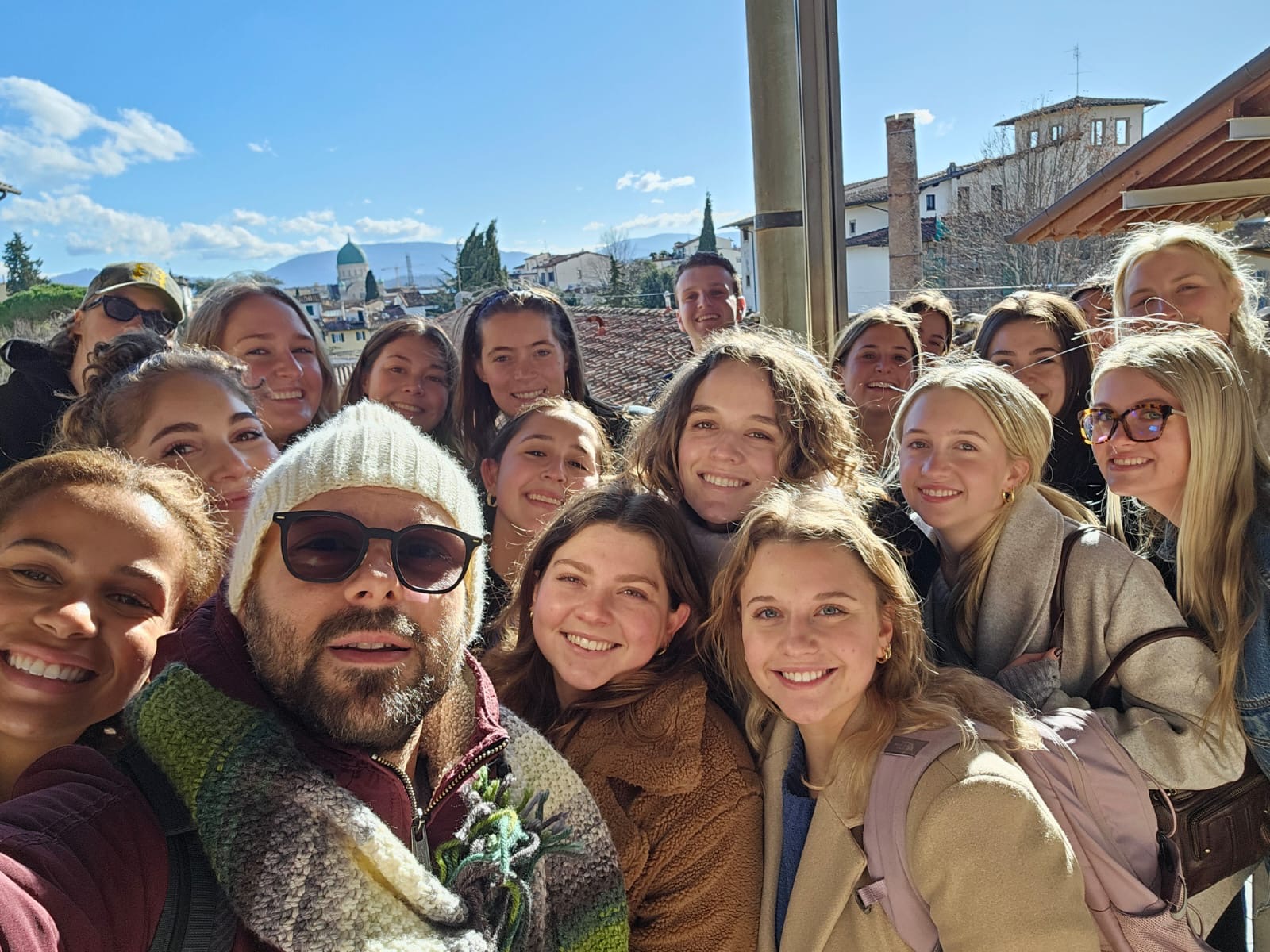
Although there were so many transformative experiences in my program, one stood out to me the most. I decided to take a class called Discovering Florence when picking my courses. I had heard great things about it from past SRISA students, and I can honestly say it went above and beyond what I expected. The class helped me connect with the city in a more meaningful way, and it gave me chances to engage with the community in ways I never imagined. One class in particular really made an impact. We took a train about 30 minutes outside the city center of Florence to visit a nearby neighborhood. Our teacher brought us to a local primary school in an area known for being very diverse. There, we got to talk with some of the students. They had prepared questions for us in English—asking about life in America, what college is like, our lifestyles, and what my experience in Florence had been so far. We spent a few hours in small discussion groups, and I learned just as much from them as they did from us. They were so open and curious, and I really enjoyed hearing about their lives and how they view the world. This experience stood out because it gave me a completely new perspective on Italian culture. Through SRISA, I got to see a more personal side of the city and understand what growing up in Italy looks like for a lot of kids. It was so different from what I had expected, and comparing their experiences with my own helped me reflect on how I grew up, too. It made me realize how much our backgrounds shape our views and opened my mind in a way I hadn’t felt before. I’m really grateful for that moment—it reminded me that studying abroad is not just about seeing new places, but also about making real connections and learning through people’s stories.
The class helped me connect with the city in a more meaningful way, and it gave me chances to engage with the community in ways I never imagined.
How did your identities impact your experience? What advice would you give to students with similar identities who are considering a similar experience?
Traveling to a new country, especially one where a different language is spoken, made me realize how identity matters in a society. I am personally tall, blonde, and fair-skinned. My heritage is European, but mostly German and Swedish. When I traveled to Switzerland and the Slavic countries, I felt the people were more accepting. Even though I did not speak the language, I felt that their culture better aligned with my own. Because I chose Italy as my base, my experience there was different. I stood out from the rest of the people, and I often got weird looks. While I do not think this attention was meant to be rude, it can be hard to feel like an outsider for months in a place you’re trying to call home. For the most part, everyone in Florence spoke English. While some Italians supported me in trying to learn their language and culture, some were not as patient. Because of this, I never truly felt at home. I loved Florence and my study abroad experience, regardless, and only share these challenges to help future students. I still recommend the city, but it’s important to consider how your identity can be perceived in another culture. That should never stop someone from choosing a challenge, but I learned how important it is to show the locals that you’re making an effort. Being respectful and aware of their way of life goes a long way and can help students with different identities feel included.
What challenges or barriers did you face as you prepared to go abroad and/or during your time abroad? How did you work through them?
One of the most important takeaways from going abroad is what you learn about yourself and how the experience changes you. For me, the real progress was made after I faced the toughest challenges. When I first came abroad, I struggled with being away from my close friends and family. I had heard of the difficulties in making friends, but it was more about finding “my people.” My program had the majority of students who went to UW–Madison, so it wasn’t hard to meet groups of people who came abroad together. But because most students came in already established groups, I felt like people were not as open to building new friendships as I was. I found myself planning trips and hanging out with people with whom I had mutual friends. I still made great memories, and I liked meeting everyone, but I felt like I did not have a person here—someone that I was close with and could share my struggles with. Even though I got to travel to amazing places with these students, I just followed along with what others wanted to do to avoid conflict. At first, it felt like that might be the way my entire study abroad was going to go, but slowly, I started speaking up for myself. I chose to do a few solo trips and started doing things that were important to me. I did not want other people to affect my experience and stop me from accomplishing everything I knew I could. Once I took time for myself and started doing what was best for me, new, unexpected friendships blossomed. Now, these friendships are ones I will carry with me forever, and some to Madison with me. My takeaway from this challenge is that being yourself and prioritizing experiences that you want to have is key to making true friends. Another solution to this issue for me was planning a few solo trips. The trips don’t have to be far away or extravagant, but exploring on your own time was therapeutic for me. It was definitely out of my comfort zone a bit, but I became more independent, and I learned the value of enjoying time spent with myself.