Spain: Michael Howe (Badgers Go Green)
Program: IES Barcelona, Spring
Michael’s Major: Global Health
Michael’s Badgers Go Green Scholarship Giveback Reflection
Sustainability in Barcelona
It was really interesting to learn about sustainability through the lens of another culture during my time abroad. In general, my perception of sustainability in Barcelona was that it was more integrated into daily life than in the United States. At minimum, it was more noticeable. One such example of this is the extensive recycling system throughout the city. Dumpster-sized recycling bins dot the streets everywhere there is space, color-coded for the four types of recycling they collect: plastic, glass, paper, and food/compost. Only after that sorting do they have bins for general trash. The convenience of these bins was the best part: I rarely had to walk more than two blocks to find bins to toss my recycling and trash in. I know for a fact that that in and of itself increases the usage of recycling because of how easy the bins are to find. Now, the effectiveness of that system of course only goes as far as people’s knowledge of how to properly recycle, but the fact that that effort is made on the front end at all is striking when compared to the United States; here, we are lucky if we can find a recycling center or program that sorts on the front end. This visual commitment to a cleaner, more conscientious city impressed me, and I think we in the United States, including Madison, can learn from this method of recycling and improve our sustainability.
Another prominent example of Barcelona’s commitment to sustainability was its public transportation system. It was incredible, far surpassing the public transportation systems of similarly sized, or even bigger, cities in the United States. Using either the subway or bus was super easy, even though the only public transportation system I was familiar with prior to this experience was in Madison (whose system, while pretty good for the United States, doesn’t compare at all with Barcelona’s). The sheer size was intimidating at first given my relative inexperience with public transportation, but within a few days I could get around the entire city without a problem using just public transportation. Even the suburbs were easily accessible by trains that shared stops with subway stations in the city. When traveling within the city, not once did I feel the need or even desire for a car because using public transportation was just so much easier. And when the trains were all-electric and the buses were almost all hybrid, I felt good about using these methods of transportation because they were environmentally friendly. As a final point on the sustainability of Barcelona, it encourages walking and living an active lifestyle. The excellent public transportation and the walkability of the city make it easier to live a lifestyle that both reduces your carbon footprint and promotes good health.
Volunteering Abroad
For my Go Green giveback activity, I wanted to do something that got me involved and active within the community. Along with living a sustainable lifestyle abroad, my other top priority was immersing myself in the culture and community within Barcelona. With my Go Green scholarship as a foundation, I was able to combine my goals, and found an opportunity to contribute to sustainability within Barcelona by volunteering for a local organization. This organization, called the Fundació per a la Conservació i Recuperació d’Animals Marins, or CRAM for short, specializes in conservation and rehabilitation of marine life in the Mediterranean Sea. I was lucky enough to participate in their volunteer program during my time abroad.
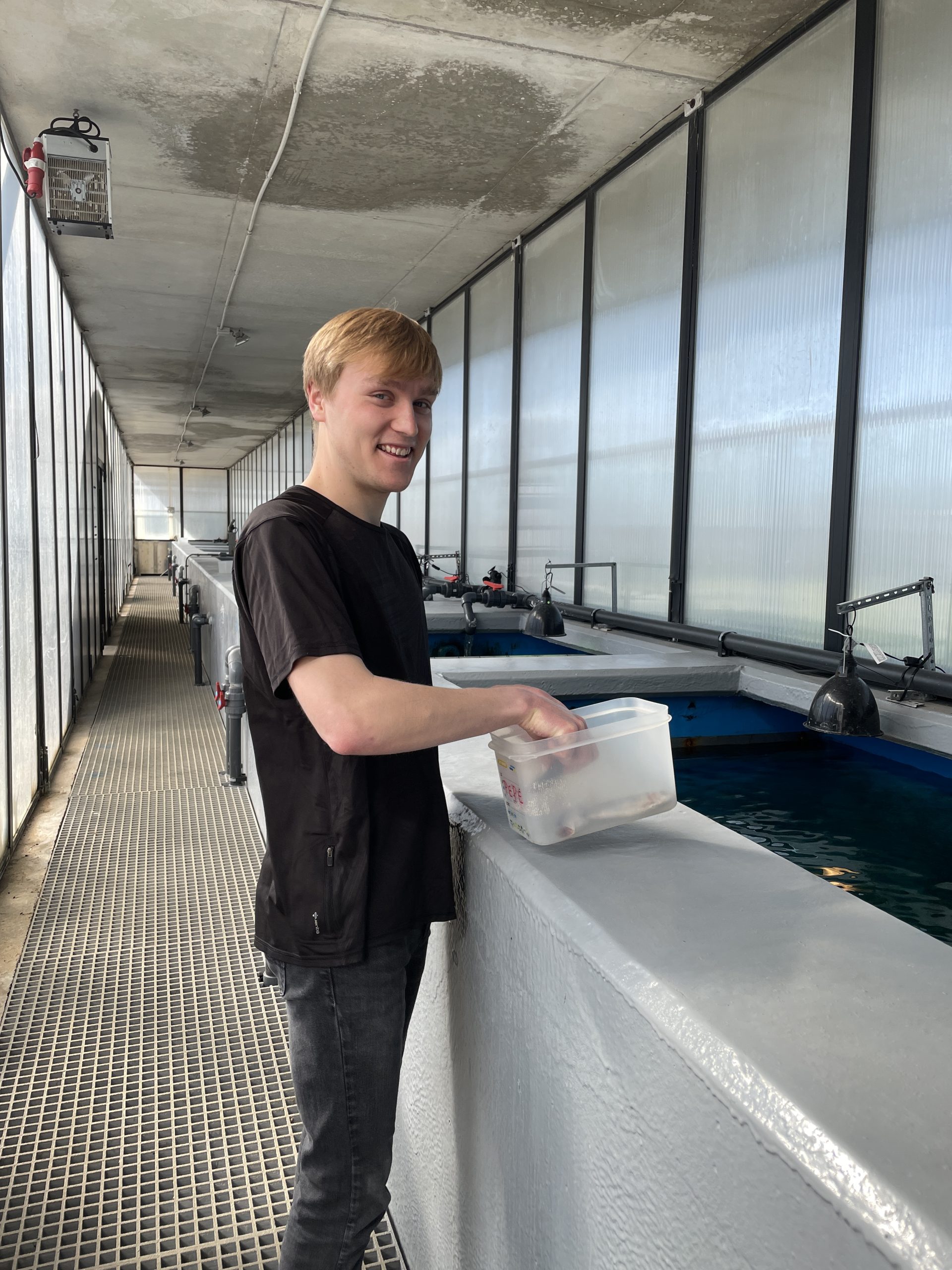
Volunteers for CRAM play an essential role in the organization’s turtle rehabilitation program. A large part of CRAM’s operation is to rescue injured turtles, most of whom suffer their injuries in run-ins with fishing boats, and help them recover before they are ready to return to the wild. CRAM tasks their volunteers with the general operations of the rehabilitation clinic – prepping diets, cleaning tanks, playing with the resident turtles that are part of CRAM’s public outreach and education programs, and anything else that helps CRAM’s employees carry out their conservation and rehabilitation goals. The English translation of CRAM’s mantra reads “our mission is to protect marine biodiversity through local actions,” and being a volunteer gets you up close and personal with what carrying out that mission looks like. When I landed in Barcelona, I had no idea that I would be spending seven mornings cutting up thawed, raw seafood, tossing it into recovering turtles’ tanks, then cleaning out those tanks and giving the turtles fresh water, but I am so glad I did.
Not only was I able to directly contribute to the sustainability of the city that so graciously hosted me for four months, but I was able to do it with people who cared about the work they were doing, both the volunteers and the employees. That was an uplifting connection to make. Here I was, across the ocean from home, in a culture that was not my own, connecting with people who shared my commitment to protecting this planet that we love and all of the amazing life that calls this place home. I am grateful that the Go Green Abroad scholarship helped make this experience possible, and that it encouraged me to make sustainability a central part of my program. Volunteering at CRAM enhanced my experience abroad, both because I made an impact to improve the health of marine life in the Mediterranean, and because I found people who shared my commitment to protecting the planet.
Highlights/Reflections
Before I close, I just want to share a memory that was my highlight from volunteering at CRAM and honestly one of my highlights from being abroad as a whole. As a way to say thank you to volunteers for the work they do, CRAM lets volunteers help with the release of turtles when they are ready to go back to the wild. On one of my last days volunteering, and near the end of my program, CRAM had four turtles ready to return to their homes. I had the privilege to be a part of that release and carry a turtle from their transport crate to the edge of the water. Watching that turtle crawl to and then disappear into the sea was an incredibly uplifting experience. Not only was it a joyful occasion, it was also a moment of pride knowing that I had played a part in that turtle’s rehabilitation. It was an amazing reward for the work I did during my time abroad.
I am grateful for the extraordinary opportunity I was provided to learn through immersion in Barcelona this spring and the depth that sustainability added to my experience. I have come back to the United States with a fresh perspective that will inform how I work towards sustainability and a bolstered commitment to making that happen.