Singapore: Global Gateway Summer 2025 (A Day in the Life 2)
Salvador B: A New Experience
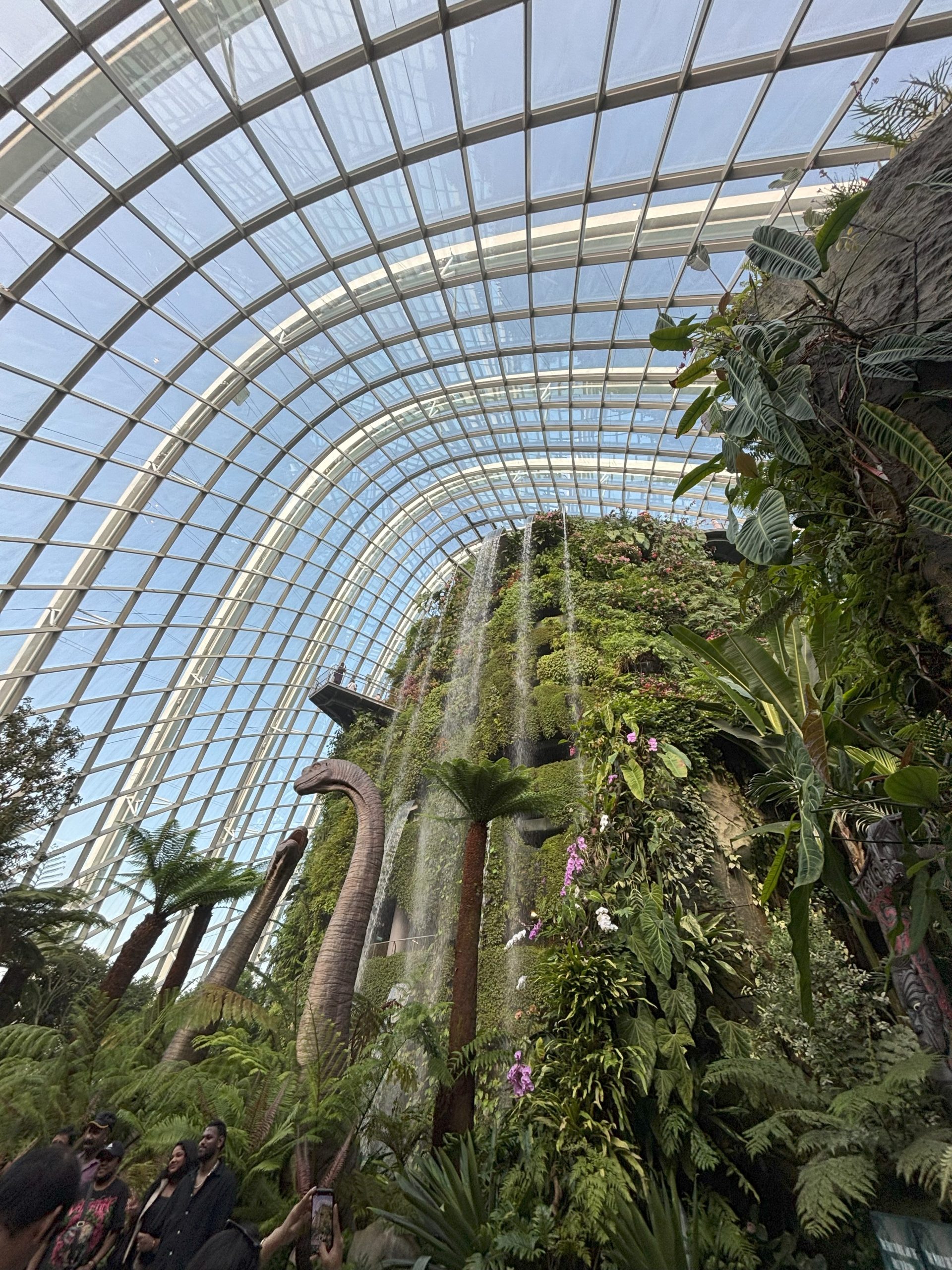
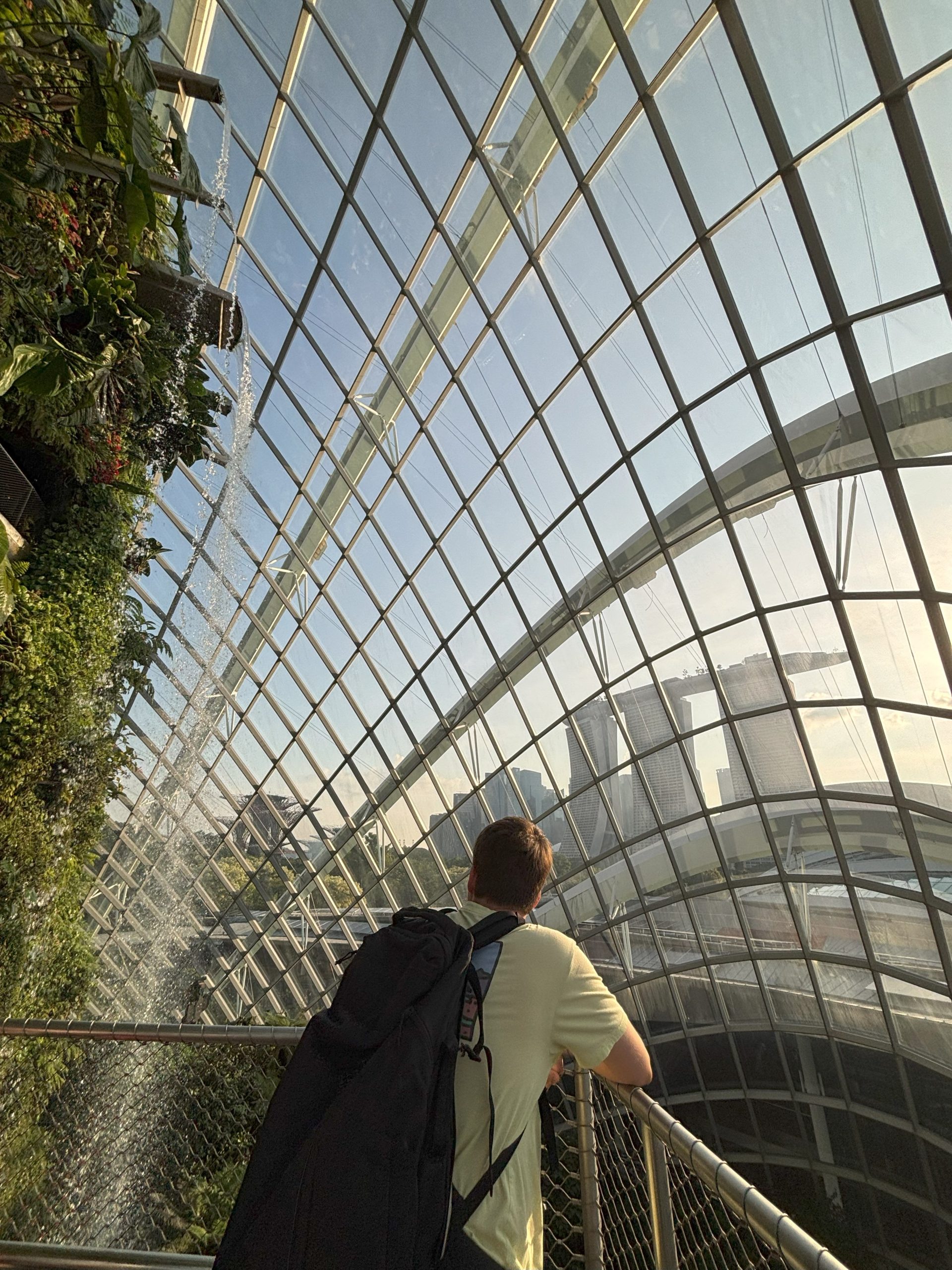
On our second day in Singapore, I was well rested and didn’t feel the effects of jet lag almost at all anymore. Now my full mind and body was in Singapore and I felt energized to explore. After our first class together, the cohort went over to Gardens by the Bay, an iconic part of the city. The Flower Dome was our first stop. It’s the largest glass greenhouse in the world and has plants from all over the world. We then went on to another huge glass dome called the Cloud Forest. In it, we saw the world’s second tallest indoor waterfall. There was also a Jurassic Park exhibit. As we were walking high up in the skybridges of the Cloud Forest, I got the first good look of the city’s skyline through the glass and that’s when I thought, “Wow, I’m really in Singapore.” I couldn’t stop looking at some of the iconic landmarks like the Marina Bay Sands, the Ferris wheel, the Supertrees and also the huge container ships at sea. Both glass domes were very impressive buildings with extremely modern technology and as an engineer I was amazed.
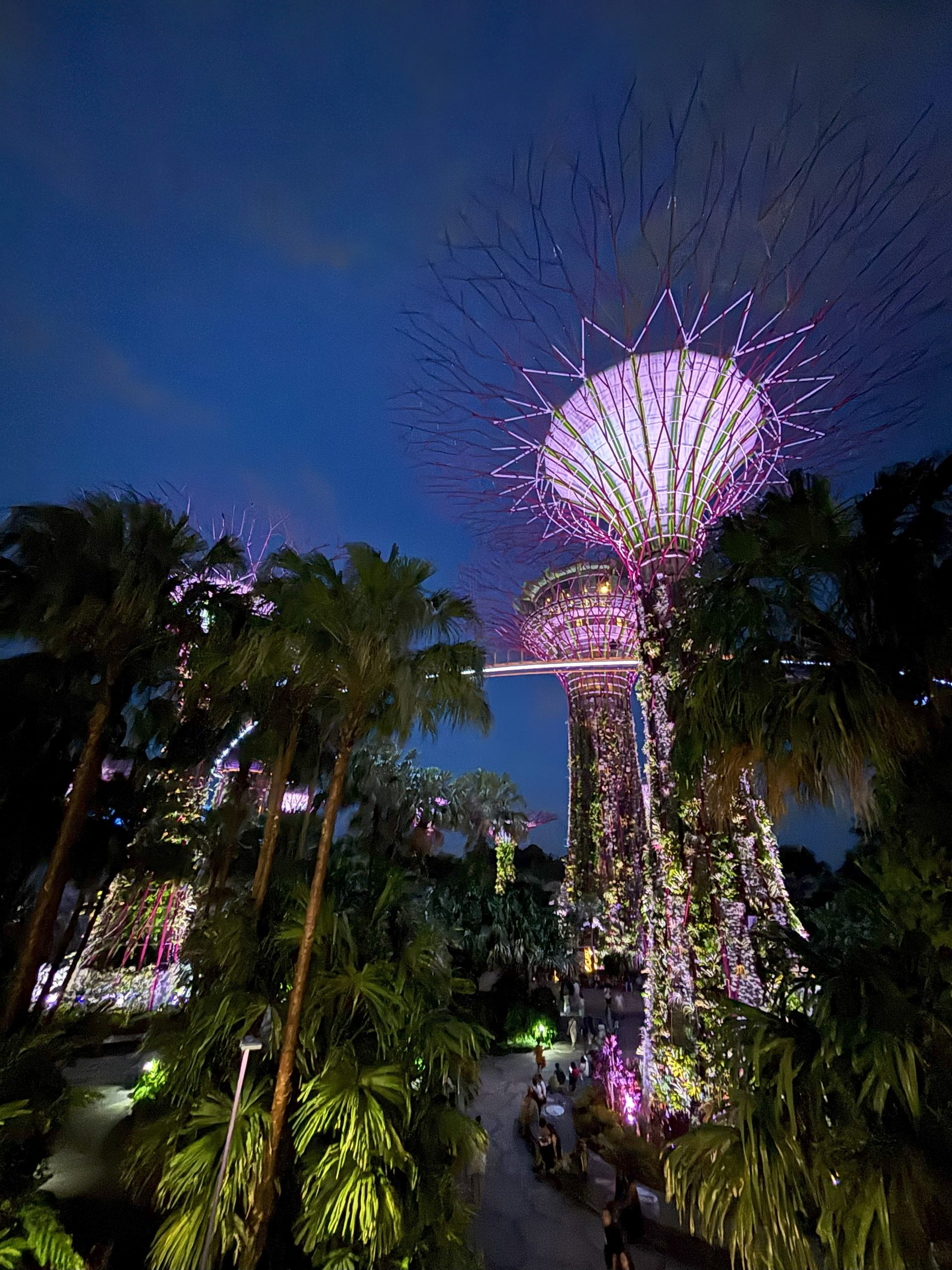
During this excursion, we didn’t only learn about Singapore, but we also got to know each other. The cohort transformed itself from shy people doing small talk to people getting to really know each other and form friendships. After this excursion, I felt comfortable in the cohort and I could tell other people did too. At nightfall we went over to the supertrees to look at a lightshow they were doing. The supertrees are extremely high manmade structures that harness solar power and have plants around them. They look very futuristic and at the same time alien-like. We laid on the pavement, looked up at the trees and enjoyed the lights and music.
On the way back, the whole cohort reunited and took the subway back to the hotel. I decided to write specifically about this excursion not just because of how incredible it was, but also because it was one of our first impressions of Singapore. That day we saw how Singapore strives for a future that blends nature, technology and infrastructure. It also marked a before and after in our evolution from simply classmates to friends. Overall, It was a day full of excitement and a great introduction to our journey.
Amy F: Our Global Classroom
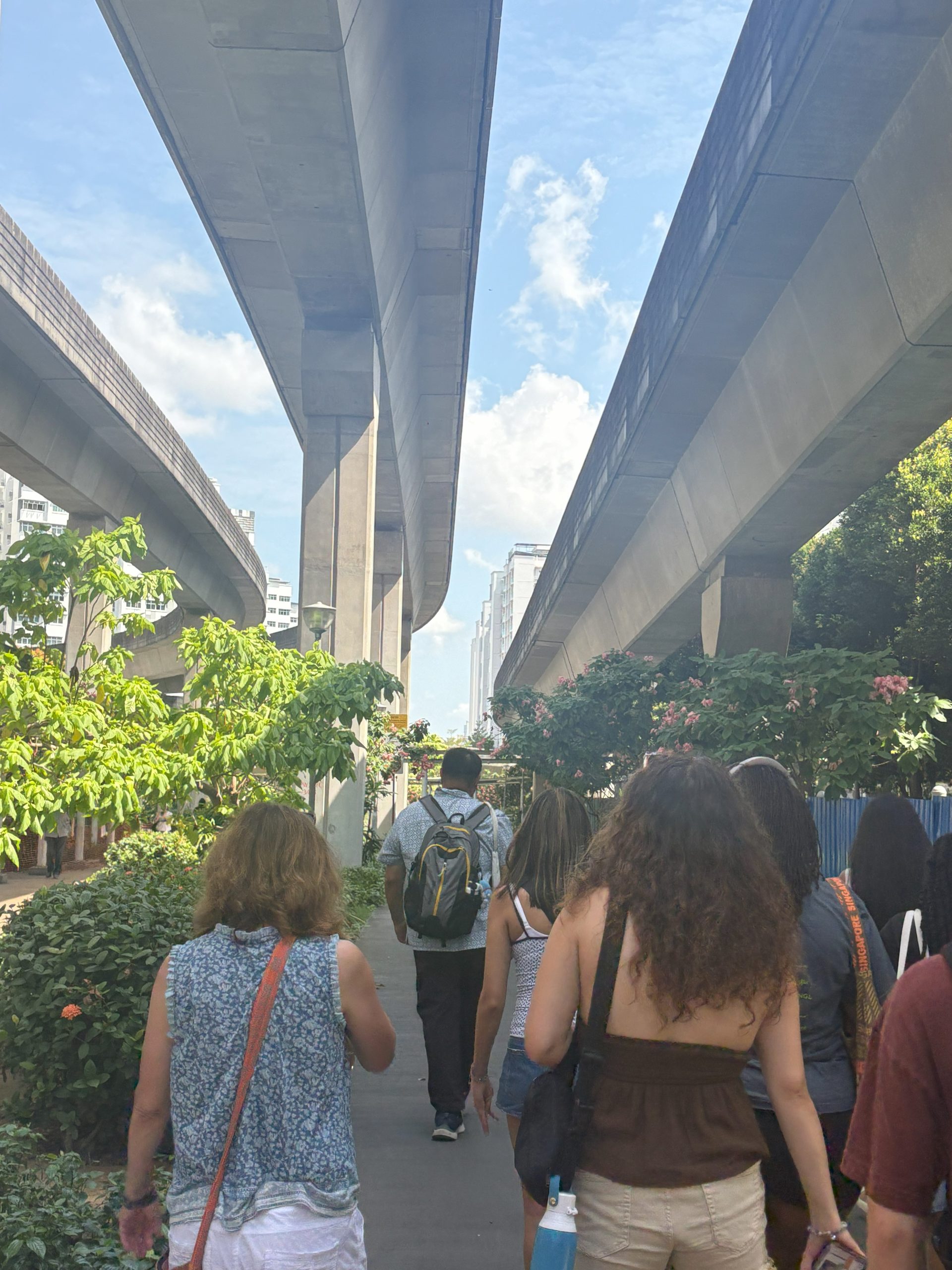
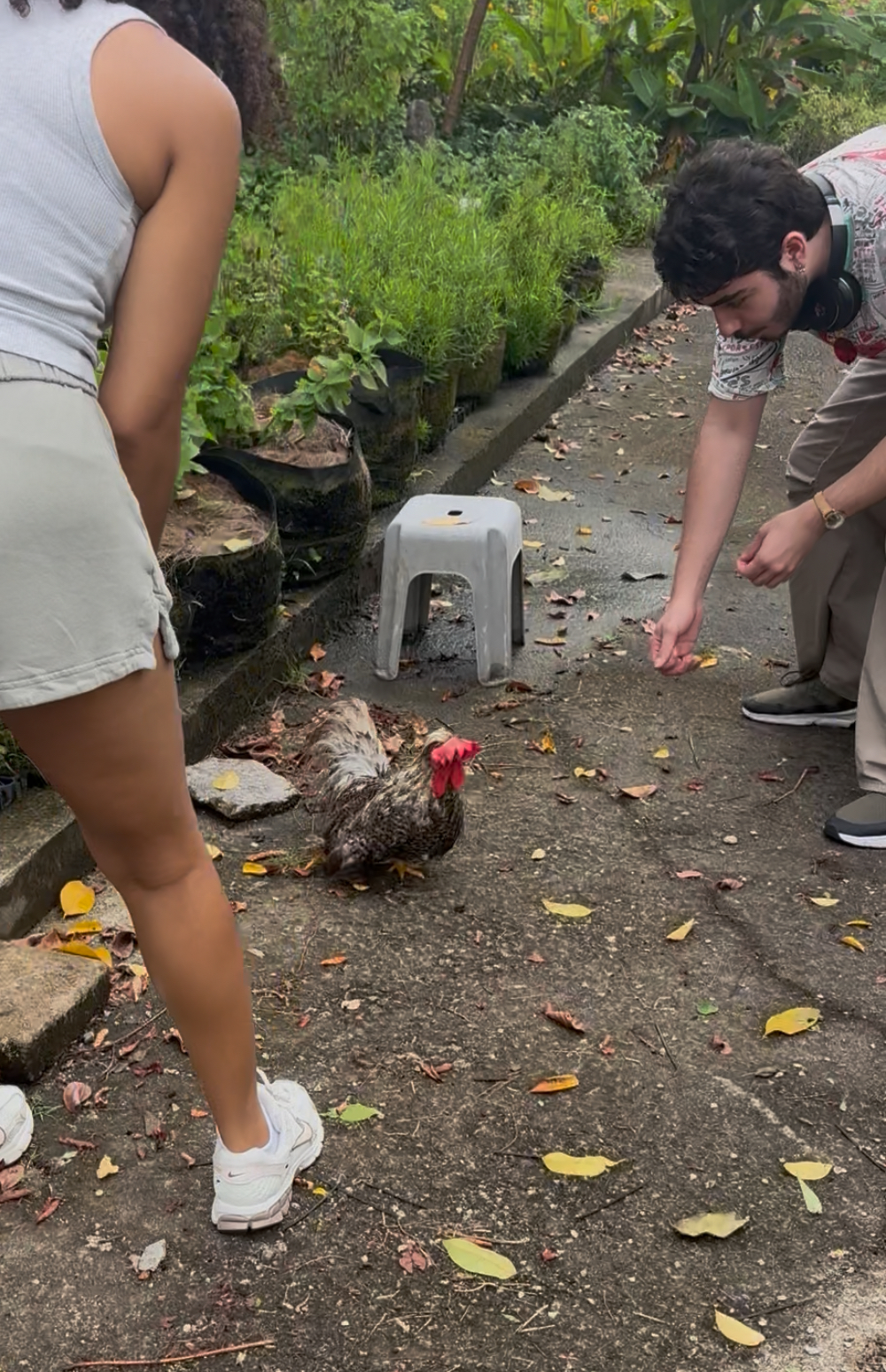
Over the course of this excursion, I’ve had the pleasure of experiencing a multitude of academically enriching experiences that have broadened the way I not only think about the environment but also my learning. When the program first started, I thought that we would be spending all our time in a classroom setting and going over slides. However, as soon as we landed in Singapore, the learning began right away with simple things such as taking an escalator or more complex situations such as our excursion to Pulau Ubin. While the articles were assigned and in class discussions did aid in my understanding of Singapore, nothing compared to the excursions. It was when I would go out into Singapore with my cohort members that I would find myself truly immersing myself into what we were learning in the classroom. I could map out the geography and culture that I’d read about and truly apply what I was seeing to my understanding of Singapore. Learning outside of the classroom also often looked like getting lost at times taking public transport or chasing chickens around edible gardens. Although not as formal as a classroom, it allowed for me to experience firsthand and apply my knowledge whilst also creating community with my cohort. The guides that lead our excursions also really influenced our out-of-class experiences because they weren’t teaching the same way a teacher would in a formal classroom setting. They were interacting with the environment as they talked about it, and they were showing us the ins and outs of Singapore through the perspective of a local. Learning outside of the classroom also included talking with locals at hawker centers, universities, and even our Grab drivers. By opening myself to talk to locals I gave myself the opportunity to see and understand Singapore and the culture through a further refined lens that strayed more and more from that of a tourist as time went on.
Gabriella L: “I’ve never thought about that before” Moment
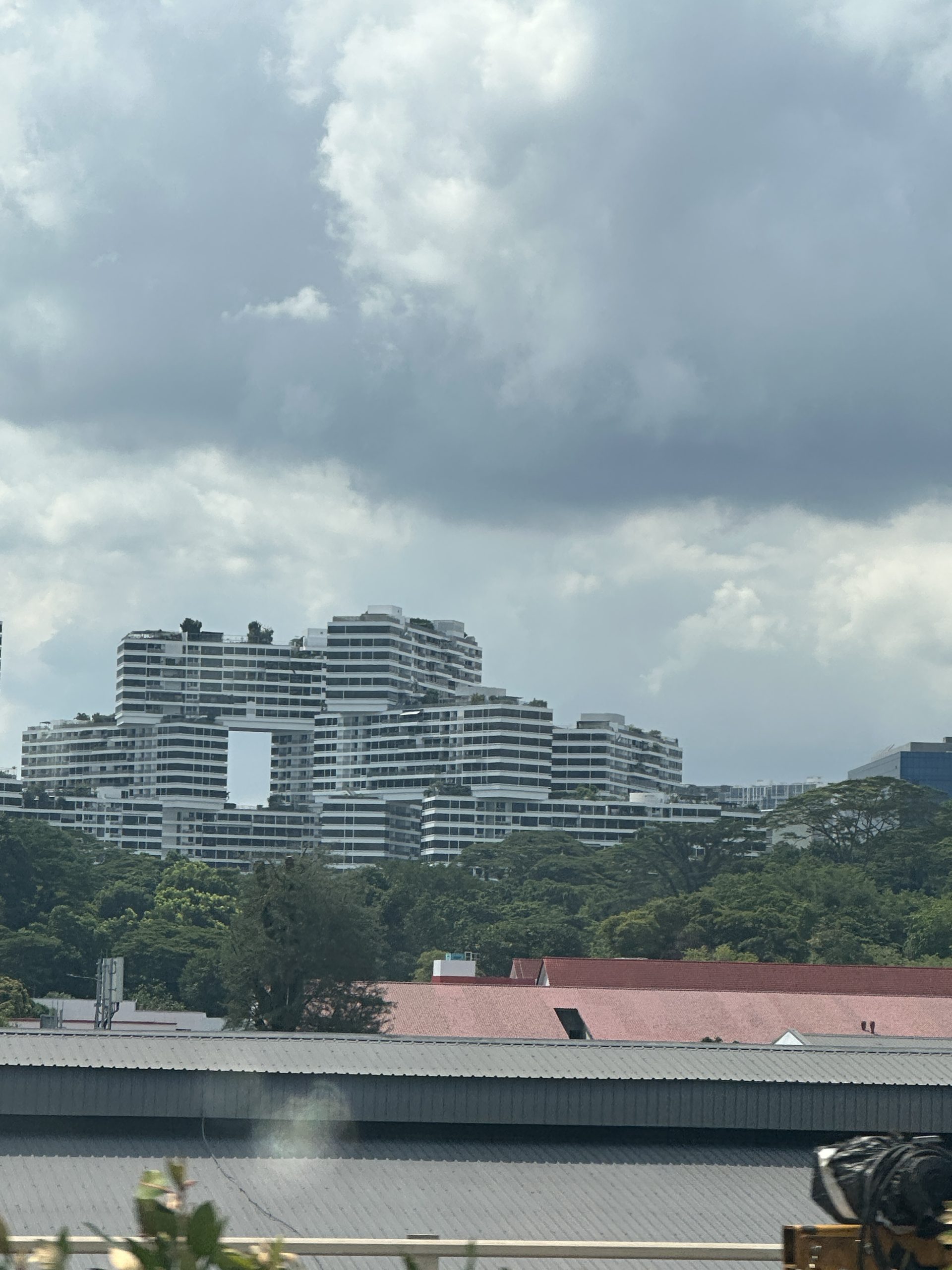
My experience in Singapore has been truly unlike anything I have ever encountered before. Throughout my three-week experience, I have learned many new things about Singapore and made connections to America’s way of life. One of the aspects of Singapore that I have found to be most fascinating is its approach to sustainability and urban planning. Singapore is approximately 31 miles from east to west and 17 miles north to south, leaving Singapore’s land usage relatively scarce. In the United States, especially coming from a state as large as California, land can feel abundant and even limitless. However, in Singapore, land is vital and must be used as efficiently as possible. Whilst in Singapore, my cohort has explored exactly how strategic urban planning must be. We have examined concepts of vertical farming, land reclamation, sustainable household practices, housing policies, and underground structures. Singapore has challenged my assumptions of how land must and should be utilized. My cohort had a fascinating class discussion about luxury as it relates to housing and the idea of ownership. In the United States, we are prone to believe that high rises and apartments as far in the sky as the eye can see are the symbol of luxury. However, Singapore contrasts that idea, living in a high-rise is the norm and standard for many Singaporean citizens, with approximately 80% of the population living in high-rise public housing. This experience has provided me with the opportunity to think critically and reconsider my ideal of ownership and property. Singapore’s public housing operates on a 99-year lease, a leasing format that allows residents to utilize their home for 99 years until it turns over to the government at the end of their lease. Learning about how public housing operates has disrupted my ideal of what ownership looks like, specifically for property. In the United States, when we assume land, we think it lasts forever, passed down for generations, ours to be torn down and rebuilt. In Singapore, land is treated as long-term usage, and after time has passed, it can be reutilized, something to be used and then restored. Singapore has truly challenged me to think more sustainably and reconsider my wants and ideals of what a home is supposed to look like.
Ezgi T: Learning on Excursions
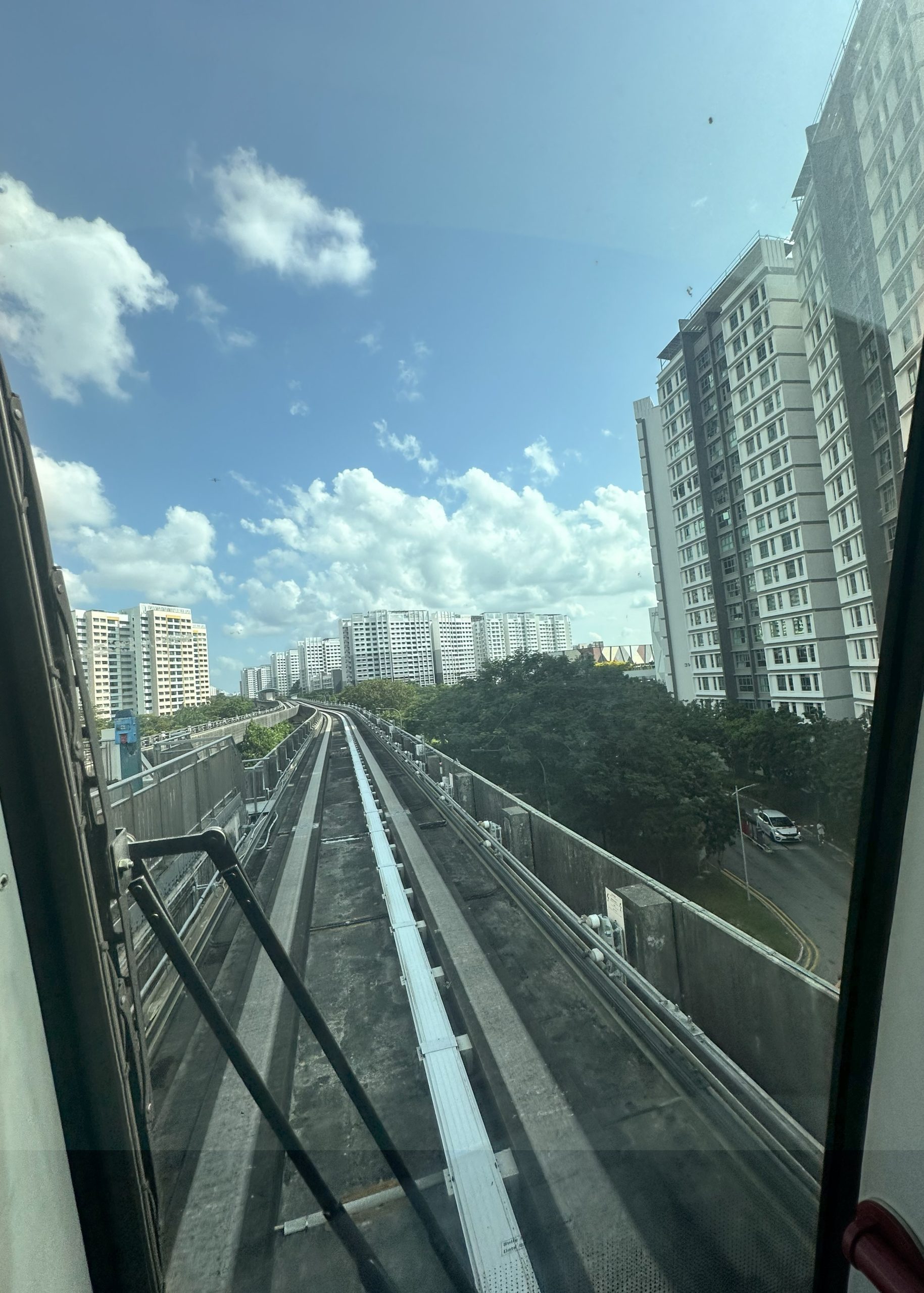
In one of our excursions, our cohort visited a residential district of Singapore named Punggol. Upon exiting the Punggol train station, the immediate surroundings can present an overwhelming sight. Many green metro buses lined up ready to transport residents to their homes. At a distance were large, tall, predominantly white and cool-toned colored apartment buildings that towered above everything else creating an imposing yet grand and admiring presence.
Many of these apartment buildings are part of the Housing & Development Board (HDB), Singapore’s public housing program. As we walked around these buildings, many units had clothes hanging outside drying in the sun. Our tour guide liked to put these as Singapore’s national flags. Lots of trees and bushes surrounded pathways to entrances of the buildings and playgrounds. Some residents from inside some of their units saw us from their windows and waved at us. The arrangements of the greenery and welcoming energy of the residents created a very pleasing atmosphere.
Singapore is a very diverse country, and we all knew this before our arrival. The diversity can be reflected through the public housing program by the ethnic integration policies implemented. In each public apartment building, there exists a quota for groups in the Chinese-Malay-Indian-Others (CMIO) model, which is a framework to approach multi-culturalism in the country. Since the Chinese group make up the majority of Singapore’s population, there is a higher quota for them in each block and neighborhood. This policy supports the CMIO model by allowing different ethnic groups to be neighbors and learn culture through one another. Neighborhood communal spaces outside also serve for multiple types of venues. Seats and pillars could be decorated for a Malay couple to have their wedding. A few days later, a Chinese Buddhist group could be holding a funeral, in this same exact spot. Through these, multi-culturalism is promoted by enabling different ethnic groups to learn each other’s cultures.
In the district, we also got to explore One Pungol, a community center hub consisting of all sorts of facilities. The hub had a library, basketball courts, technology assistance center, hawker center, McDonald’s, Subway, and even more- with some under construction. In the center of the hub, we also saw a seating area directed towards a large screen that was casting on the news, mostly taken up by older people who were waiting for their grandkids or hanging around. Inside the library included strollers parked in a designated area and little kids with their parents spending time together. There was also a room called “calm space” designed for those with ADHD. This hub was a concrete sight of how the community is brought together.
Entering Singapore, we all agreed how Singapore seems to be very intentional in their planning. Making our way to class each morning, we’re surrounded by luscious greenery and it’s completely normal to see a rooster taking a walk on the same sidewalk. Birds casually entering and exiting hawker centers and shops. Lots of escalators inside and outside of buildings. The HDB public housing with ethnic integration policies. There are many more ways and locations in how Singapore shows its convenience, multi-culturalism, orderliness, and intentionality; the Punggol residential district is one reflection of these topics.