Greece: Jelena Lee (Food in Thessaloniki)
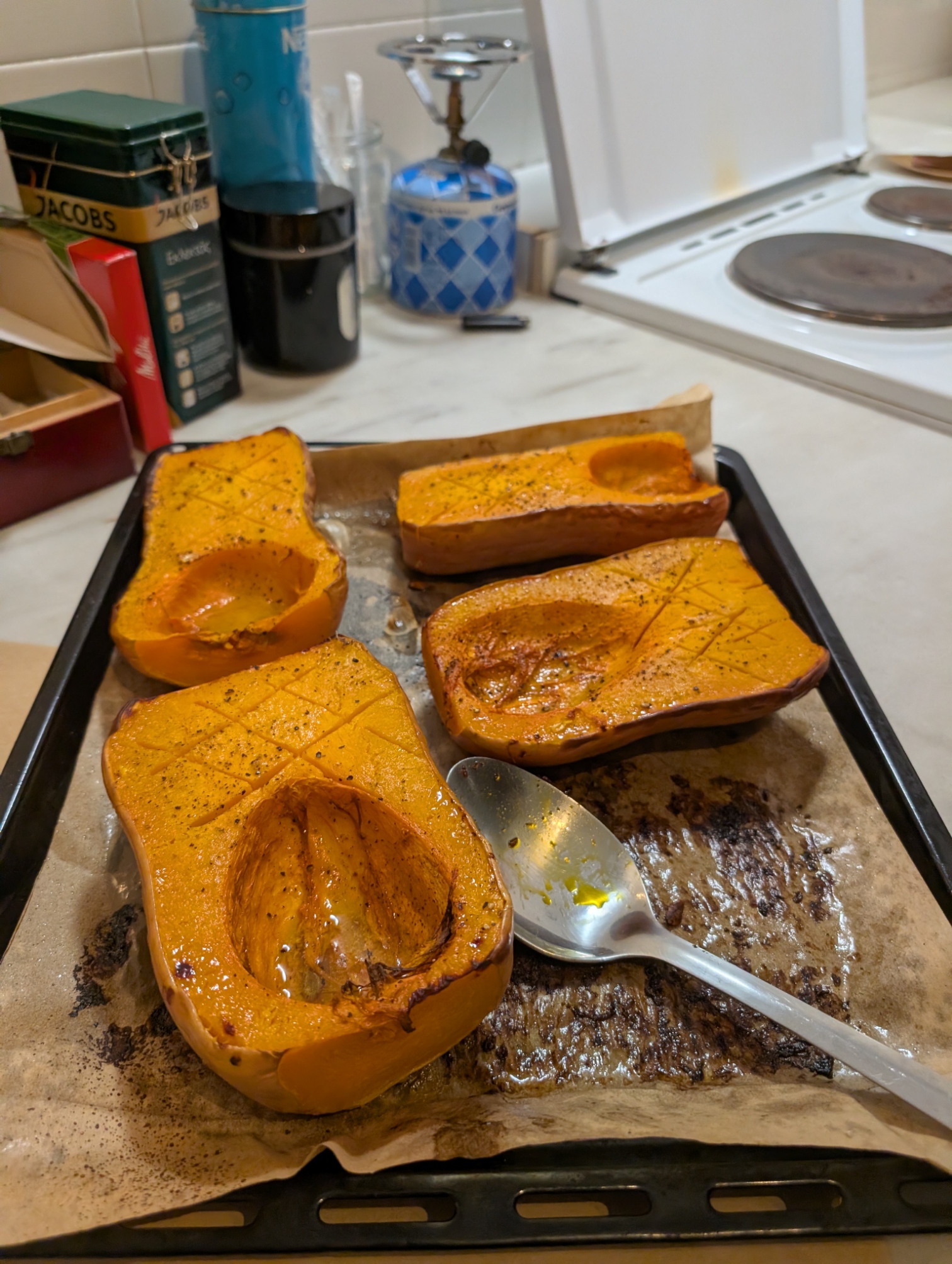
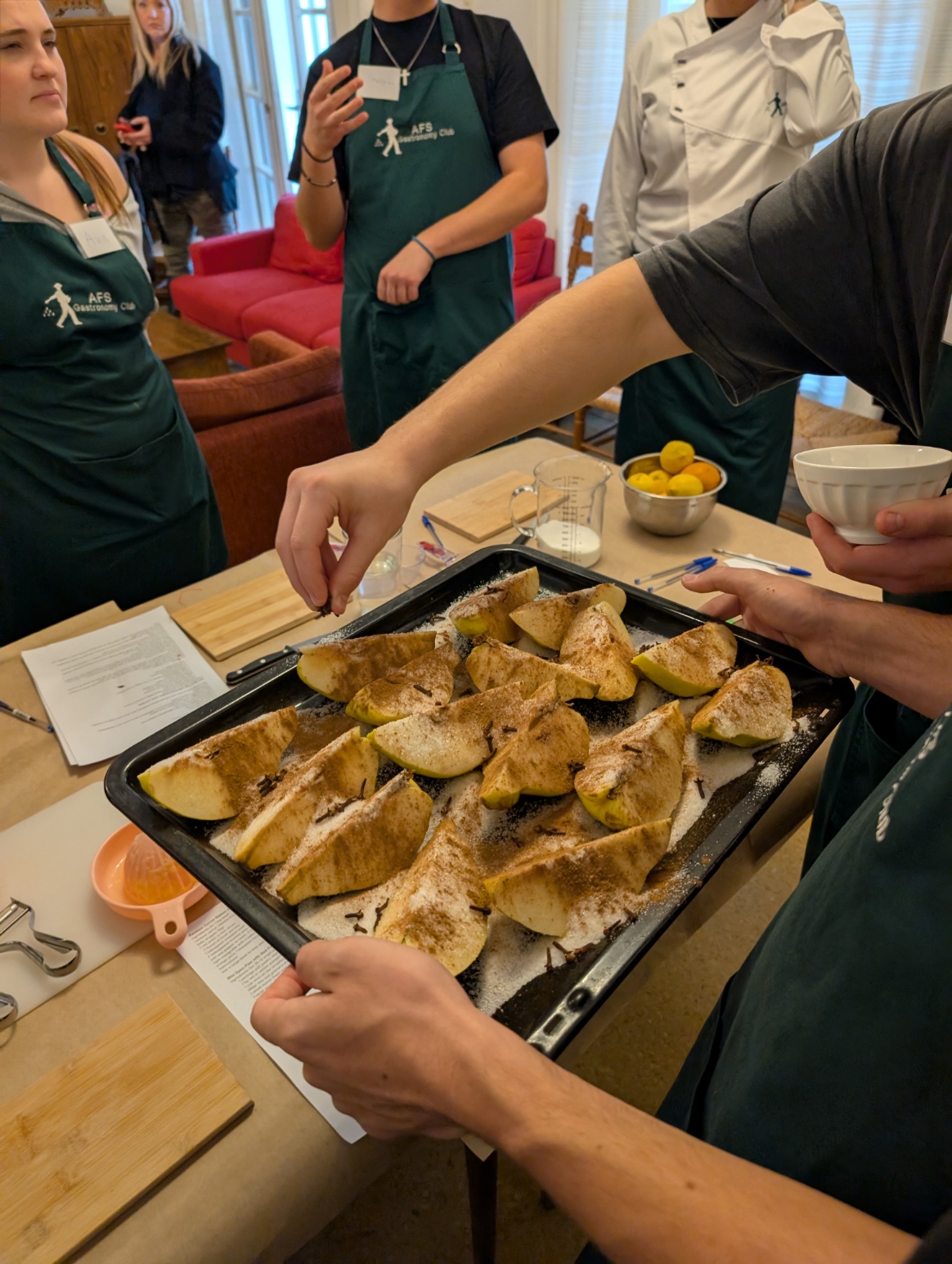
Greek food was one of the things I looked forward to most before beginning my program, and it’s been my goal to try everything I come across!! (Within reason and budget, of course). I’ve been coasting by thus far on mostly the food from the dining hall, but my Greek peers and the approaching end of my program have urged me to take a proactive approach in seeking out new foods. A few weeks ago, we had a cooking class organized by Perrotis in collaboration with their high school’s Gastronomy Club, and that was a real treat (literally and figuratively). Greek cuisine places a lot of emphasis on utilizing seasonal ingredients throughout the year, so our ‘menu’ featured pumpkin, carrots, and a fruit called quince for our entrée, side, and dessert.
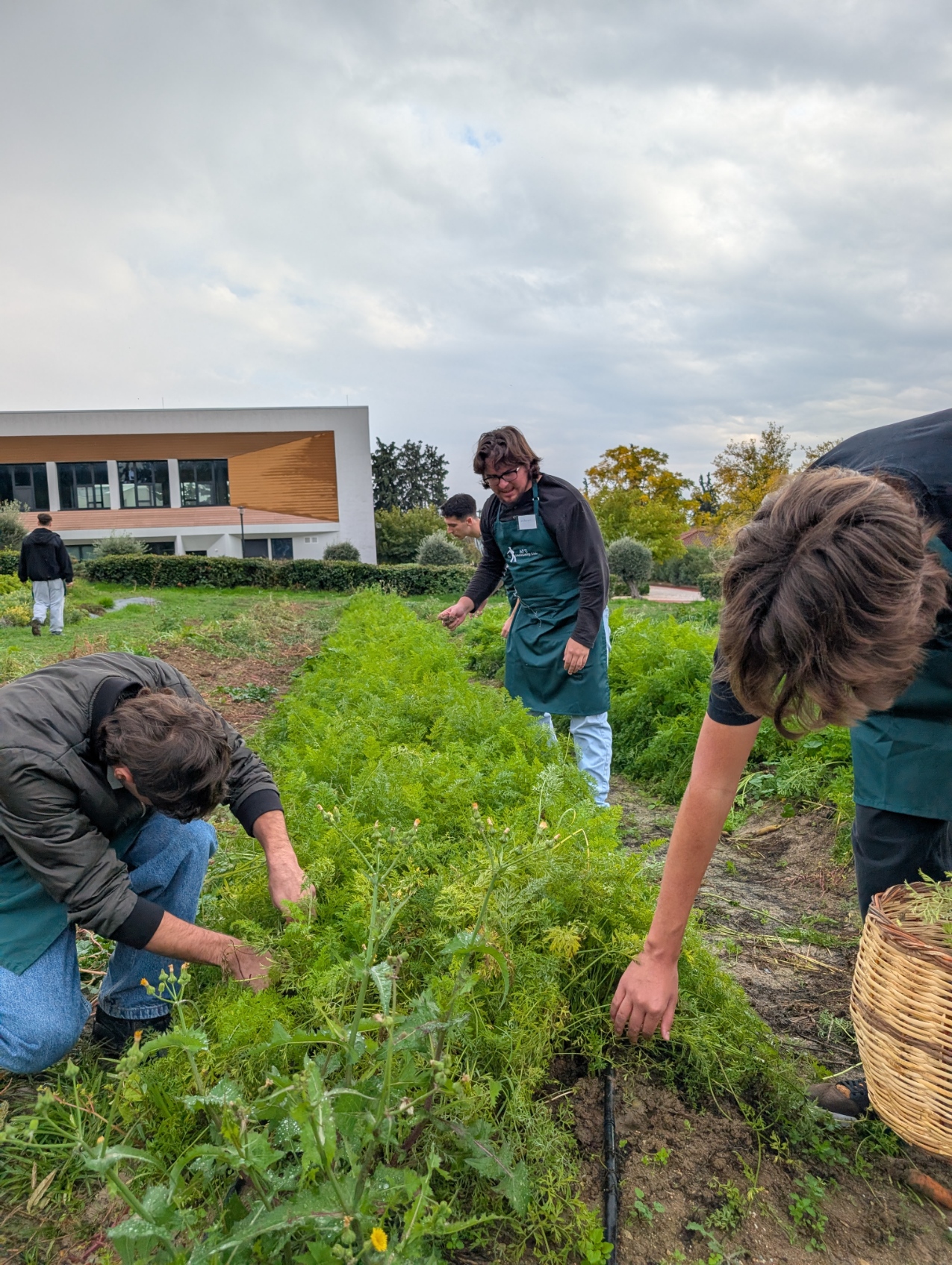
I’d never heard of quince prior to coming here, but it’s a very common fruit in Greece (or perhaps this region of Greece) and is something like a very stiff apple-pear. It’s so hard that you cannot eat it raw, so it is often either boiled or baked – we baked it – prior to serving and consumption. We briefly discussed the most common spices that can be found in Greek cooking, such as oregano, paprika, anise, all-spice, and cumin, and how the Greek palate has been influenced by trade and immigration.
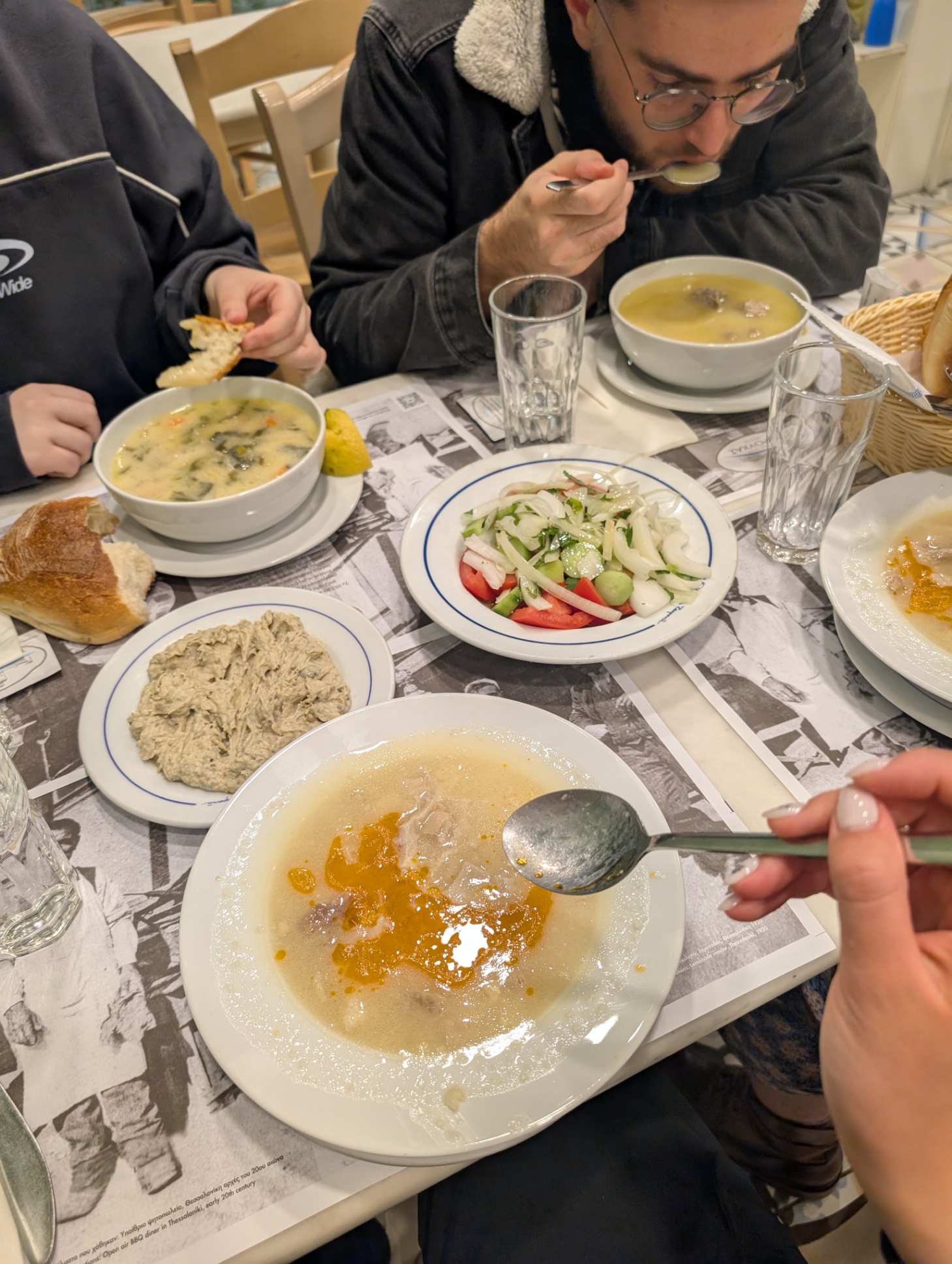
One of our recent lessons in Greek culture class was about food and one dish that our teacher mentioned was a beef tripe (stomach) soup known as ‘patsas’ at an old traditional restaurant that she used to go to with her father when she was younger. I went to try it that very night; I’m very familiar with tripe from my own cultural dishes, and I’ve reached the point in the semester where I’m aching for a taste of home. I went along with some local students, who also haven’t tried the soup since it is more traditional and not so hip with the kids typically, and indeed we were probably the only people in the restaurant under the age of fifty.
However, it was so worth it because the soup was phenomenal. The soup also had beef foot tendon (another classic), and both the tendon and tripe were melt-in-your-mouth perfection. The seasonings weren’t Asian like my cultural dishes, of course, but absolutely delicious nonetheless and the texture and mouthfeel was just right. The restaurant is called Tsarouchas Restaurant in Thessaloniki, highly recommend a visit even if you don’t get the patsas specifically, all their other food was very impressive as well.

Jelena Lee
Hometown: Maplewood, Minnesota
Major: Microbiology; Nutritional Science
Program: Perrotis College
One goal that I hope to accomplish on the program is to experience and learn more about ‘the Mediterranean diet’ as a cultural history and dynamic art rather than the clinical prescription that it can sometimes be portrayed as here in the US.
One reason I chose this program is because I am a huge fan and appreciator of history, and Thessaloniki is home to many historical sites across many eras thanks to its cultural/political importance as a port city.