South Korea: Global Gateway Summer 2026 (First Impressions)
Program: UW Global Gateway in South Korea, Summer
Keegan G: Sustainable Travel Practices and Goals
One of my goals while studying abroad in South Korea has been learning how to live more intentionally and sustainably in a different environment. Before coming here, I mostly thought about sustainability in terms of recycling or reducing plastic use, but living in Seoul has shown me how much everyday systems and habits shape people’s lifestyles.
One thing that immediately stood out to me was the limited number of public trash cans throughout the city. At first, it was surprising because I was used to seeing trash cans everywhere in the United States. After spending more time here, I learned that South Korea has a structured waste system where residents often must buy designated garbage bags to throw away regular trash. There are also separate systems for food waste and recycling, which encourages people to be more aware of what they consume and dispose of daily. I have become much more conscious about waste in my own routine. I find myself holding onto trash until I can dispose of it properly and thinking more carefully before buying disposable items. It made me realize how convenience can sometimes lead to unnecessary waste. Another part of sustainable living that I have noticed is transportation in Seoul. Since arriving, I have used the subway and bus systems everywhere I go. The city is designed in a way where you really do not need a car to get around. Public transportation is affordable, reliable, and connected to every part of the city, making it easy to travel while reducing reliance on cars.

While preparing for this program, I also considered recommendations from orientation materials about reducing waste and traveling responsibly abroad. I packed lighter and brought reusable items like a water bottle and tote bag. This experience has shown me that sustainability is often built through everyday habits and systems that encourage people to think differently about consumption and public space.
Isabelle M: “We’re not in Madison anymore” Moment
During this first week in South Korea, I have been able to learn, appreciate, and embrace a very different environment and culture from Madison. South Korea, I have learned, is a monocultural society, which means that the majority of people living in Seoul share a unified cultural identity, language, religion, and worldview. I knew that Korea was a monocultural society before the trip. However, it still surprised me just how different Korea is from the multicultural society of the United States and, of course, Madison.
Upon arrival, I quickly realized I wasn’t in Madison, Wisconsin anymore. There were temples and monuments at every turn with vibrant colors. South Korea has a strong sense of pride and nationalism that I was able to witness and appreciate during every excursion. I learned about the color schemes of South Korean architecture and how they relate to the elements.
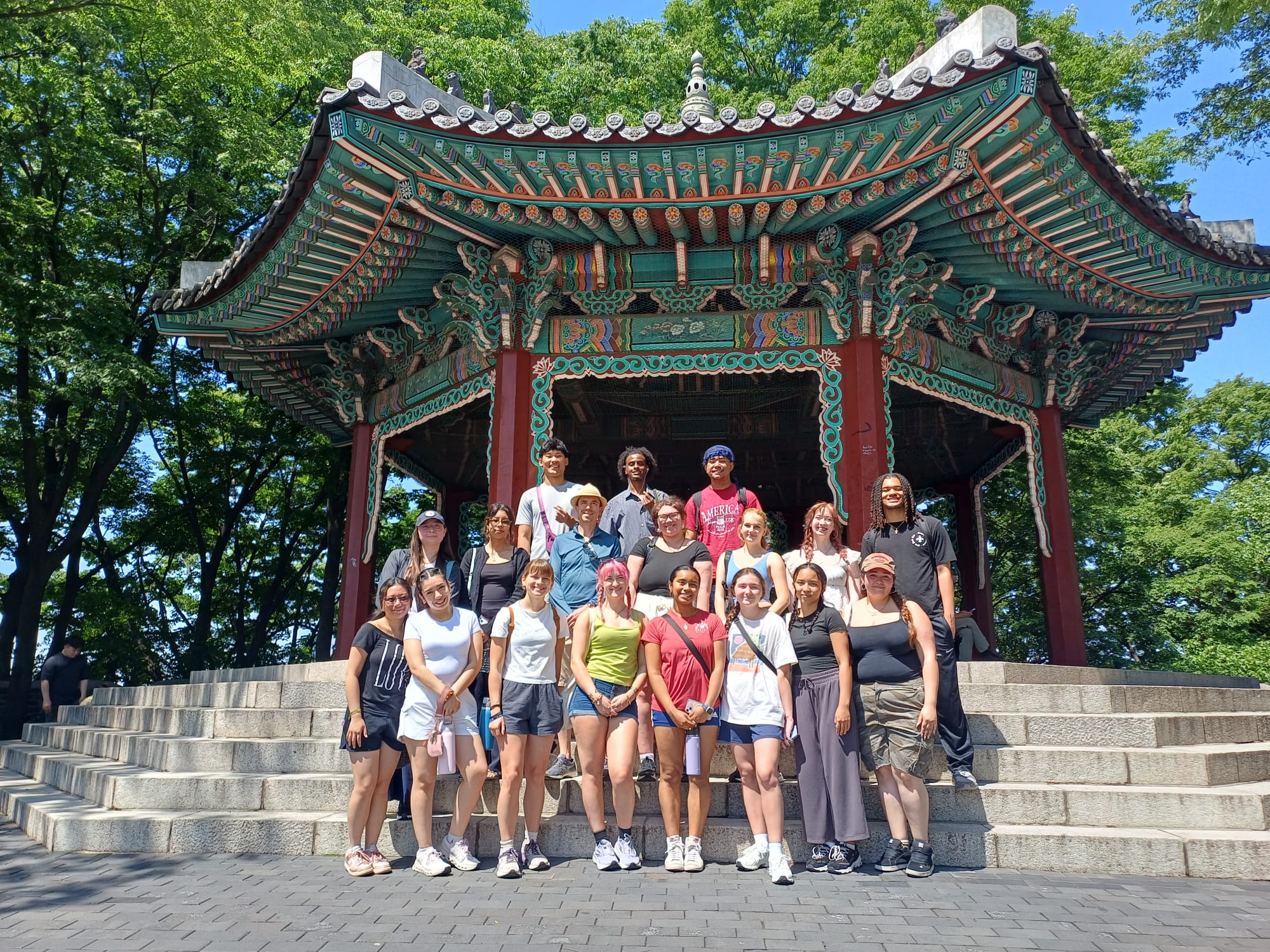
Additionally, during the trip to the Korean War Memorial, I noticed the immense sense of national pride emphasized throughout the exhibits. I was surprised by how the memorial primarily focused on South Korea’s resilience and sacrifices during the war rather than any reflection on potential complexities or shortcomings. From this experience, I observed that South Korea’s historical narratives often emphasize national unity and pride. This phenomenon is certainly different from Madison, Wisconsin, where many public spaces and educational settings start with a land acknowledgment and reflections on the historical injustices and wrongdoings of the United States.
That being said, although the United States certainly has elements of patriotism, I have never engaged with a culture or society with as much patriotism and pride as South Korea. It was refreshing to be in a space where every individual is so passionate about their culture. Every turn had a different monument or temple to commemorate the people who had come before them, which isn’t seen to the same extent in Madison, Wisconsin. All in all, I have recognized how different a monocultural society looks in comparison to the multicultural society of the United States. South Korea’s monocultural society has allowed me to embrace South Korean culture quickly, as the city of Seoul is rich in monuments, temples, and historical figures that continue to influence South Korean society today.
Bryna W: The 5 Senses in Seoul
See: I’ve seen an abundance of modern skyscrapers amongst beautiful cultural palaces throughout the program thus far. Futuristic buildings coexist with lush greenery and colorful temples throughout the Jongno District. Down the periphery streets, small shops line narrow alleys and powerlines crisscross the roofs above us.
Taste: I’ve eaten an abundance of cultural food already during my time here. There are so many new flavors that I’ve never had before, and the main excursions my small group has done with our free time is try new food. The primary taste is always a little bit different, but there’s a lot of the same flavor profiles: spicy, tangy, sweet undertones, and fermented foods. We’ve tried kimchi, Korean BBQ, chopped noodles, and tteokbokki, just to name a few traditional dishes.


Smell: The air has been so clean. While many large cities I’ve been to, such as New York City and Chicago, tend to have a persistent, musty smell, Seoul hasn’t nearly as much. I catch whiffs of cigarette smoke when passing the groups of workers taking their breaks outside. Walking through the street markets, food carts fill the air with the sweetness of baked bread, the char of grilled meat, and the spices of gochujang. In the mountains, the air is rich with the smell of earth, not that different from hiking in Wisconsin. The mountain air was a reprieve from the smoke and unavoidable tang of the city.

Hear: The city, for being metropolitan, is quiet. There aren’t many conversations had outside, especially on public transportation. The most you hear is the rumble of passing cars and the occasional sirens or honking. During the observance of Buddha’s birthday, however, I could catch hints of the chants of Buddhist monks or the thud of a ritual drum. In busy intersections, there can be loud cheers from political campaigns. During the weekend nights, there’s a greater thrum of activity throughout the city, especially in the crowded areas near markets.
Feel: I almost always feel warm. While back home it would still fluctuate to chilled temperatures, it has been consistently warm outside in South Korea. My calves and feet almost always feel tired and sore, yet the discomfort serves as a physical reminder of all the experiences I’ve had thus far.