Chile: Global Gateway Summer 2026 (A Day in the Life 2)
Program: UW Global Gateway in Chile, Summer
Jacinda C: Our Global Classroom
In Santiago de Chile, our classrooms are interactive rather than sedentary. Instead of strictly spending hours with slideshows and droning talk, we are able to directly experience and discover our host city. Through excursions and conversations with program leaders, the borders of the traditional classroom expand and reveal a richer world. Through the various approaches in navigating sustainability and development, Santiago de Chile has invited us to a global classroom.
Although four hours are structured in a traditional classroom on most weekdays, the remaining hours of the day allot us a vivid and immersive experience with the geographical and social arrangements of Santiago. From hikes in the Andes Mountains, visits to Chilean citizens’ plots of land, and explorations through the city and landmarks, we are granted an expansive view of a world beyond our preliminary experience.


There is a scent of palo santo kissing the air as we leave the cathedral on one excursion. There is a medley of fountains to be heard when in the downtown portion of the city. At times here, I feel I am in the belly of the Earth, and the trees are her utters. The sky is luminous and whispers its gentle light like the final glow of a childhood summer. Here, I am at the extreme end of the world as a new one is revealed to me. On the streets, there is always something being sold and a quiet business. There are few secrets for each tienda is glowing its products through glass and open doors. I hear the customary hush of Chilean people’s days, yet the warmth of such a place. I hear chuckles and stare deeply at people’s faces, desperately wanting to know their stories, their lives, their emotions, and they pass by, never to be seen again, only lived as only they themselves can live. But in those brief moments, I find a well of knowledge through the aged and habitual expressions and lines upon their faces. From the city, which so closely resembles many in the United States; except Santiago is far more walkable, to the country, I learn different ways of being, both familiar yet different.

Here, both past and present co-exist. There is no denial or erasure but rather a commingling, a dialogue of where we have been and where we are going, and possibly where we must go in order to continue going. There is a glass skyscraper of the 21st century, diminutively challenging the Andes mountains next to an old French-Italian style building with much history, rather than purely business. On the streets are tables of portable shops, selling and showing on display common snacks, fresh produce, and accessories. There are many fountains with cherubs, religious or political figures, transporting you into the atmosphere of Spain, all whilst in Chile. It is a mixture because of its history, because of the domination, yet the prevailing. There is beauty to be made, to be found, when in dialogue.
I have never seen a palm tree before. They are like pineapples that have decided to simply be instead of be consumed. Sharing the lack of secrets of las tiendas, the roots of the trees often peek above ground. On the way to our traditional classroom, a beautiful and large tree with twisting and overlapping roots, thick as if they have devoured all the sustenance within the mile and are offering you a substitute in their presence. In the streets and through nature, I find the most fulfilling classrooms. There is much to learn from the hospitality of the people, the array of buses branded with “100% Electrico”, the trash cans with no plastic bags, the consistently washed and well-kept sidewalks, the paper straws and packaging at restaurants, water strictly held in glass bottles with a recyclable label, and the excursions to Ecocitex and FreeMet illuminating a path to a greater, greener, and more grounded future.
Hannah P: Learning on Excursions
I walked down the metal steps, clutching my jacket closer as I took a deep breath of the brisk morning air, the golden sun bathing the small building ahead; we had just landed on La Isla de Chiloé.
Gathering on to a bus, we drove through winding roads and rolling hills, the overwhelming beauty of the morning island captivating me. Sheep grazed on hillsides and flamingos flocked in the wetlands. We arrived on the peninsula of Rilán, a quaint town surrounding us and a house with an open door awaiting us. Ilse and Raul welcomed our group of fifteen with a hug, and brought us into their kitchen to gather around the heat of the stove. After introducing ourselves, we were led to the fogón, a small wooden building with a fire pit; the warmth of the fire matching the warmth of the hearts of traditional Chilote people, the culture of Chiloé. Along the walls were the works of Raul’s carpentry; from a wooden apple press to model sailboats, his love of woodwork was evident. Ilse explained to us the Chiloé crop of potatoes, grown with minga, a form of collaborative work in which no one pays, but instead, the best crop is shared.

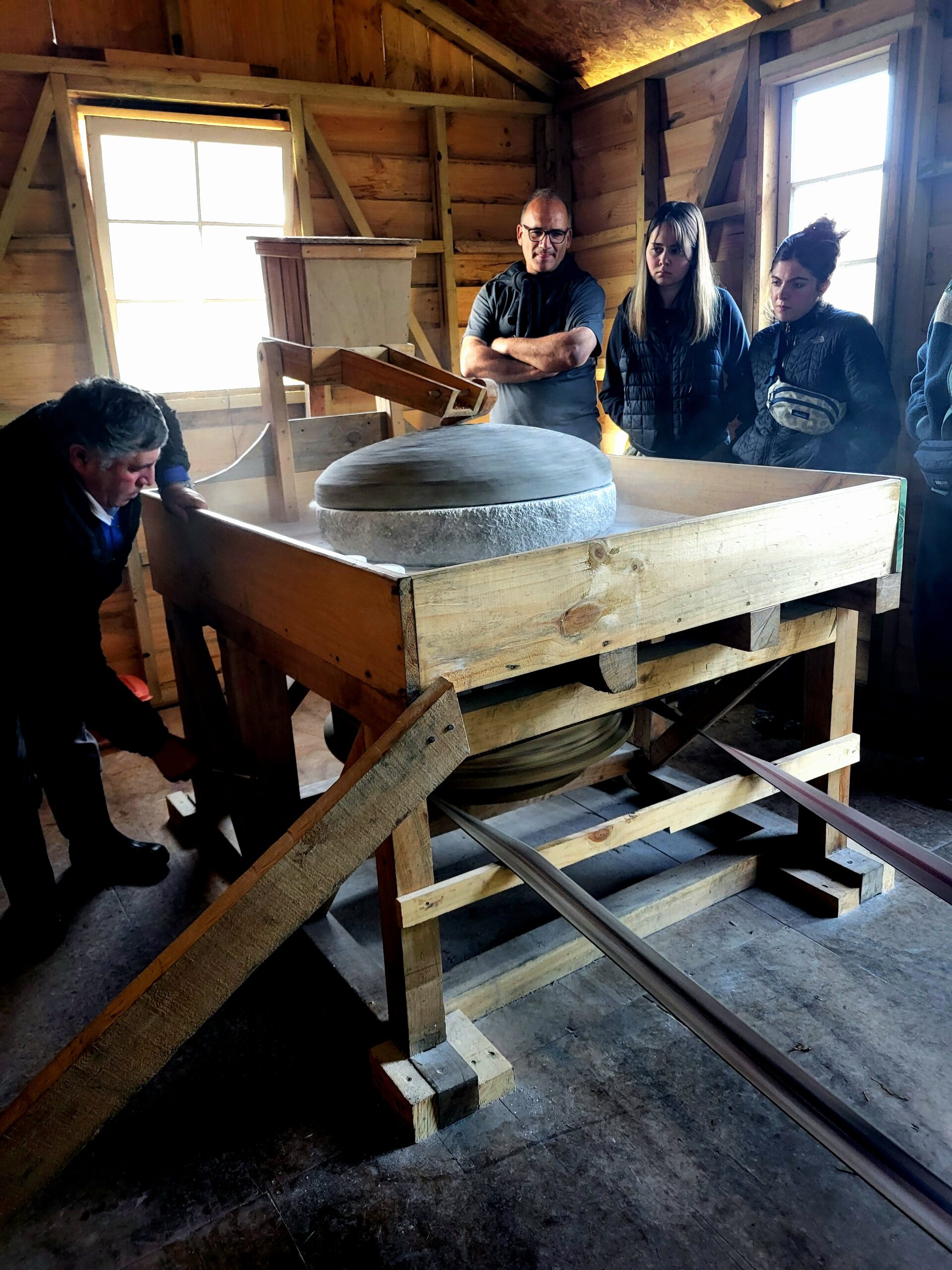
After leaving the warmth of the fogón, Raul led us around their property, describing the unique plants and trees that grow there. Walking along a small, moss-covered path, we approached a statue tucked between trees; a statue of the Chilote legend, El Trauko, who is a small man who lives in the woods. We even got to see how they make fresh flour with a mill stone. Soon, we were walked into a building with a large open space, golden morning sun gleaming in the windows. Then, something unexpected happened.

Raul brought in a large speaker, grabbed Ilse’s hand, and began dancing. We spent our final moments in this magical corner of Chiloé learning to dance traditional Chilote dances; I had the honor of dancing with Raul. Our entire group was grateful for these moments, and some of us had tears in our eyes as we said our thanks. Learning about the culture of the Chilote people was a gift, and witnessing the same reliance on the land that we have discussed in class brought a reality to our discussions. There are so many things in the world worth protecting, and the fragile land of Chiloé and the Chilote people is one I have not only gotten to see, but experience. This place will be a part of my heart for a long time.❤️