Ghana: Global Gateway Summer 2025 (Discoveries)
Molly C: Sustainability in Legon
During my first two weeks in Ghana, I have experienced a variety of sustainable practices. From the creation of high-end fashion and useful items from materials sent to Ghana by secondhand stores like Goodwill, to artists reusing textiles for visual projects, creatives from around the country are continuing to innovate with the intention of decreasing waste and helping the environment. Of the practices I have so far observed, the one that stood out to me most was the traditional glass bead making process. We recently traveled a few hours northwest of Accra to visit a bead making factory, and I was impressed by the sustainable nature of the work.
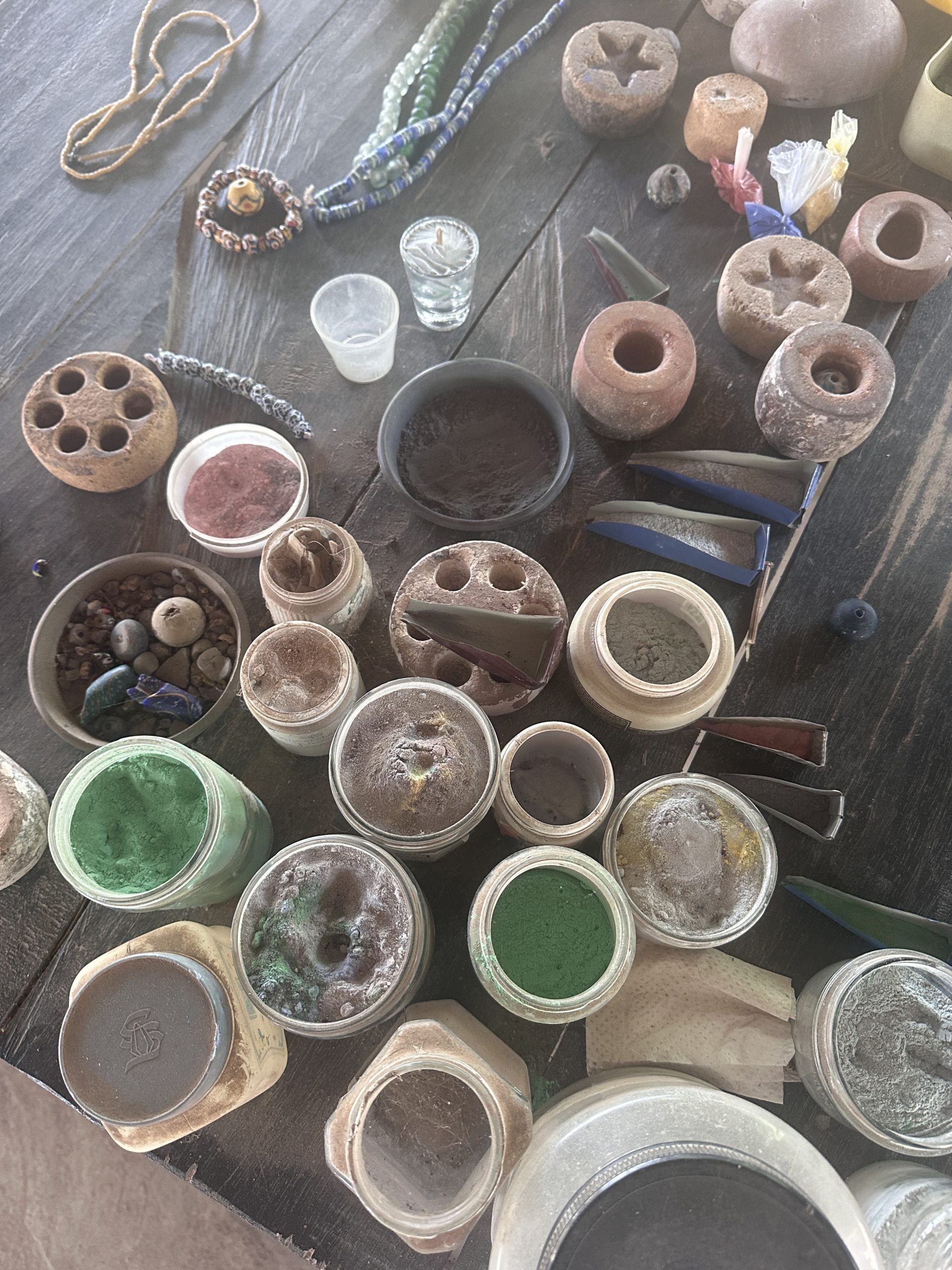
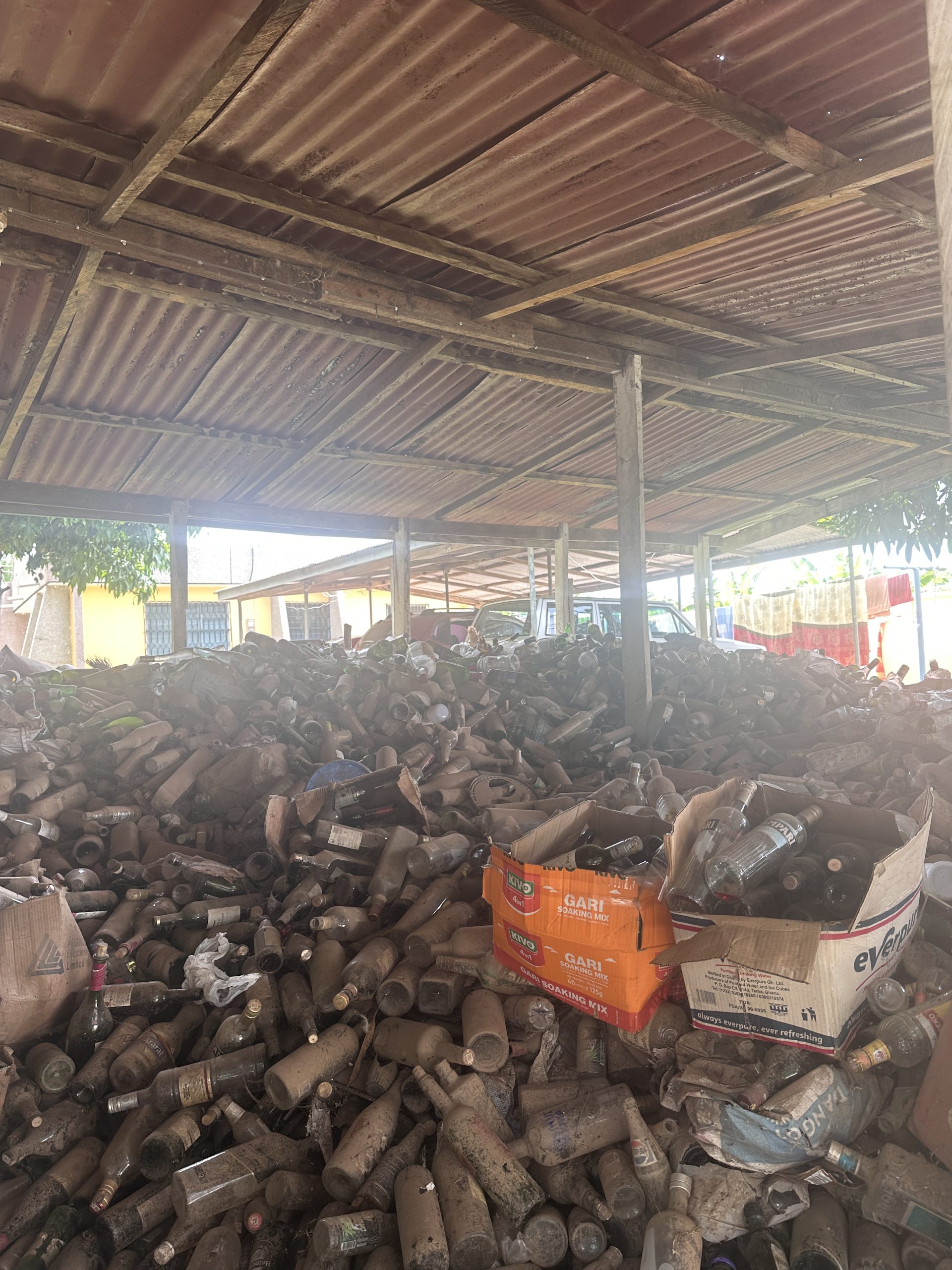
When we arrived at the factory, I first noticed a large area containing glass bottles of various colors, sizes and shapes. These bottles are collected by the factory from people who no longer have a use for them, and are then turned into gorgeous, colorful beads. The bottles are broken into smaller pieces of glass, and some are pounded into a fine powder that can be colored with pigment and used to add details. The glass pieces are placed inside of molds made from clay, with a piece of cassava stalk in the center to create a hole. Both materials were gifted from the earth to the artists, nothing new was manufactured to aid in the process. These molds are then placed in a fire structured with old car parts because they heat up well and can withstand high temperatures. After the beads are set out in the sun to cool and set, they are brought to be polished by hand with water and sand.
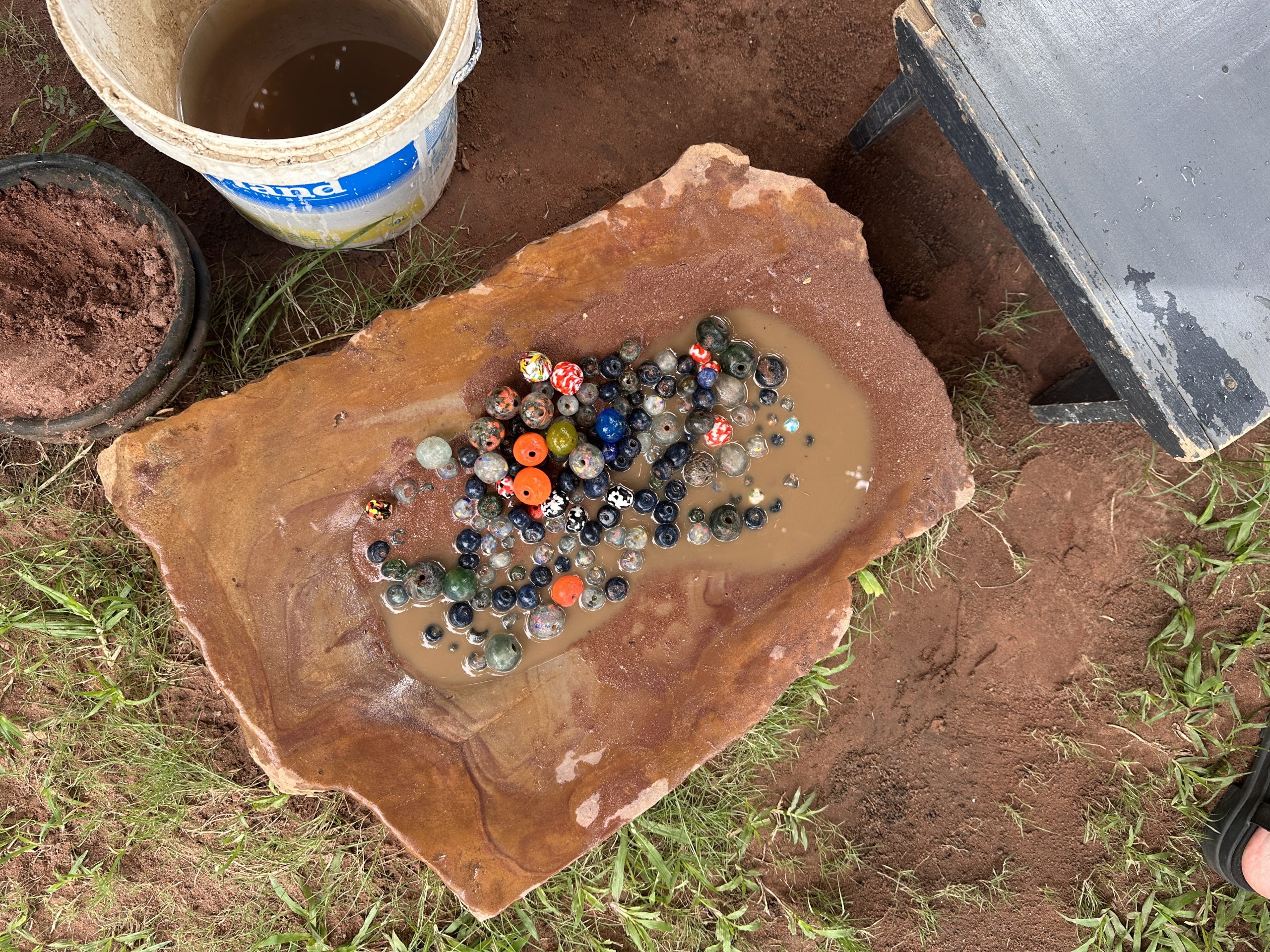
This process fully embodies the definition of sustainability. It utilizes something we used but no longer serves the same purpose and gives it a new life in the form of wearable art. These bottles would have otherwise been thrown away and polluted. I was incredibly impressed while watching the demonstration, and I was particularly in awe of the innovation and creativity of those who discovered this art. Our guide explained to us that people commonly recycle their bottles into beads using this process in their own backyards, even sometimes selling them to make a living. I feel inspired by this experience to be better at recycling things that no longer serve the same purpose into new items or art.
Michelle D: Local Interactions – Tie and Dye Connections: Kumasi, Ghana
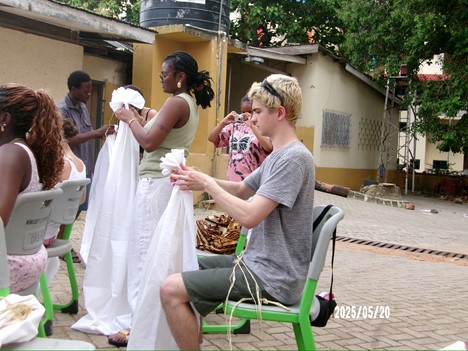
It was 9 a.m. on a hot and humid Tuesday in Kumasi, Ghana, when our group had the incredible opportunity to work with Dr. Dorothy Amenuke and a few of her students from KNUST (Kwame Nkrumah University of Science and Technology). The day’s activity was creating our own tie and dye patterns on cotton fabric.
Dr. Amenuke is renowned for her Batik cloth which incorporates beautiful cotton fabric and combines vibrant dye with wax print designs. Since Batik is a detailed and time-consuming process, instead we were introduced to tie and dye patterns, a faster method that still creates stunning results.
When we were first shown examples of the patterns we could make, I quickly realized this wasn’t going to be your typical rubber band tie dye t-shirt situation. My group chose an accordion-style fold, which looked simple at first, but I was soon humbled. As I started my first attempt at gathering the fabric, one of the KNUST students stepped in with a smile, gently saving me from a bad move. As he explained the technique, our conversation naturally shifted to our lives. Antwi is currently pursuing his master’s in fine arts, having previously studied sculpture and painting as an undergrad at KNUST. He spoke passionately about using art as a way to reconnect people with their creativity, a vision that really stuck with me. We talked about how COVID had affected both of our societies in different ways, but also how it served as a turning point, reminding us of the need for deeper human connection and resilience.
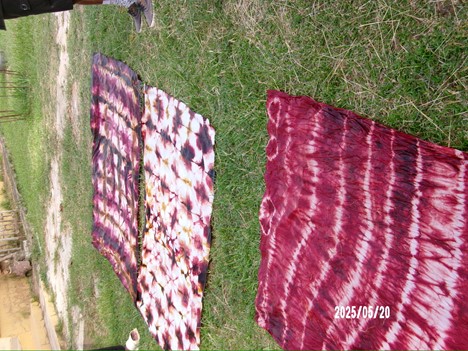
By the time we were halfway through folding our fabric, over thirty minutes in, I was completely absorbed, not just in the process, but in the exchange of perspectives. I asked Antwi about the school system in Ghana, and learned something new: after completing undergraduate studies, students are required to complete a year of national service before they can pursue graduate school or enter their chosen profession. It gave me a lot to think about how different and yet similar our paths can be, and how much we can learn from each other.
This wasn’t just a creative workshop. It was a window into the lives of people my age in another part of the world. It reminded me that beyond technique and fabric, art is a conversation and that morning, ours was one I’ll never forget.
Lizbeth R: An Impactful Moment – Discovering a New Way to Embroider
One of the most memorable experiences I had in Ghana was visiting the Christine Brown factory. As someone who learned to embroider by hand, I loved the outcome but never the actual labor of it. I was not expecting to be so fascinated by the embroidery machines and the workers we saw there. Walking through the factory, we got a close-up look at how everything was made—from fabric cutting to final stitching. But what really caught my attention were the embroidery machines at work and the actual type of embroidery technique used.
Watching the machines produce beautiful, intricate designs in minutes was honestly mind-blowing. I kept thinking about how it would take me weeks to complete something like that by hand. The precision, the layers of thread, and the speed of it all completely shifted how I think about embroidery. I used to associate embroidery only with slow, personal craftwork and never with clothes that are not traditional clothing. Seeing it done this way showed me how innovation and creativity can work together.
That blend of traditional skills and advanced technology gave me a new appreciation for both methods. It reminded me that there is not just one “right” way to create something meaningful.
I left the factory feeling inspired and curious about new ways to explore embroidery. I now see it as something that can be both deeply personal and incredibly innovative. And I am excited to try incorporating some of what I saw into my own work back home.
Leah R: A Home away from Home in Legon
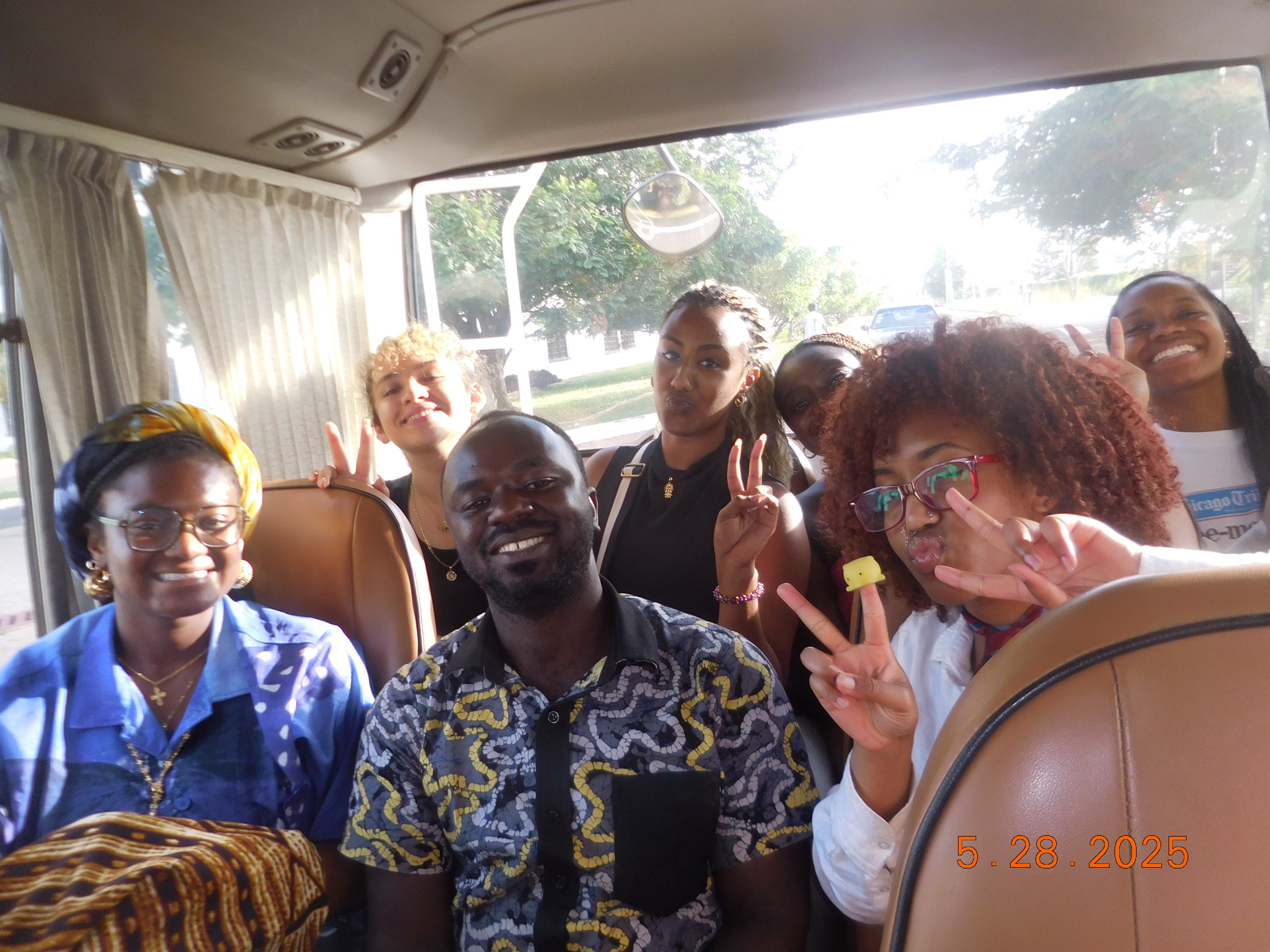
One new experience that has become part of our daily routine in Ghana is getting on our bus in the morning to go somewhere new. Sometimes the drive can be very long, so my cohort and I have to pass the time by playing taboo or debriefing past experiences, journaling, reading, or listening to music. I also like to look out the window, there is always something to see whether it be people outside eager to wave, or observing the beautiful landscape. We have taken a liking to our bus driver, Eric. He drives us anywhere and everywhere, and we are so grateful for him.
After a long, hot day, we have to jump in the pool at our hotel. I always bring my book and journal intending to use them, but I find myself too busy swimming to do so. We all get our energy back because the pool is cooling.
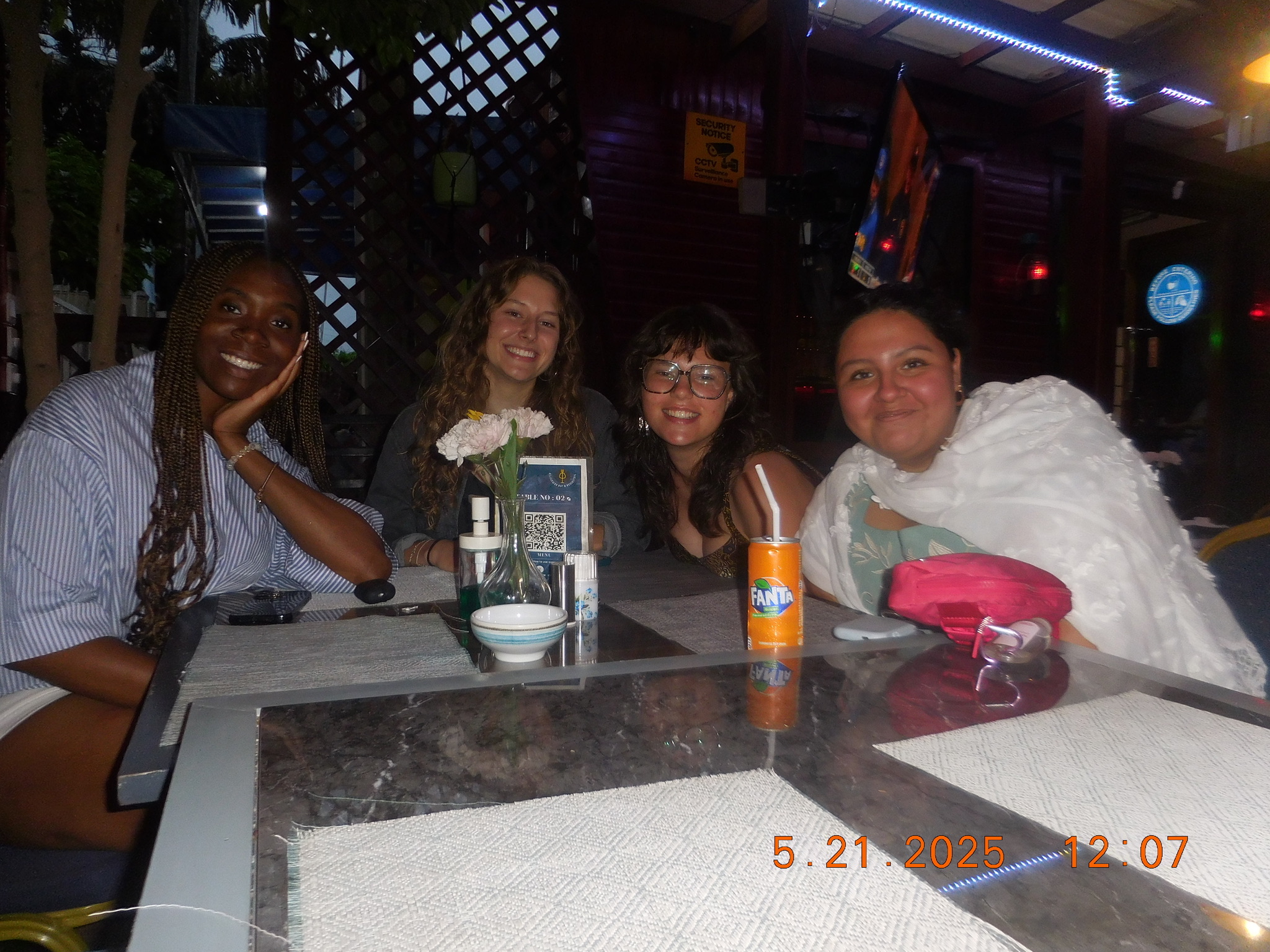
The final experience that has become part of our routine is going to a restaurant for dinner. After the pool, we are hungry for a meal, so we order a bolt which is Ghana’s version of Uber. Sometimes our driver is talkative, and we have a nice chat about how we’re finding Ghana so far. Dinner is special because we’re in a smaller group, so we are able to have different conversations. We are also able to try different foods.
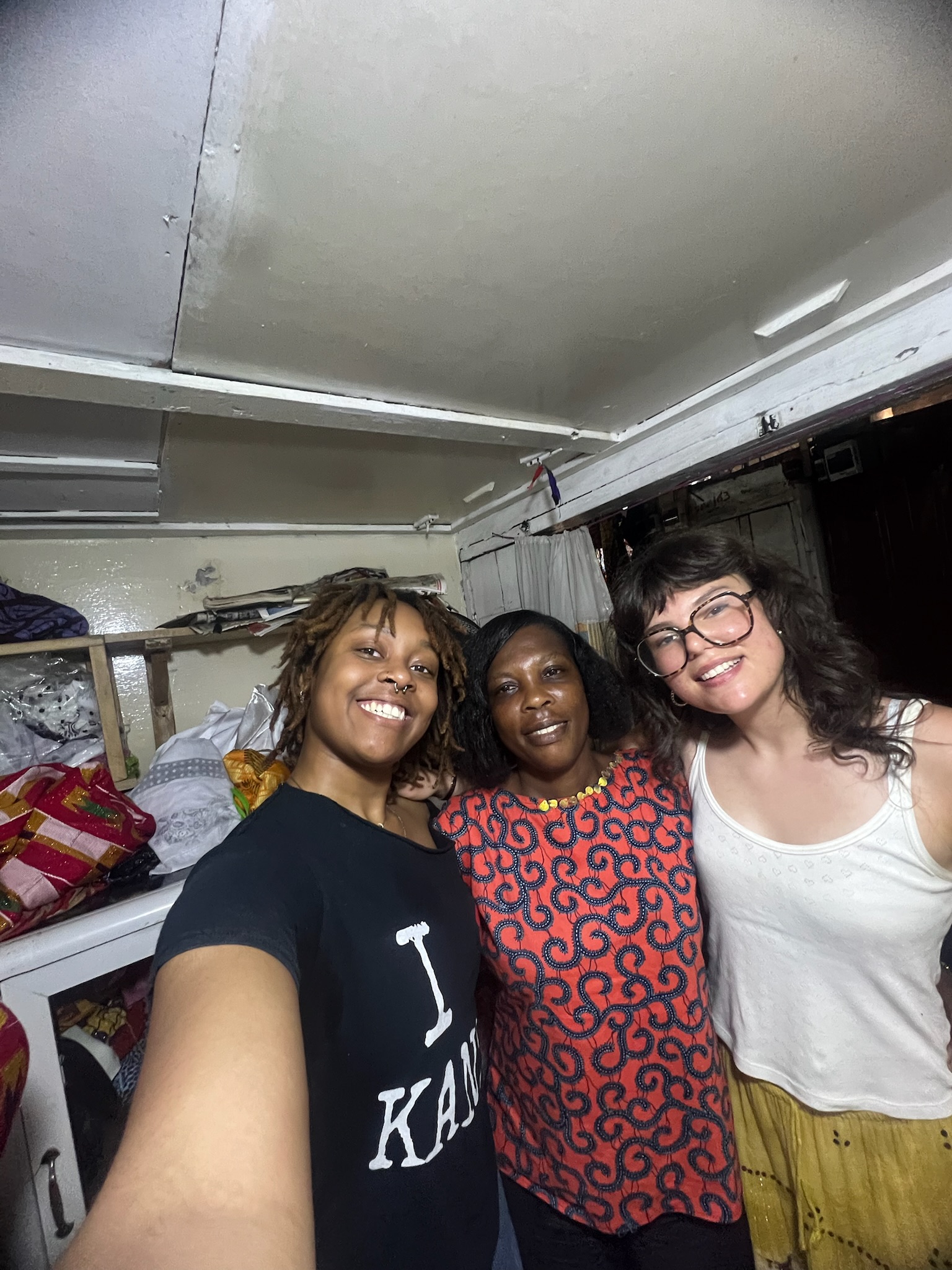
A favorite spot I’ll miss is the Kenichi market. It comprises three floors, the first being all food, the second is imported goods, and the third is all cloth. The cloth is the best part. There are tons of different vendors all with beautifully patterned and colored fabric. I had to take a lot home with me to make things later. What is special about the market is the community; lots of vendors know each other and support one another.