Italy: Adam Van Helden
Program: UW in Florence, Spring
Majors: Economics; Data Science
What is the moment you are most proud of?
One of the moments I am most proud of is my willingness to step outside my comfort zone and genuinely connect with the people of Florence. When I first arrived, I took advantage of free programming offered to students, some of which was led by Italians our own age. On a walking tour of the city, I met two young men who had grown up in Florence. After the tour, they warmly invited me to join them for lunch at a spot they loved. They offered to order for me in Italian, chatting and joking easily with the owner, who welcomed us with remarkable hospitality. He smiled and declared he would make the sandwich “the way he liked it.” It came out piled high with meat, cheese, and pesto, and it was delicious. I went on to spend lots of time with these two friends, and we had many meaningful conversations about our lives. We discussed the differences between growing up in Italy versus Wisconsin, and our perceptions of Americans, Italians, and study abroad students. Developing genuine friendships with locals deepened my understanding of cross-cultural differences in ways that no classroom experience could replicate.
The second moment I am most proud of is discovering a neighborhood bakery tucked just outside the city center. One afternoon, my roommate and I set out in search of a great bakery and stumbled upon one with a perfect five-star rating across over a hundred reviews. We were greeted by the owner, who spoke little English, but before any uncertainty could settle in, she warmly offered us samples of her biscotti. We were struck by the genuine hospitality she showed us and ordered a bag. My roommate and I returned again and again, working our way through her breads, pastries, and cakes, each one as delicious as the last. Every visit, without fail, she offered us biscotti samples. Over time, she began to light up when we walked in and would try to predict our orders. As my Italian improved, I grew more confident placing orders on my own, which felt like a small but meaningful milestone. The bakery never became crowded or touristy during my time in Florence. It was our hidden gem, a quiet, personal connection to the city that I will always cherish.

What challenges or barriers did you face as you prepared to go abroad and/or during your time abroad? How did you work through them?
Studying abroad presented many challenges that pushed me outside my comfort zone, but each one also created an opportunity to grow. Overcoming them brought a genuine sense of accomplishment. One of the most tangible challenges was simply adapting to everyday life in Italy. Many of the small routines I take for granted at home required real effort to navigate in a new country, and grocery shopping was a perfect example. When I first arrived in Florence, I had to figure out which stores were worth shopping at near the city center. Fortunately, my program offered helpful recommendations during orientation. Even so, the shopping experience itself was overwhelming at first. All of the signage was in Italian. Prices were listed in euros per kilogram rather than the familiar units I was used to, and the product selection was quite different from what I knew back home. While that made it harder to find comfort foods, it also opened the door to experimenting with new ingredients. Checking out presented its own hurdles as well. My Italian was limited early on, and I often struggled to understand what the cashier was asking. On top of all that, I quickly discovered that food in Italy has a much shorter shelf life than in the US. After buying too much on my first trip and watching it go bad, I learned to adjust my habits and shop several times a week instead.
After a few weeks, grocery shopping transformed from a source of stress into something I actually looked forward to. I learned the layout of the store and the customs around buying produce, which made finding items much quicker and more efficient. I also became familiar with the questions cashiers typically ask, so I felt far more prepared at checkout. The store I frequented even had a self-checkout option with an English setting, which was a welcome comfort early on. Perhaps most rewarding, though, was coming to appreciate the quality of Italian food itself. What the ingredients lacked in shelf life, they more than made up for in freshness and flavor. My groceries were simpler and less processed than what I was used to at home, yet noticeably healthier and more delicious. They were also often a bit more affordable. Food is one of the things I will miss most about Florence. The quality of what ended up on my plate made every meal more enjoyable and left me feeling better throughout the day.
Florence is similar in scale to Madison. It’s large enough to keep you busy and exploring, but small enough to be fairly walkable and feel like home fairly quickly.
What is your most memorable experience from your program?
As a big sports fan, I was thrilled to discover that the Winter Olympics would be taking place in Milan while I was studying in Florence. I bought tickets to a Women’s USA hockey game, which made it even more special knowing that a few fellow Badgers were on the team. The Olympics carry a kind of atmosphere that is hard to find anywhere else. I would describe it as a unique blend of lightheartedness, national pride, and genuine warmth between strangers that reminds you of the best that sports can offer. When we stepped off the train in Milan, the city felt transformed. Olympic decorations lined the streets and made everything feel a little surreal. We ended up connecting with other study abroad students and even some family members of a player on the team. Everyone was remarkably friendly. The game itself was electric, with Team USA winning by a comfortable margin. Afterward, we explored the Olympic village, and since we were there just before the opening ceremony, the Olympic torch was brought out! While unexpected, it was an unforgettable way to cap off an incredible night.

How will your experience benefit you in the future? How might it affect your future career or studies?
Studying abroad gave me new perspectives and skills that I believe will benefit me well into the future. Perhaps the most significant is a greater confidence in my ability to adapt. I grew up in Wisconsin, had never lived outside the state and had never traveled internationally. Living in Florence was a genuine leap into the unknown, and navigating that experience on my own taught me a great deal about my own resilience. Study abroad comes with no shortage of adversity. From figuring out Italian washing machines to managing cancelled flights in a foreign airport, I was constantly faced with situations I had never encountered before. Each time, I pushed through and figured it out. What struck me most, though, was that even in the most stressful moments, things still managed to work out. That lesson has stayed with me. Returning home, I feel far more confident that whatever challenges come my way, whether it’s personal or professional hurdles, I have the resourcefulness to handle them.
My experience has also shaped how I think about my future career in data science and economics. In my corporate finance course, we examined how Italian business culture differs from that of the United States — from attitudes toward risk and growth to the role of relationships in professional settings. Living in Italy brought those differences to life in a way that a classroom alone never could. As I pursue a career that will likely involve working across industries and with people from diverse backgrounds, I believe that firsthand exposure to different economic and business cultures will make me a more thoughtful and globally aware professional.
I also came away with a much deeper appreciation for language. Growing up in Wisconsin, I rarely had reason to use anything other than English in daily life. In Italy (and across Europe more broadly) there were moments where knowing Italian or another language would have meaningfully enriched my interactions with others. While the language barrier never significantly diminished my enjoyment of the experience, it did leave me genuinely motivated to continue learning. The ability to communicate with someone in their own language is, in my opinion, an underrated quality. It is both a professional courtesy and a way of engaging more fully with the world. Even a handful of simple phrases can go a long way in building connection and showing respect.
Finally, Italy reshaped how I think about pace and presence. Italians tend to move through life more deliberately. Meals are lingered over, conversations are unhurried, and there is a cultural emphasis on savoring the moment rather than rushing past it. My food and culture course touched on this contrast directly, and living it firsthand made the lesson sink in. In a world that constantly competes for our attention, I found it refreshing to slow down. It is a mindset I intend to carry with me, both in my personal life and in how I approach my work.
What is your advice for someone considering your program?
My biggest piece of advice is simple. If you are considering studying abroad, do it! There will likely not be another time in your life when moving to another country for three months is this accessible with built-in support, a structured community around you, and the freedom to fully immerse yourself in the experience. Many people I have spoken with who are now further along in life expressed regret for not taking the opportunity when they had the chance. Going abroad was one of the highlights of my college experience, and I would encourage anyone on the fence to take the leap.
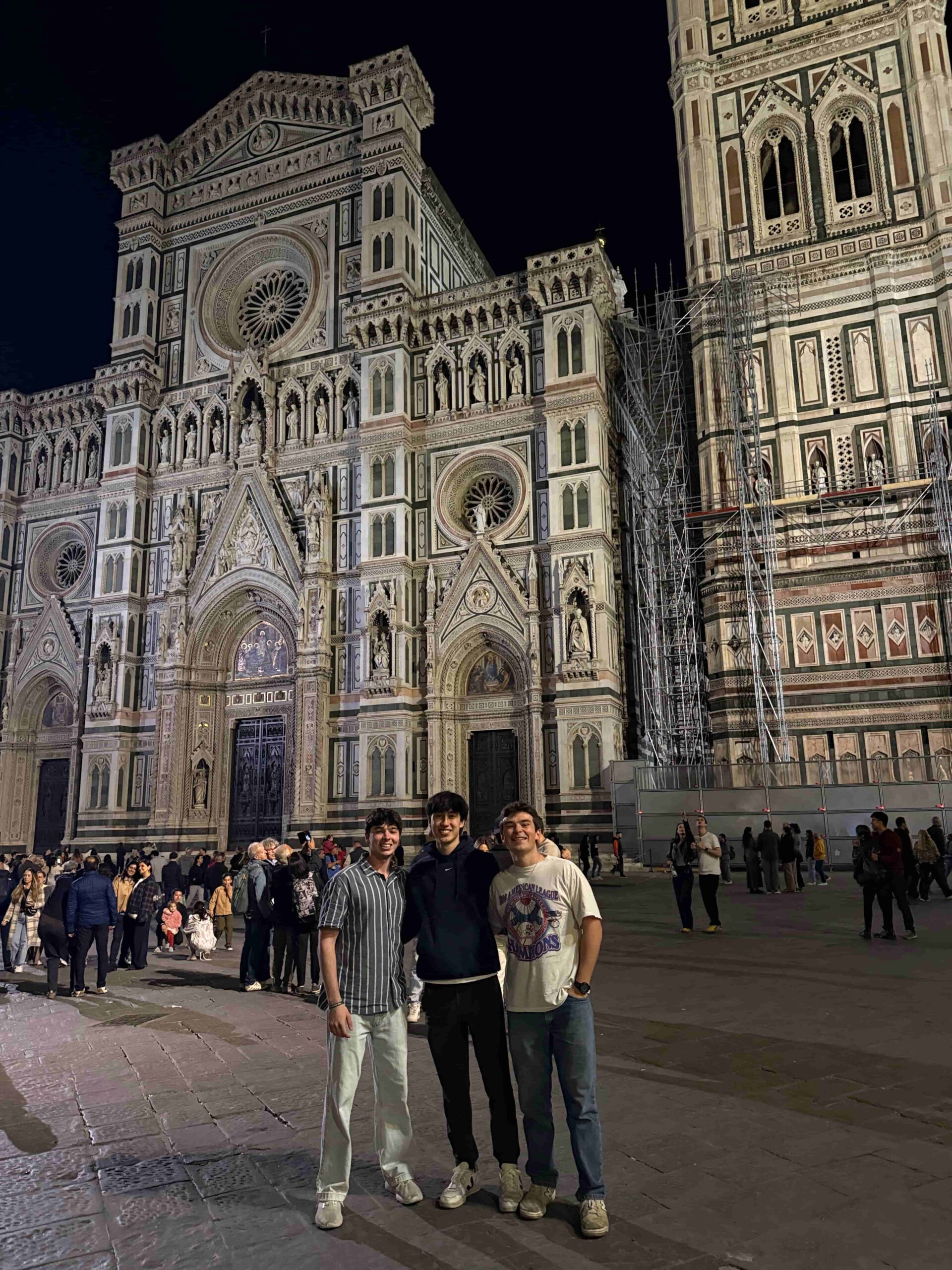
When it comes to choosing the right program, think carefully about what kind of environment you thrive in. For me, Florence was a natural fit. I had always been drawn to the food, history, and culture of Italy, and Florence delivered on all of it. The city is filled with UNESCO World Heritage sites, world-class museums, and the legacy of figures like Michelangelo, Leonardo da Vinci, Galileo, Donatello, and Brunelleschi around nearly every corner. But what surprised me most was how livable it felt. Florence is similar in scale to Madison. It’s large enough to keep you busy and exploring, but small enough to be fairly walkable and feel like home fairly quickly. In terms of program structure, UW in Florence struck a balance that worked really well for me. As a junior, timing mattered a lot. The program aligned with the UW semester calendar, which allowed me to finish in May and pursue a summer internship without any conflicts. Beyond logistics, the program offered a lot of built-in support throughout my time abroad. They made the transition to living abroad much smoother than I expected. Being surrounded by fellow Badgers gave me an immediate sense of shared identity and community. Also, being paired with students from other universities across the US opened up opportunities to gain different perspectives on college life and compare experiences in a way I genuinely valued.
More broadly, I want to emphasize that studying abroad is about far more than the destination. It is an experience where you will learn a great deal about yourself, often in moments outside the classroom. There will be stressful situations and unexpected challenges, but working through them builds a kind of confidence that is difficult to develop any other way. Approach the experience with an open mind, say yes to things that feel unfamiliar, and do not be afraid to venture beyond the well-worn tourist path. The most meaningful moments often come from the connections and places you least expected.